

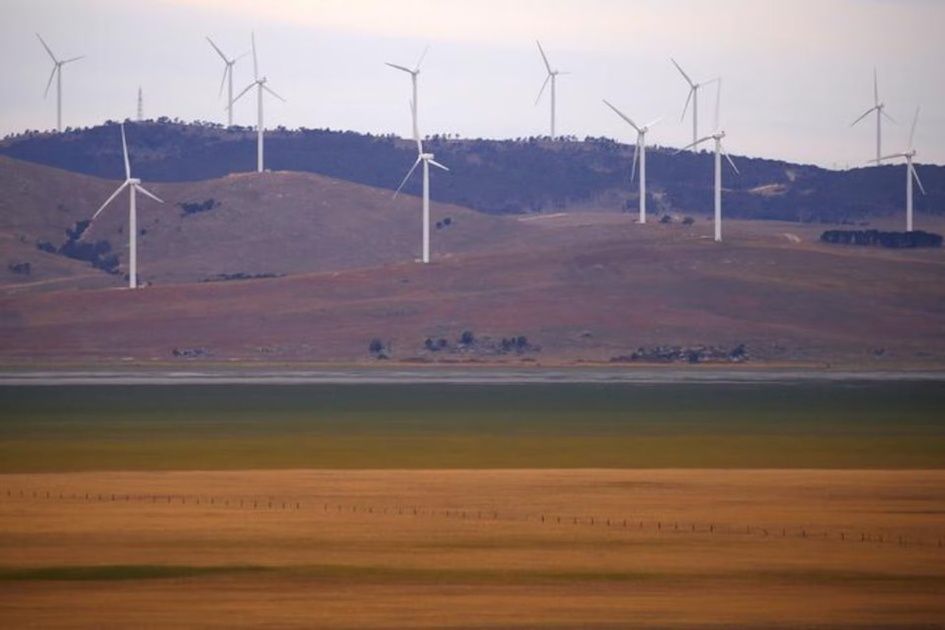



Australia’s climate minister says the country can shift from coal and gas exports to clean energy, green hydrogen and low-carbon products as global demand moves toward net zero.
Australia can transform itself from one of the world’s largest fossil fuel exporters into a major supplier of clean energy and low-carbon products as global demand shifts toward net-zero economies, the president of the next UN climate summit said on Saturday.
Speaking at UN climate talks in Bonn, Australia’s Climate Change and Energy Minister Chris Bowen said the country must prepare for a future in which markets for fossil fuels and other high-emission products continue to shrink.
“We have to recognise that the world is committed to net zero. More than 80% of our trading partners are committed to net zero,” Bowen said in an interview. “The world is changing. We can pretend that’s not happening, as some in Australian domestic politics do. Or we can prepare.”
Bowen argued that Australia had already demonstrated leadership in the global push to transition away from fossil fuels through the rapid expansion of renewable energy and battery storage across its domestic electricity grids.
Australia remains one of the world’s biggest exporters of coal and gas. Since taking office in 2022, Prime Minister Anthony Albanese’s Labor government has approved more than 30 fossil fuel projects and expansions. Despite this, Bowen acknowledged that fossil fuels would face growing pressure as countries pursue climate targets.
“Our track record on that is pretty strong now,” he said of renewable energy development. “Australia can play a role in decarbonising many countries. If you look at how we can work on our role as a potential renewable energy superpower, we could play a much bigger role in reducing emissions internationally.”
Bowen noted that Australia, alongside Pacific Island nations, had helped secure a landmark agreement at UN climate negotiations in 2023 calling for the world to “transition away from fossil fuels” for the first time.
He said Australia was uniquely positioned to benefit from the energy transition.
“Yes, we’re a large fossil fuels exporter. But we also happen to have huge potential in the renewable energy sector. We’re blessed in that regard. Not every country can do that,” he said.
The Bonn negotiations are taking place as Australia’s government faces increasing pressure at home from political groups opposed to climate action. One Nation, a right-wing party that rejects claims that temperatures are rising and that extreme weather events are worsening, secured about 6% of the vote in last year’s federal election. Recent polling, however, suggests support for the party has risen to around 30%.
Australia has emerged as a global leader in household solar energy and battery adoption. More than one-third of Australian homes now have rooftop solar panels. Since the launch of a government subsidy programme in July, more than 400,000 small batteries have been installed.
The expansion of rooftop solar and battery storage has reduced reliance on costly gas-fired electricity generation and has begun to lower power prices for consumers.
Looking ahead, Bowen said Australia could export renewable electricity generated from solar and wind resources to countries such as Singapore, which have limited capacity to produce large amounts of clean energy domestically.
He also said Australia could export a range of products and services powered by renewable energy to help countries and companies lower their carbon footprints.
“You can export green hydrogen, you can export electrons through cables, you can make things with that renewable energy, you can export green gigabytes, green artificial intelligence. You can have datacentres in Australia and export the AI to countries that maybe can’t do that,” Bowen said.
“We’ll work with trading partners and will also be a reliable supplier of old energy as we’re developing together new energy.”
Bowen is set to preside over formal negotiations at the COP31 UN climate summit, which will be held in Turkey in November. Turkey’s Environment Minister Murat Kurum will serve as co-host and oversee the summit’s action agenda, which focuses largely on voluntary measures taken by countries to address climate change.
Government representatives from around the world have gathered in Bonn this week and next for preparatory discussions ahead of COP31. One of the major topics under negotiation is electrification, which is widely viewed as essential for cutting greenhouse gas emissions from transport, heating, cooling and industrial sectors.
Kurum described electrification as “the most important tool in the toolkit” for tackling climate change.
“Unless we go through this transformation, we won’t be able to achieve the target” of limiting global warming to 1.5 degrees Celsius, he said.
Source: The Guardian




