




Speakers warned that destructive nets, poison baits, pollution and habitat loss are disrupting breeding cycles and damaging wetlands, urging community action to keep natural water bodies productive.
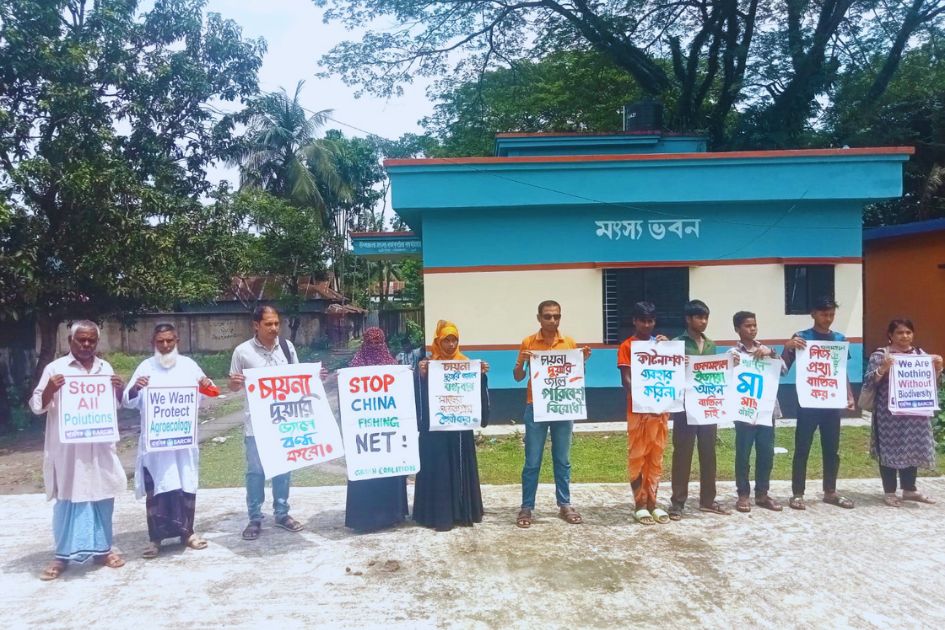
Youth groups and fishers have formed a human chain in Atpara upazila to demand the creation of fish sanctuaries to protect local fish diversity, as Bangladesh marks National Fisheries Week 2026.
The Atpara fisheries department has been observing the week through different programmes. Private research organisation BARCIK also organised quiz competitions and discussions at educational institutions, along with the human chain at the Atpara upazila complex.
Prizes from the quiz competition were distributed at the closing ceremony, where speakers discussed the need to protect natural fish habitats, create sanctuaries, stop the catching and sale of egg-bearing fish and end the use of aggressive fishing gear.
The event was attended by the Atpara upazila nirbahi officer, the officer-in-charge of Atpara police station, Bangladesh Nationalist Party president Masum Ear Chowdhury, the youth development officer, the statistics officer and officials from different upazila-level government departments. Young people, fishers, cultural activists, environmental activists and women leaders also joined the programme.
Speakers said native fish species were gradually disappearing because egg-bearing fish were being caught and marketed indiscriminately. They said strong measures must continue to stop such practices if fish production from natural sources is to be sustained.
“Water bodies must be kept free and sanctuaries must be created in every water body to protect local fish species,” said Upazila Nirbahi Officer Shahnur Rahman. “Every young person must take initiative. Only then will we be able to stand before the world.”
Participants said China duari nets used in haor wetlands destroy small fish, eggs, juvenile fish, snails, mussels, aquatic animals, shrimp, crabs, grass, aquatic plants and food sources for other species.
They said such practices break the breeding cycle. Current nets, berjal nets, airguns and poison baits are also used, they said. Toxic pesticides, including aluminium phosphide, gas tablets, rotenone, lambda, cyhalothrin and glyphosate, are used as poison bait.
Speakers also said the destruction of hijal and koroch forests, catching fish by draining water, catching and selling juvenile fish and egg-bearing mother fish, dragging nets along the bottom, unplanned infrastructure construction, water pollution, plastic waste, chemically contaminated water flowing from upstream, excessive pesticide use in agriculture, lack of oxygen in water, indiscriminate harvesting of snails and mussels and their sale to companies for making lime and feed for fish, ducks and chickens were causing extensive damage to water bodies and ecosystems.




