




Experts in Netrokona warned that excessive pesticide use and banned fishing practices are accelerating aquatic biodiversity loss, threatening wetland ecosystems, fish populations, pollinators and long-term agricultural sustainability in Bangladesh.
The excessive use of pesticides and banned fishing practices is accelerating the loss of aquatic biodiversity in northeastern Bangladesh, speakers warned at a dialogue in Netrokona district of Mymensingh Division on Tuesday (June 16), calling for stronger regulation and greater environmental protection.
The dialogue, titled “Use of Pesticides and Banned Materials in Wetlands: Extinction of Aquatic Biodiversity”, was organized by private research organization BARCIK and the Atpara Green Coalition Committee at the Atpara Upazila Officers’ Club.
Speakers expressed concern over the alarming decline of beneficial insects and aquatic organisms across the country, warning that continued misuse of pesticides and destructive fishing methods could severely disrupt crop production and push Bangladesh’s agricultural system into crisis.
Atpara Upazila Nirbahi Officer Shahnoor Alam attended the event as chief guest while Atpara Green Coalition Committee President Sajedur Rahman Selim presided over the programme. Among those present were Upazila Agriculture Extension Officer Mahfuza Khan, Fisheries Officer Masudur Rahman, Youth Development Officer Omar Faruk, government officials, journalists, farmers, fishers, youths, students, teachers, cultural activists, members of civil society and people from various professions.
BARCIK Regional Coordinator Md. Ahidur Rahman delivered the opening remarks, highlighting the impact of pesticides and banned materials on aquatic biodiversity. The keynote presentation was delivered by youth organizer Tajim Rahman Rakib.
Rakib emphasized the importance of wetlands in sustaining biodiversity and ecological balance.
“Wetlands are the reason biodiversity exists. They support ecosystems, flowering plants, birds, freshwater fish and native tree species such as hijol, koroch, mandar, tamal and borun. They help maintain groundwater levels and sustain nature itself,” he said.
“If rivers disappear, wetlands disappear and greenery fades away. Wherever rivers flow, life survives. Wetlands sustain ecosystems, wildlife and aquatic plants. This is the foundation of Bangladesh’s ecological system,” he added.
Agriculture Extension Officer Mahfuza Khan said excessive pesticide use was harming both agriculture and the environment.
“When pesticides are used in crop fields, insects do not survive. The eggs of beneficial insects are destroyed. Excessive pesticide use threatens public health and places the entire animal kingdom at serious risk. It is killing pollinators that are essential for crop production, yet there is no alternative to pollination,” she said.
Journalist Syed Maksudul Haque warned that banned fishing gear and toxic substances were destroying wetland ecosystems.
“China duari nets destroy small fish, fish eggs, fry, snails, mussels, aquatic animals, shrimp, crabs, grasses, aquatic plants and other food sources within wetlands. These practices disrupt natural breeding cycles,” he said.
He added that current nets, ber nets, air guns and poison bait are also being used in wetlands. According to him, toxic substances such as aluminium phosphide, gas tablets, rotenone, lambda-cyhalothrin and glyphosate are being used as poison bait to catch fish and other aquatic species.
Speakers at the event stressed the need for stronger monitoring and regulation of pesticide sales and use, development of non-toxic alternatives and greater awareness among farmers about the risks of excessive chemical use. They also called for the moderate application of fertilizers and environmentally responsible farming practices.
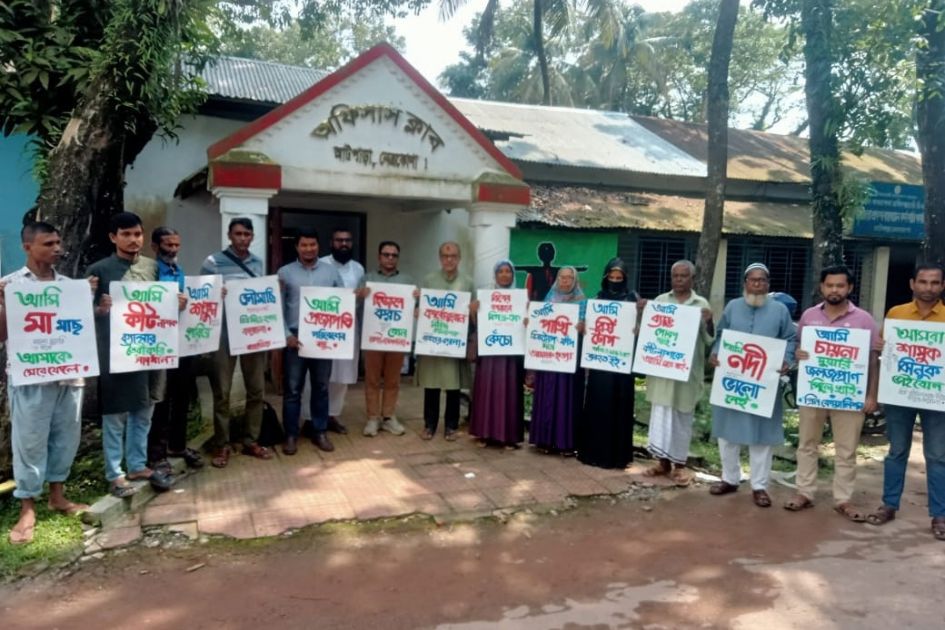
Following the discussion, participants displayed placards highlighting aquatic life and species extinction on the upazila premises. The programme concluded with a symbolic human chain protesting the use of pesticides and banned materials that threaten aquatic biodiversity.




