

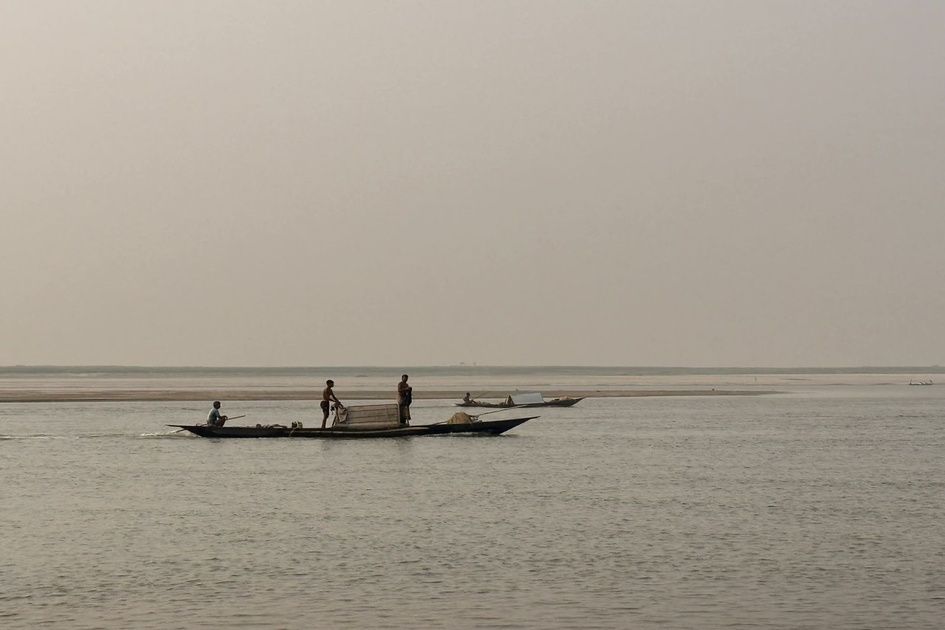



In Kurigram’s fragile char lands, repeated river erosion is displacing thousands, exposing the human face of climate injustice and testing Bangladesh’s commitment to Loss and Damage and long-term resilience.
Standing on the fragile sands of Barober Char in Rajibpur, Kurigram, I witnessed a reality that statistics alone cannot capture. The land beneath my feet shifted with every step, cracked, fragile and uncertain. Around me were families living with the constant fear that their homes could disappear overnight.
Md. Babul, a 56-year-old farmer, shared his story quietly but with visible exhaustion. Over his lifetime, he has dismantled and relocated his home 20 times due to relentless river erosion. The river has swallowed nearly 80 bighas of his ancestral land. This year, he is preparing once again to move his home, uncertain whether the next location will survive the coming monsoon season.
Nearby, Md. Haidar Ali, a 59-year-old fisherman, described a similar struggle. Over the past two decades, he has been displaced eight times and lost 30 bighas of land. For generations, rivers like the Brahmaputra have sustained communities through fishing and farming. Today, for families like theirs, the river has transformed from a source of life into a force of displacement.
Their stories are not isolated tragedies; they reflect a broader pattern unfolding across northern Bangladesh.
Kurigram is one of Bangladesh’s most climate-vulnerable districts. It is shaped by 16 major rivers including the Brahmaputra, Dharla, Teesta and Dudhkumar. The district contains more than 450 char areas, temporary river islands formed through sedimentation. These lands are fertile and attractive for settlement but remain extremely fragile and unstable. Entire communities build homes, farms, schools and markets on land that can vanish within a single season.
Every year, between 2,000 and 2,500 families in Kurigram lose their homes to riverbank erosion. Over the last decade, nearly 30,000 families have been displaced in this district alone. These are not isolated humanitarian incidents. They represent a growing pattern of climate-driven displacement that is reshaping northern Bangladesh.
National-level data confirms the scale of this crisis. The International Organization for Migration estimated in late 2025 that nearly five million people are currently internally displaced in Bangladesh due to natural disasters. A significant proportion of them are victims of river erosion in northern regions.
Scientific projections suggest that the situation will intensify in the coming decades. Bangladesh sits downstream of the Himalayan river system, making it highly sensitive to upstream climate changes. Rapid melting of Himalayan glaciers is increasing water flow volatility in major river systems feeding the country. Global water research warns that flood intensity in the Brahmaputra basin could rise dramatically. If these projections materialize, char communities could face permanent disappearance.
Bangladesh has contributed less than one percent of global greenhouse gas emissions yet it stands among the most climate-vulnerable countries in the world. Families like Babul and Haidar are paying the price for a crisis they did not create. Their experiences represent one of the clearest examples of global climate injustice.
Bangladesh has taken important steps to address climate vulnerability. The country has developed national adaptation strategies, invested in community-based disaster preparedness, strengthened flood forecasting systems and introduced livelihood support programs in erosion-prone regions. These initiatives have saved lives and strengthened resilience across vulnerable communities.
However, the pace of climate impacts is outstripping current adaptation capacity. Adaptation alone cannot match the speed and scale of climate-driven river erosion. Local communities continue to lose land faster than they can rebuild their lives.
River erosion destroys not only homes but entire economic and social systems. Families lose farmland, livestock, schools, health facilities and access to markets. Displacement forces many households into urban slums, increasing poverty, unemployment and social vulnerability. Women and children often suffer the most. Displacement increases the risk of early marriage, disrupts education, increases unpaid care burdens and reduces access to healthcare and safety mechanisms.
Climate finance discussions often focus on infrastructure and disaster response. However, char communities require long-term structural solutions. Secure land rights for displaced families, diversified livelihoods beyond river-dependent occupations and rights-based, dignified planned relocation strategies are critical. Without these measures, erosion-affected populations will remain trapped in cycles of displacement and poverty.
Climate displacement is increasingly emerging as a regional and global challenge. South Asia is projected to face significant internal and cross-border migration pressures driven by climate impacts. What happens in vulnerable districts like Kurigram will not remain a local issue; it will influence broader regional stability and development pathways.
The global community has increasingly recognized Loss and Damage as a central pillar of climate justice. The concept acknowledges that some climate impacts cannot be prevented through adaptation alone and require compensation and support. For countries like Bangladesh, Loss and Damage funding represents not charity but fairness and responsibility.
Yet serious questions remain about implementation. Communities on the frontlines rarely see direct benefits from global climate finance commitments. Bureaucratic delays, limited accessibility and inadequate funding mechanisms continue to prevent meaningful support from reaching displaced populations.
The international community must move beyond symbolic pledges. Climate-vulnerable nations require predictable, accessible and adequately funded Loss and Damage mechanisms that directly support affected communities. Financing should prioritize housing reconstruction, land restoration, livelihood recovery and social protection systems for displaced populations.
Climate justice is not simply about financial transfers. It is about recognizing historical responsibility, ensuring equitable development pathways and protecting the human rights and dignity of those most affected by climate change.
The crisis unfolding in Kurigram serves as a warning to the world. Climate displacement is no longer a future projection. It is a present-day humanitarian and development challenge affecting millions. Without urgent global action, displacement driven by river erosion will accelerate, creating wider regional migration pressures and humanitarian risks.
The resilience of char communities is extraordinary. Despite repeated displacement, families rebuild homes, cultivate land and maintain cultural traditions. However, resilience should not be mistaken for infinite capacity to survive. Communities cannot continue rebuilding their lives indefinitely without structural support and international solidarity.
This crisis unfolds as Bangladesh enters a new political chapter following the 13th National Parliamentary Election held on February 12, 2026. Public expectations for the incoming government are immense. The new administration has pledged to prioritize sustainable strategies for climate-related Loss and Damage and strengthen institutional capacity for disaster response. The effectiveness of these commitments will play a crucial role in shaping the future of vulnerable communities.
As global leaders continue negotiations on climate finance and Loss and Damage frameworks, they must remember that behind every statistic are families like Babul and Haidar. Their futures depend on whether global climate commitments translate into real protection for vulnerable communities.
Climate change is not only an environmental issue. It is a question of justice, equity, human rights and dignity. Temporary relief may ease immediate suffering but it cannot secure the long-term survival of communities living on disappearing land.
What happens to communities like Barober Char will ultimately test whether global climate commitments can translate into justice for those standing on the frontline of a crisis they did not create. Families living on fragile land deserve more than sympathy. They deserve protection, dignity and climate justice.




