

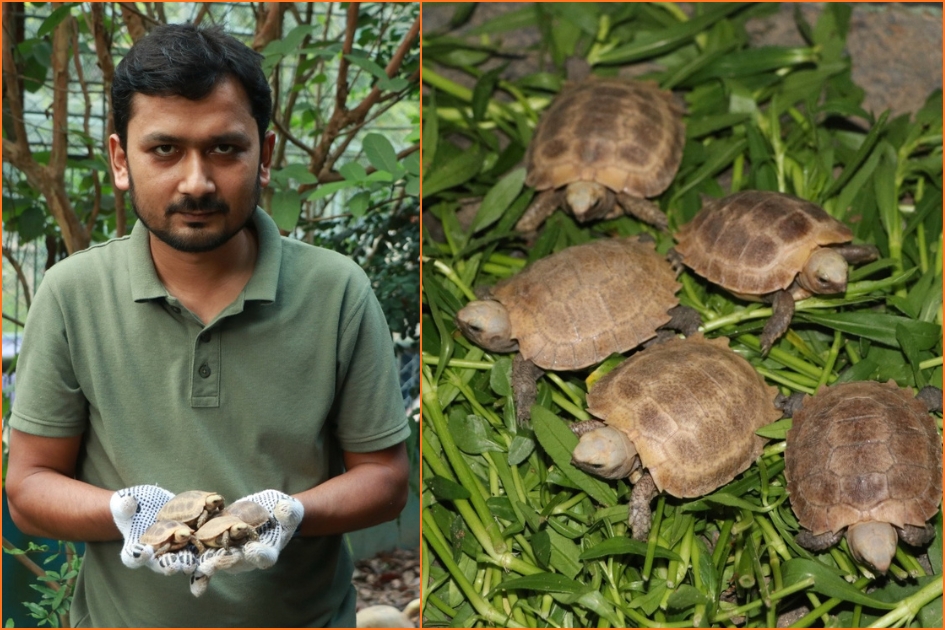



Five critically endangered yellow hill tortoises hatched at Chattogram Zoo, doubling its population to 16 and highlighting the success of captive breeding and conservation efforts in Bangladesh.
Chattogram Zoo in southeastern Bangladesh has recorded another conservation milestone with the successful hatching of five critically endangered yellow hill tortoises, bringing the total number of the species at the facility to 16.
Zoo authorities said the hatchlings emerged from their eggs on June 6, marking the latest success in a breeding program that has gained momentum since major improvements were made to the animals’ habitat and care system in 2022.
Officials and animal caretakers said the zoo’s efforts to create a larger enclosure, introduce environmental enrichment and strengthen husbandry practices have played a key role in reviving breeding among the species. The yellow hill tortoise had previously produced offspring at the zoo in 2023 and 2025.
With the addition of the five new hatchlings, the population of yellow hill tortoises at Chattogram Zoo has doubled from eight to 16 within four years, representing nearly a 100 percent increase. Conservationists say the achievement demonstrates the potential of science-based management and captive breeding initiatives to help protect endangered turtle and tortoise species in Bangladesh.
Those involved in the project described the development as one of the country’s most significant examples of conservation breeding for a critically endangered species. They believe the success will provide a strong foundation for future conservation efforts, monitoring programs and possible reintroduction initiatives.
Chattogram Zoo has been carrying out breeding and conservation programs for a range of endangered and threatened wildlife species. The latest achievement adds yellow hill tortoises to the growing list of species benefiting from these efforts, many of which are designed to support eventual release into natural habitats.
The yellow hill tortoise is regarded as a critically endangered species globally. Wildlife experts attribute its sharp population decline to habitat loss, illegal hunting and a range of environmental pressures. As a result, conservation breeding programs aimed at rebuilding population numbers are considered an important step toward safeguarding the species.
Speaking to The Business Standard, Chattogram Zoo Curator Dr. Shahadat Hossain Shuvo said the latest hatching was part of the zoo’s continuing success with the species.
“This is another achievement in our ongoing breeding efforts for the yellow hill tortoise. Hatchlings were also born from eggs on several occasions in 2023 and 2025. This time seven eggs were laid, and five successfully hatched. The remaining two eggs did not hatch,” he said.
Shuvo added that the adult tortoises had already been part of the zoo’s collection.
“There were initially eight tortoises in the collection. After expanding their habitat and improving environmental conditions, regular breeding began,” he said.
Another zoo curator, Shakhawat Hossain, said the number of yellow hill tortoises had doubled through breeding over the past four years.
“At present, 29 zoo employees collectively care for the animals. There is no separate specialized team dedicated to them,” he said.
Zoo authorities said the tortoises are regularly fed fresh fruits and leafy vegetables. Their enclosure is also maintained to closely resemble natural environmental conditions. According to officials, the yellow hill tortoise is categorized among species that have suffered an estimated 80 to 90 percent decline and is therefore considered critically endangered.
The recent success follows years of reproductive inactivity among the species at the zoo. Previously, the critically endangered yellow hill tortoises had shown no breeding activity for eight years. The group of eight tortoises, consisting of four males and four females, had not laid eggs since 2013 while being kept in a small 22-square-foot enclosure.
Zoo authorities said breeding was hindered by the lack of suitable hiding spaces and safe nesting areas.
In 2022, the tortoises were moved to a larger and more environmentally suitable habitat designed to provide secluded nesting opportunities. Officials said that after adapting to the new surroundings, the animals began showing renewed signs of reproductive activity.
Conservationists say the species remains under severe threat due to shrinking habitats, environmental stress and illegal hunting. They warn that population numbers have fallen to alarming levels, underscoring the importance of continued conservation efforts to ensure the survival of the yellow hill tortoise.




