

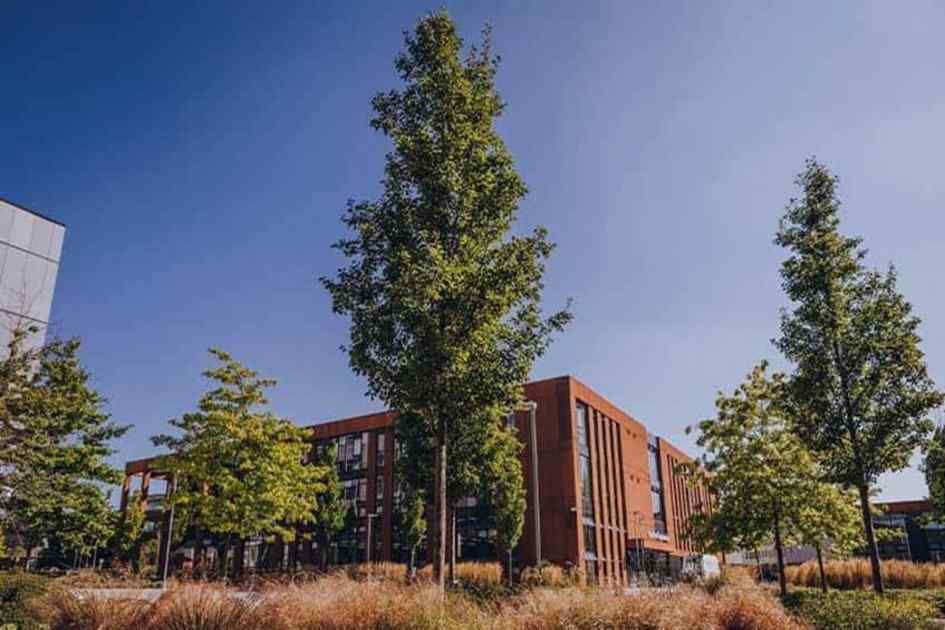



The updated plan widens Bristol’s emissions agenda beyond buildings, adding supply-chain targets while highlighting estate upgrades, renewable electricity and lower-carbon campus development.
The University of Bristol has launched a refreshed Climate Action Plan, revising its net zero targets and setting new goals for direct, indirect and supply chain emissions, the university said in a press release issued on 30 July 2026.
The plan outlines a more comprehensive and integrated approach to sustainability and climate action, with a focus on collaboration across the institution to support climate goals now and in the future.
Under the plan, the university aims to reduce emissions from buildings and energy use by 30% by 2030 and reach net zero by 2042 for Scope 1 emissions. For Scope 2 emissions, it aims to cut emissions by 70% by 2030 and reach net zero by 2042.
The university is also introducing a new target for emissions linked to its value and supply chain, known as Scope 3, aiming to reduce them by 42% by 2030 and reach net zero by 2050.
In 2015, the University of Bristol set a goal of achieving net zero emissions from its buildings by 2030. Although emissions from buildings are now less than half the level recorded in the 2005/06 baseline year, the university said climate science showed this was not enough.
Scientific expertise from across the university played an important role in shaping its ambitions for the next five years and beyond, including the adjustment of net zero goals across all scopes covering direct, indirect and supply chain emissions.
The university said it had been recognised for its sustainability commitments, most recently in the Times Higher Education Impact Ratings 2026, where it ranked 56th overall and joint seventh in the UK for its work in making the world a healthier, greener and better place.
Since 2015, the university’s reported carbon emissions have fallen by just over half against the 2005/06 baseline. It said the reduction was mainly due to the UK electricity grid becoming much lower carbon, alongside a decision to buy more renewable electricity through a long-term power purchase agreement.
Emissions have also been reduced by electrifying buildings, including Beacon House in Clifton and the new Blagdon Building at its Langford Campus, which replace older gas-heated spaces.
The university said actions including installing solar panels, improving heating controls and switching off gas-fuelled energy systems meant it now used 75% less oil and 26% less gas than 20 years ago.
Sustainability has been a guiding principle in the construction of the new Temple Quarter Enterprise Campus, which opens in September. The main Sloane Robinson Building has 750 solar panels on its roof and is connected to a district heating network to reduce energy demand and carbon emissions. Lower-carbon construction methods, including the use of eco-concrete, have also been adopted.
Professor Evelyn Welch, Vice-Chancellor and President of the University of Bristol, said: “The recent heatwaves and associated devastating fires in Europe are a reminder that climate change is here and that we need to act now if we are to make a difference. The University of Bristol has a long-standing tradition of supporting sustainability research, education and engagement but there is much more to do.
“Our University Climate Action Plan sets a clear direction for the whole institution. We know that becoming more sustainable is not straight-forward for a sizeable and globally engaged University like ours. We carry out world-leading research that requires complex infrastructure. We care for a significant estate of historic buildings that was not designed with today’s environmental challenges in mind. Achieving our goals won’t be easy but it is essential for our long-term success.
“The Plan reflects our belief that collaboration is the foundation of progress: It has been shaped by the expertise, research, and experiences of staff and students from across the University, all of whom I would like to thank for their input. It will be delivered by working in partnership with our city, our region and our international partners because we all have a role to play in achieving our collective ambition of a more sustainable, resilient future for ourselves and our planet.”




