


With more than 600 organisations backing a joint appeal, campaigners are pressing governments to turn climate commitments into policies that protect workers and vulnerable communities.
Women, youth and disability groups join hundreds of organisations demanding an inclusive transition mechanism, climate finance and concrete action to move away from fossil fuels.
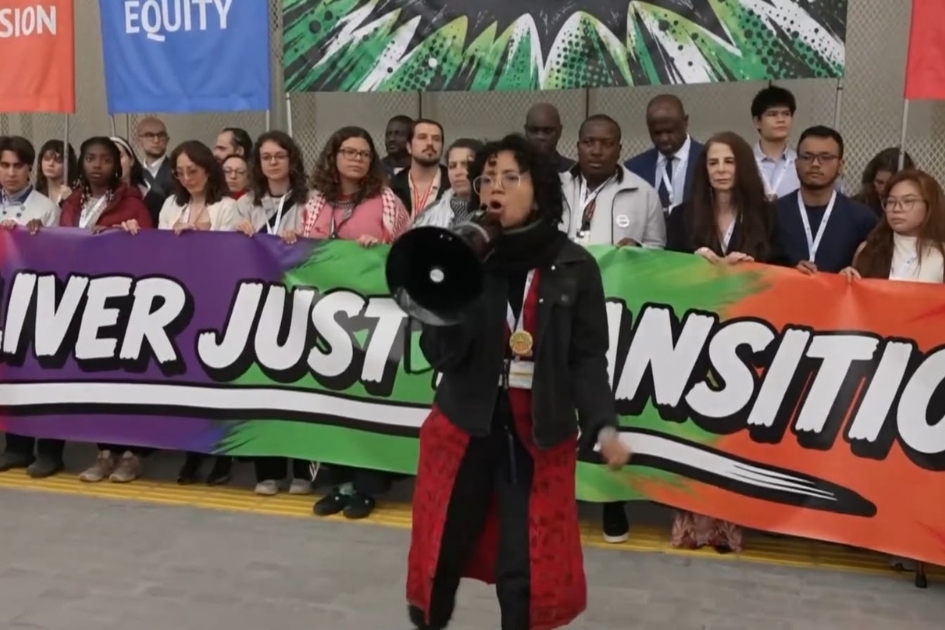
Civil society groups rallied at the COP31 venue, demanding a just transition mechanism, stronger climate finance and concrete commitments to move away from fossil fuels. Through chants, songs and calls for justice, representatives of women, youth and disability groups urged governments to put affected communities at the centre of climate decisions.
Speakers representing the women and gender constituency, the youth constituency and the disability caucus led participants in call-and-response slogans, including “We need a just transition” and “The people united will never be defeated.”
A seat at the table and real power
Opening for the women and gender constituency, a speaker said women, Indigenous communities and people affected by wars must be included in climate negotiations. Civil society, she noted, had helped shape the frameworks now being negotiated and was demanding not only “a seat at the table” but also genuine decision-making power.
She criticised governments for continuing to direct resources towards fossil fuels while claiming there is insufficient money for climate justice and support for workers. She vowed to continue the fight until a proper mechanism is secured, before leading the crowd in the chant: “No just transition without climate justice!”
Debt, damages and public money
Charles, speaking for the youth constituency, said young people, workers and developing countries were being left to carry mounting debts and climate-related damages without adequate grant-based support from wealthy nations.
He called for public money to be directed towards protecting communities rather than increasing corporate profits, stressing the importance of public investment in a fair and inclusive transition.
A transition away from fossil fuels
Beyond establishing a just transition mechanism, civil society groups are calling for COP31 to deliver concrete action towards transitioning away from fossil fuels.
They argue that a just transition must address the root causes of the climate crisis while protecting workers, communities and countries that depend on fossil fuel-based economies.
Several countries are already taking steps towards this transition, including phasing out coal and ending fossil fuel subsidies, with further commitments expected. These efforts underline the need to translate international agreements into concrete national policies.
“A transition away from fossil fuels must be backed by climate finance and social protection. Developing countries and vulnerable communities should not be left to pay the price of a crisis they did little to create,” said Sohanur Rahman, executive coordinator of YouthNet Global.
A just transition mechanism should go beyond institutional arrangements. It must help countries develop practical pathways towards clean energy systems, protect workers’ livelihoods, expand decent employment opportunities and ensure that women, Indigenous Peoples, persons with disabilities and frontline communities have meaningful decision-making power.
An inclusive transition
Juliet of the disability caucus said that “a just transition is an inclusive transition”, adding that people with disabilities must not become a footnote in the climate story.
The crowd responded with the slogan: “No just transition without disability rights!”
Speaker Gina argued that rights and affected populations must remain at the centre of climate negotiations, rather than decisions being made “behind computers” by people who do not experience the consequences of climate change.
She pointed to existing international guidelines and principles protecting Indigenous rights, food sovereignty and care workers. She also led participants in chants calling for equity, justice and the means of implementation.
A dream of dignity
Closing the rally, Anna spoke on behalf of communities and organisations, noting that many frontline advocates could not attend because international climate conferences such as COP remain privileged and restricted spaces.
She described the just transition as a dream centred on dignity, workers’ futures and equity, rather than simply numbers and policy commitments.
Anna said more than 600 organisations had signed a joint letter calling for stronger climate action and the establishment of a just transition mechanism at COP31 in Antalya.
“The fight has only just begun,” she told participants before the gathering concluded with a song.
What comes next
The rally comes as negotiators work through a packed COP31 agenda, with the proposed just transition mechanism among the issues closely watched by civil society.
The challenge for governments is not simply to establish another institutional mechanism but to ensure that it delivers meaningful action. The COP31 outcome needs to prioritise a transition away from fossil fuels while providing adequate financial and technical support to countries, workers and communities facing the economic and social consequences of that transition.
The commitment to transition away from fossil fuels, agreed at COP28, provides an important foundation. COP31 now has an opportunity to advance its implementation through concrete national pathways, including phasing out coal, ending fossil fuel subsidies and expanding access to clean energy.
For developing countries, this must be accompanied by adequate grant-based finance, technology transfer and international cooperation. Workers need decent employment and social protection, while women, Indigenous Peoples, persons with disabilities and frontline communities must have meaningful roles in shaping decisions that affect their futures.
With negotiations continuing in Antalya, civil society groups are urging governments to move beyond declarations and deliver a just transition mechanism that supports a concrete shift away from fossil fuels. For campaigners, the test of COP31 will be whether its decisions protect workers, respect human rights and ensure that developing countries and frontline communities receive the finance and support needed to make the transition fair and inclusive.