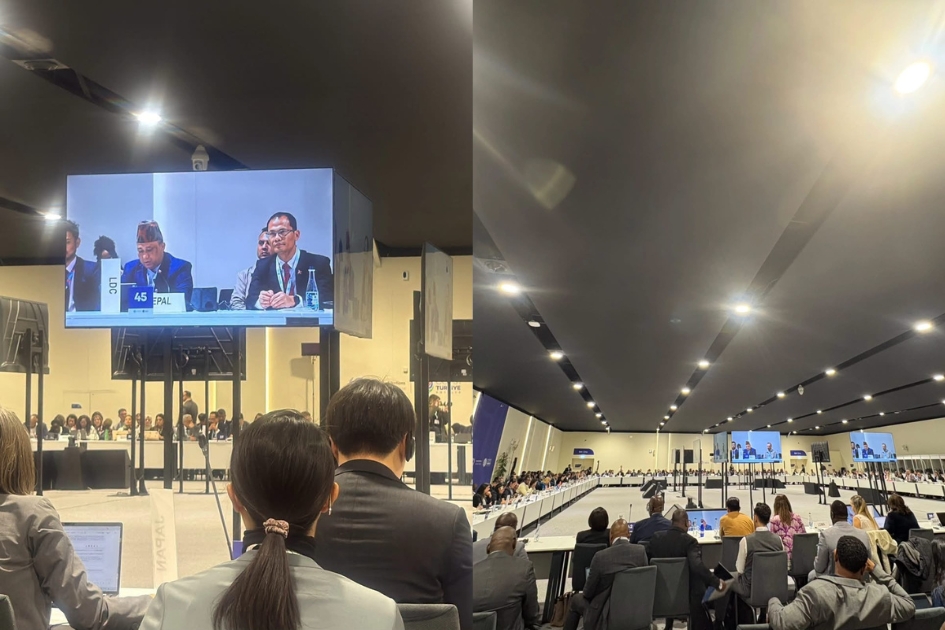



The LDC group warns that climate commitments must translate into accessible funding, stronger local institutions and practical support for countries facing escalating climate risks.
Nepal’s foreign minister tells COP31 that vulnerable nations need simpler access to funding and a stronger voice for frontline communities.
Nepal’s Foreign Minister Shisir Khanal has urged governments to turn adaptation finance commitments into clear, credible delivery plans, warning that the world’s least developed countries can no longer wait for overdue climate action.
Speaking on behalf of the Least Developed Countries (LDCs) group at the High-Level Dialogue on Adaptation at COP31, Khanal called for simpler access to funding and international support tailored to vulnerable nations’ evolving needs.
“For LDCs, adaptation is not just a technical or an environmental response. It is also a matter of climate justice,” he said.
He stressed that countries contributing least to climate change were among those suffering most from its increasing and worsening impacts.
Highlighting the severe human and economic toll of recent climate-induced disasters in Nepal, Khanal underscored the urgency of matching international commitments with action.
The minister said LDCs were advancing decentralised, people-centred adaptation through their National Adaptation Plans, which set out national priorities for addressing climate risks. Those domestic efforts needed corresponding global finance and support, particularly for countries furthest behind.
He called for commitments to scale up adaptation finance to be backed by credible delivery pathways and simplified access arrangements, enabling vulnerable nations to secure the resources needed to implement their plans.
Khanal also urged faster adaptation action at national and global levels, aligned with the UAE Framework for Global Climate Resilience and the Belém Adaptation Indicators, which guide adaptation efforts and help track progress.
The LDC group’s demands extended to how adaptation decisions are made. Khanal called for stronger local institutions and locally led approaches that enable frontline communities to shape their own adaptation priorities and investments.