

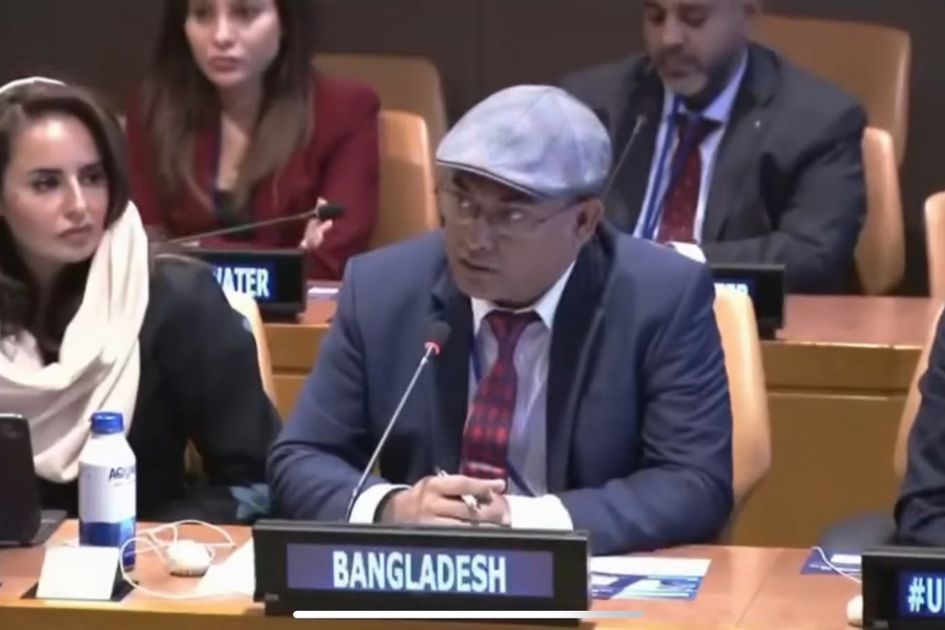



At a UN high-level water meeting, Bangladesh highlighted the need for cooperation, science-based decisions and support for climate-vulnerable nations facing water challenges.
Bangladesh has called for sustained dialogue, transparent data sharing and fair use of shared rivers as world leaders at the United Nations General Assembly warned that growing water scarcity is placing mounting pressure on communities and economies worldwide.
Dr Saimum Parvez, Special Assistant to the Prime Minister of Bangladesh on Environment, Forest and Climate Change Affairs, made the call on Thursday at “United for Water: A Call for Collective Action,” a high-level meeting co-chaired by Saudi Arabia and Senegal in cooperation with the Global Water Organization.
“Water connects us. It sustains people, economies and ecosystems. It crosses borders and underpins shared prosperity,” Parvez told the gathering.
He warned that climate change, rising demand and growing pressure on freshwater resources were making it increasingly difficult for countries to secure their water needs through national action alone, urging governments to translate their commitments into cooperation that delivers measurable results.
Call for trust and data sharing
Parvez called for equitable and reasonable use of shared rivers and underground water reserves, regular dialogue, timely data exchange and decisions grounded in sound science. “Above all, they require trust,” he said.
He also urged greater access to finance, appropriate technology and stronger support for building resilient water infrastructure in developing and climate-vulnerable countries.
Describing Bangladesh as a densely populated delta situated downstream of major shared rivers, Parvez outlined the country’s persistent challenges: floods, water scarcity, river erosion, waterlogging, pressure on groundwater and coastal salinity intrusion. He pointed to ongoing efforts to restore waterways, strengthen flood management, control salinity and expand groundwater monitoring.
“Bangladesh calls for sustained dialogue among riparian countries, equitable and reasonable use of shared waters, transparent data sharing and stronger international partnerships,” he said.
Parvez also cited Bangladesh’s accession to the 1992 UN Water Convention in June 2025 as a mark of its commitment to cooperation, noting that Bangladesh became the first South Asian country to join the treaty.
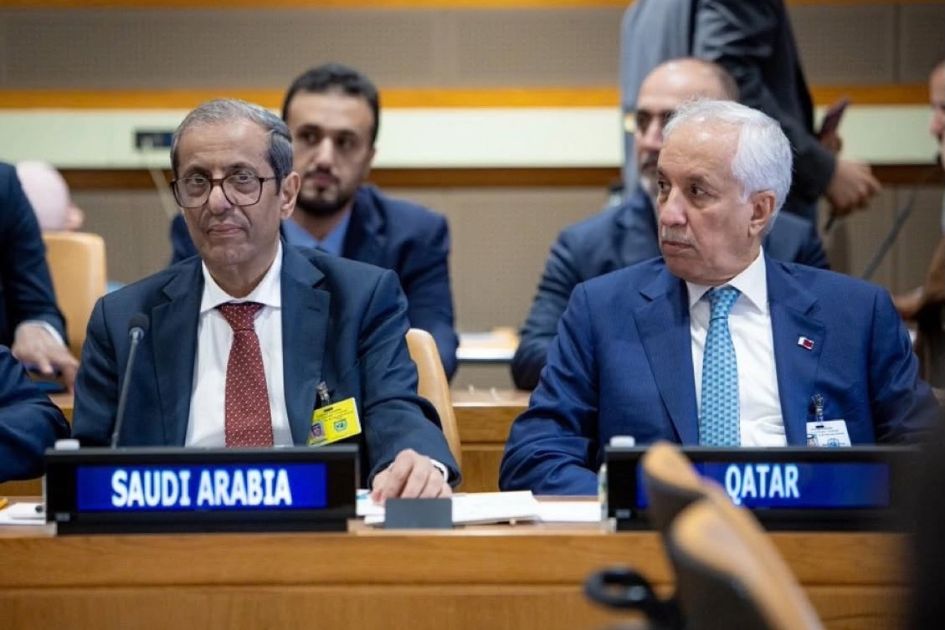
Saudi Arabia, Senegal push for wider action
Saudi Deputy Minister for International Multilateral Affairs Abdulrahman Al-Rassi said reliable water supplies were central to human well-being, economic development and international stability, adding that mere availability of water would achieve little without access, effective governance, technology and cooperation.
He pointed to Saudi Arabia’s investment in desalination and its National Water Strategy 2030, saying cooperation on water could open space for wider dialogue, while resilient water systems and secure maritime routes were linked to regional and economic stability.
Amina Tature, Senegal’s high representative of the president, urged governments to give water greater political priority given its links to climate change, development and social stability. She noted that water shortages in Africa fall disproportionately on women and girls, who often bear the burden of collecting water for their households.
Tature cited cooperation in the Senegal and Gambia river basins as examples of successful shared-resource management and welcomed Saudi Arabia’s plans to host the 11th World Water Forum in March 2027.
UN Secretary-General’s Special Envoy on Water Retno Marsudi warned that progress towards the global goal of ensuring safe water and sanitation for all remained too slow, noting that one in four people still lack safe drinking water while 3.5 billion lack access to safely managed sanitation.
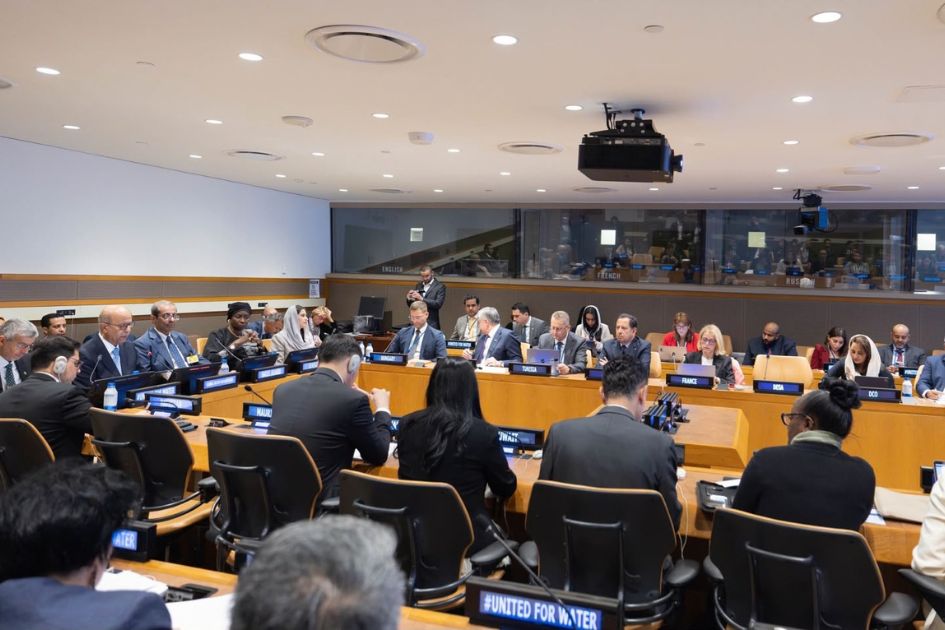
Speakers at the event looked ahead to the UN Water Conference, co-hosted by the United Arab Emirates and Senegal, to be held from December 8 to 10 at the Abu Dhabi National Exhibition Center, a separate gathering from Thursday’s New York meeting.
“Bangladesh stands ready to share its experience and work with partners to mobilize knowledge, finance and technology,” Parvez said. “Let us turn shared water challenges into shared progress.”




