




Britain’s new climate funding package highlights growing international concern over links between environmental disruption, resource pressures and global security planning.
Britain will provide £331 million ($438.24 million) to help address instability driven by climate change and biodiversity loss, warning that environmental shocks are increasingly becoming a national security threat.
The UK government said on Wednesday the funding would be provided to the Global Environment Facility to support food and water security and protect ecosystems, including forests in the Amazon and Congo Basin.
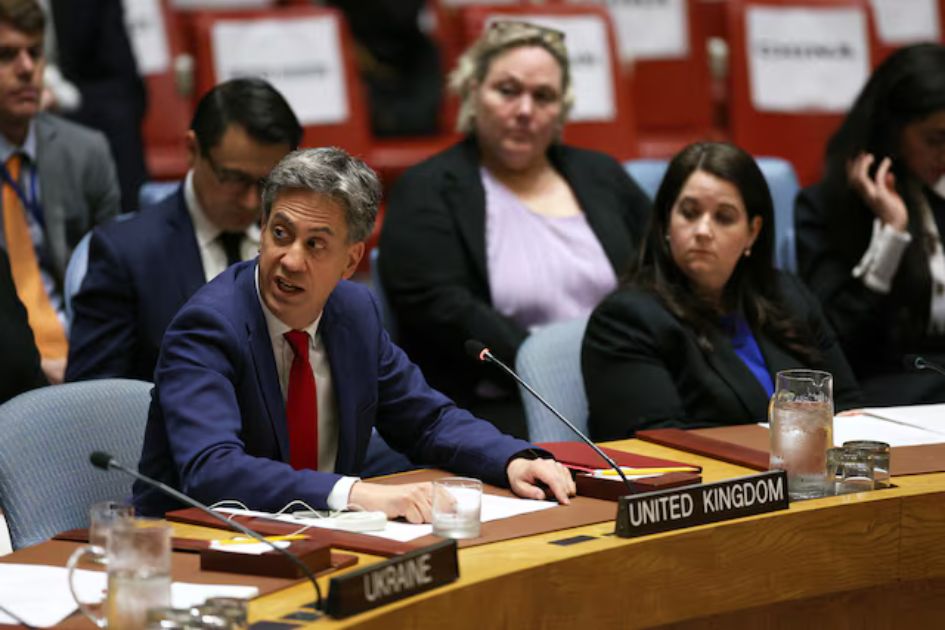
The announcement came after UK Foreign Secretary Ed Miliband urged world leaders at New York Climate Week, held on the sidelines of the UN General Assembly, to consider climate change when assessing national security risks.
Miliband said climate change and ecological collapse should be integrated into defence strategies, intelligence networks and strategic military planning.
“Countries need to pool information because a shock beginning in one country can rapidly travel through supply chains, financial markets and migration patterns to other countries,” Miliband said.
The focus on climate security comes as the Iran war has pushed oil and gas prices higher, leading some countries to increase coal power use, a major source of carbon emissions, while others have expanded the adoption of solar power and electric vehicles.
Katie White, the UK’s minister for climate transition, told Reuters on the sidelines of the UN General Assembly that the UK is “leading the way” in shifting countries’ focus towards climate security ahead of the upcoming COP31 climate summit in Antalya, Turkey, which begins on November 9.
“The military has been at the forefront of a lot of this [climate risk] planning for a long time because they’ve always seen that climate change is a threat multiplier,” she said. “The politics is a bit behind the security community on this.”
The exchange rate used was $1 = £0.7553.




