


The partnerships aim to help island institutions monitor ecosystems, strengthen marine research and turn environmental data into policy support amid rising climate and sustainability pressures.
UNESCO has signed cooperation agreements with two Chinese research institutions to expand scientific support for Small Island Developing States, including access to satellite data, artificial intelligence, marine science expertise and capacity development.
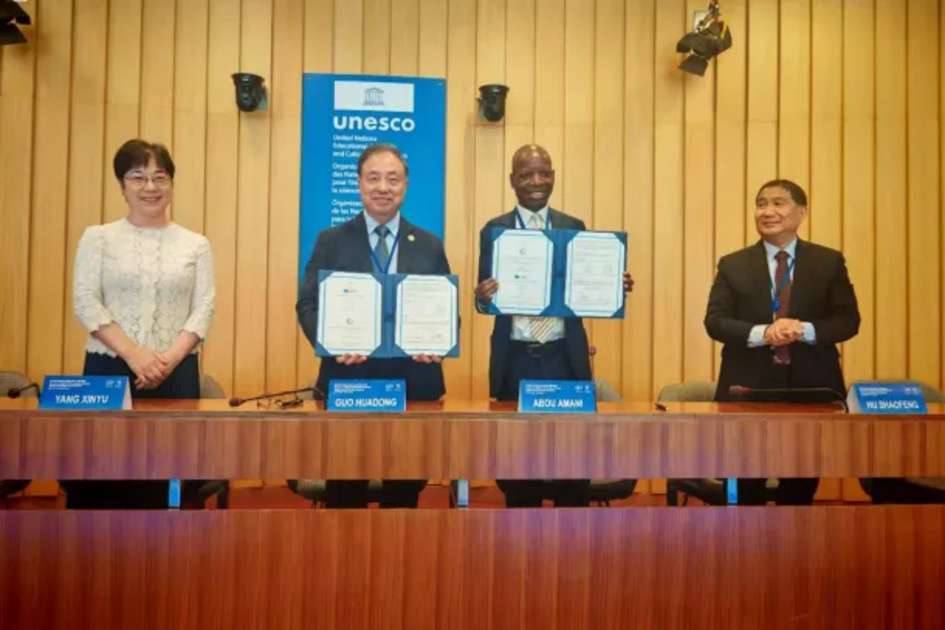
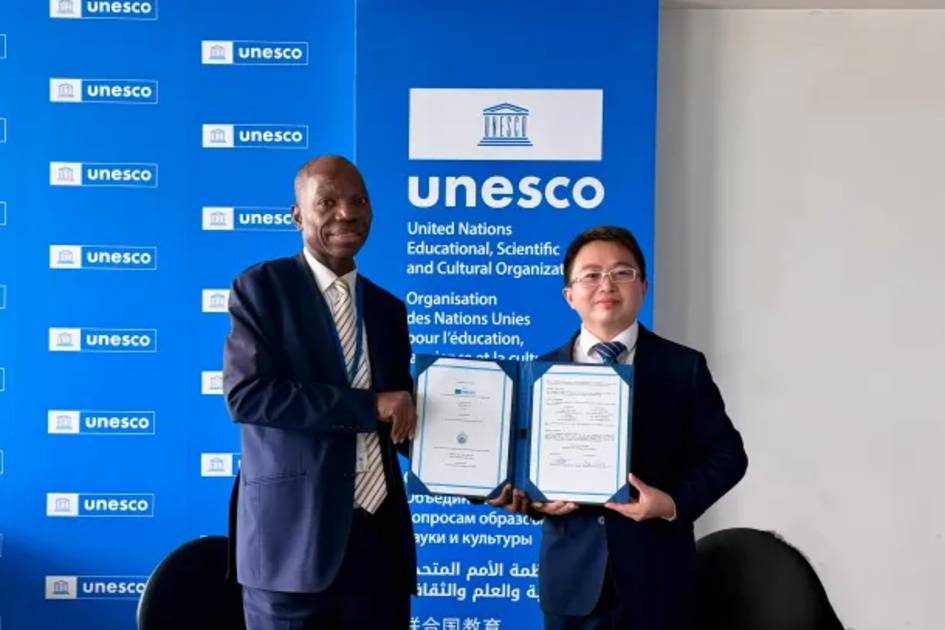
The agreements were signed on 17 July 2026 with the International Research Center of Big Data for Sustainable Development Goal, known as CBAS, and the Second Institute of Oceanography, or SIO, UNESCO said. The announcement was issued on 20 July and last updated on 21 July.
UNESCO said the partnerships are intended to strengthen scientific cooperation for SIDS, which face some of the world’s most acute and disproportionate climate and environmental challenges while often having limited access to research infrastructure, data systems and technical capacity.
UNESCO
CBAS will support access to SGDSAT-1 satellite data and big data-driven monitoring and reporting of the Sustainable Development Goals, while SIO will contribute expertise in marine sciences and technology, ocean health and capacity development.
The agreements are aligned with the International Decade of Sciences for Sustainable Development, running from 2024 to 2033 and coordinated by UNESCO, as well as the 2023-2029 UNESCO Operational Strategy for SIDS.
UNESCO said the ecosystems of small island states, including marine, freshwater and terrestrial environments, offer important opportunities for research, long-term monitoring and locally grounded innovation. But it said realising that potential requires reliable scientific information and stronger links between research institutions, public authorities, universities and local communities.
UNESCO
The need is particularly relevant in São Tomé and Príncipe, which in 2025 became the first state to have its entire territory designated as a UNESCO biosphere reserve, UNESCO said. Monitoring ecosystems across the country and translating scientific evidence into informed decisions will require sustained technical capacity and access to appropriate tools, it said.
In 2025, CBAS completed a report titled Monitoring Environmental Change and Supporting Sustainable Development in Príncipe Island, assessing coastline change, sea level rise and spatial mapping to better support environmental protection and sustainable development.
“As an island nation, reliable scientific information is crucial to understand the evolution of our marine and terrestrial ecosystems, track the impact of climate change, and support decisions related to natural resource management,” said Professor Hugulay Albuquerque Maia of the University of São Tomé and Príncipe.
UNESCO said the agreements build on its broader efforts to make digital technologies more accessible to SIDS, including through its Operational Strategy for SIDS and Accelerator Programme 5 on harnessing digital technologies for SIDS.
The agreements were signed for UNESCO by Abou Amani, Assistant Director-General a.i. for Sciences. CBAS was represented by Director-General Huadong Guo, while SIO, which operates under China’s Ministry of Natural Resources, was represented by Mr Yuntao Liu on behalf of SIO.
UNESCO said the cooperation will support initiatives including IslandWatch and the Centres of Excellence in Marine Sciences and Biodiversity for Lusophone SIDS, with a particular focus on UNESCO-designated sites, including biosphere reserves and World Heritage sites.
IslandWatch promotes community-based monitoring of island ecosystems, while the Centres of Excellence strengthen national and regional research and training capacities in marine sciences and biodiversity.

Through training, knowledge exchange and access to scientific tools, the partnerships are expected to help SIDS institutions generate, manage and use environmental data for research, policy and local action.
“As part of the Science Decade, SIO will contribute marine science expertise, interdisciplinary collaboration and capacity development to help translate scientific knowledge into practical solutions for SIDS institutions and communities addressing the impacts of climate change and other global challenges,” said Mr Yuntao Wang, Director of the International Collaboration Center of SIO.




