

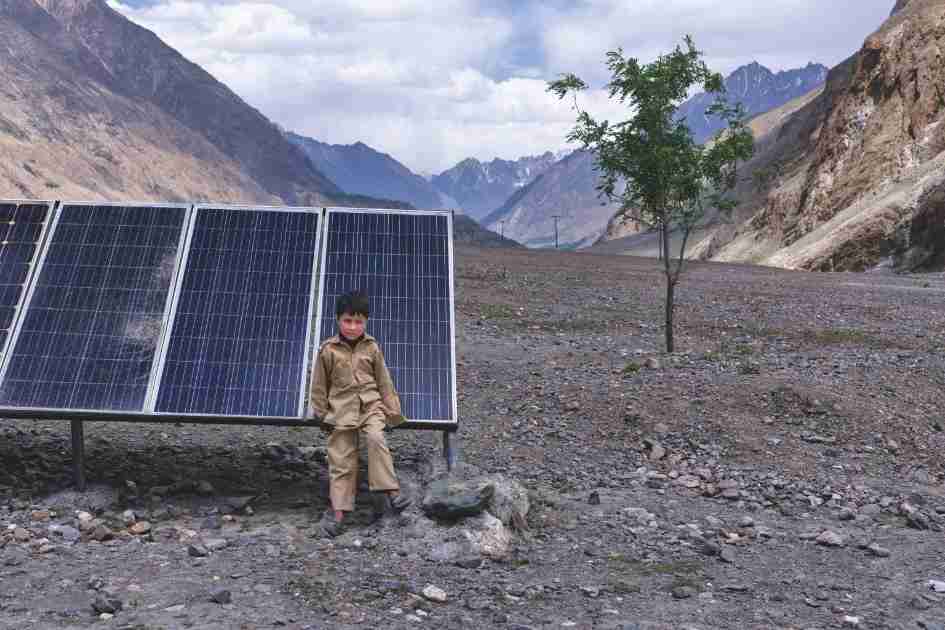



Pakistan’s uncounted rooftop solar surge is transforming energy demand, slashing fuel imports and exposing gaps in official data, as a people-driven transition reshapes planning and grid realities across the country.
Pakistan’s rapid shift to solar energy is being significantly underestimated as millions of rooftop systems remain excluded from official data, masking a major transformation in the country’s energy system.
A new report by Renewables First reveals that this “invisible” solar expansion is already reshaping how energy demand is met, largely outside formal policy and planning frameworks.
The policy paper, “Electrons_In_Hydrocarbons_Out_,” shows that Pakistan had imported more than 51.5 GW of solar modules by 2025. According to co-author Nabiya Imran, this capacity could help the country avoid up to $180 billion in fossil fuel imports over time while generating around 1,730 terawatt-hours of electricity.
Despite this massive expansion, official figures remain far lower. Government data records only 6.8 GW of net-metered solar and about 780 MW of utility-scale capacity. Independent estimates however suggest total solar capacity may already have reached 32 GW by mid-2025 with more than 24 GW coming from distributed systems installed across homes businesses and off-grid locations.
This gap highlights a growing disconnect between official energy planning and the reality on the ground where consumers not policymakers are driving the transition.
“There is no single verified source capturing the full extent of distributed solar,” Imran said, warning that the lack of comprehensive data is complicating long-term energy planning.
The underreporting also helps explain why official energy consumption appears stagnant despite population growth urbanisation and economic expansion. When distributed solar is factored in, energy use aligns more closely with economic trends.
Pakistan’s energy system is already undergoing what analysts describe as a quiet reorientation with electrification and decentralised generation becoming defining features.
The shift accelerated after the global energy crisis triggered by Russia’s invasion of Ukraine which drove up fuel prices and led to widespread power shortages. Faced with rising electricity bills and unreliable supply households increasingly turned to rooftop solar as a long-term solution.
“People realised that a one-time investment in solar was far more cost-effective than relying on an unstable grid,” Imran said.
The results have been significant. Solar power now supplies a large share of daytime electricity reducing reliance on imported liquefied natural gas which still accounts for about one-fifth of the power mix but is increasingly used for evening peak demand.
The expansion has also provided a buffer against global energy shocks. As geopolitical tensions disrupt oil and gas flows through the Strait of Hormuz Pakistan’s growing solar base has helped cushion the impact on its power sector. Analysts estimate that the solar surge has already helped avoid around $12 billion in fossil fuel imports by early 2026.
Regional energy analysts say Pakistan’s experience could signal a broader shift across Asia toward decentralised energy systems. Similar trends are beginning to emerge in countries like Bangladesh where rising fuel costs and unreliable grids are also pushing households toward rooftop solar.
However challenges remain. Pakistan continues to rely heavily on imported fuels with more than 90 percent of its oil and liquefied natural gas supplies passing through vulnerable global trade routes. In 2024 alone the country spent more than 10 percent of its GDP on fossil fuel imports exposing the economy to price volatility and external shocks.
Experts warn that without timely reforms the transition could become uneven and place additional strain on utilities and infrastructure.
The central challenge now is not whether electrification will happen but whether institutions regulation and grid systems can adapt quickly enough to support it. Investments in grid modernisation battery storage and electric vehicles are seen as critical to sustaining progress.
Pakistan’s experience is increasingly being viewed as a model for other Asian economies grappling with energy insecurity. With renewable energy costs continuing to fall the shift is no longer just about climate it is about economic survival and energy security.
With a people-driven solar revolution already underway Pakistan now faces a critical choice adapt its policies to support the transition or risk being overtaken by it.
Sohanur Rahman Executive Coordinator of YouthNet Global said, “Pakistan’s experience clearly shows that when energy systems fail to meet people’s needs communities will innovate their own solutions. This bottom-up solar transition is not just about clean Energy it is about energy justice resilience and economic survival. Countries like Bangladesh must take note and proactively support decentralised renewable systems rather than lag behind reality.”




