

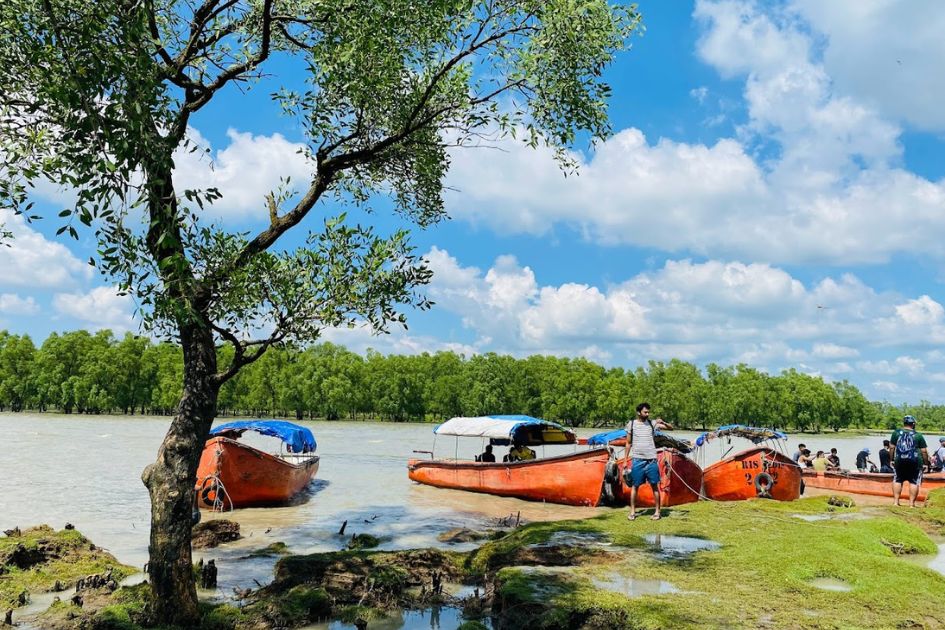



Forest officials warn unregulated tourism, pollution and illegal land occupation are rapidly destroying mangroves, wildlife habitats and fragile biodiversity across the ecologically sensitive Guliakhali coastal forest in Sitakunda.
Unregulated tourism, land grabbing and widespread tree felling are putting the fragile coastal ecosystem and wildlife of Guliakhali Sea Beach at serious risk in southeastern Bangladesh, according to forest officials and environmental experts.
Located along the Bay of Bengal in Sitakunda upazila of Chattogram district, the coastal area stretches across nearly 5,000 acres in the Banshbaria and Bhaterkhil regions. Once known for its tranquil mangrove forests and wetlands, the area has long served as a rich habitat for diverse plant and animal species.
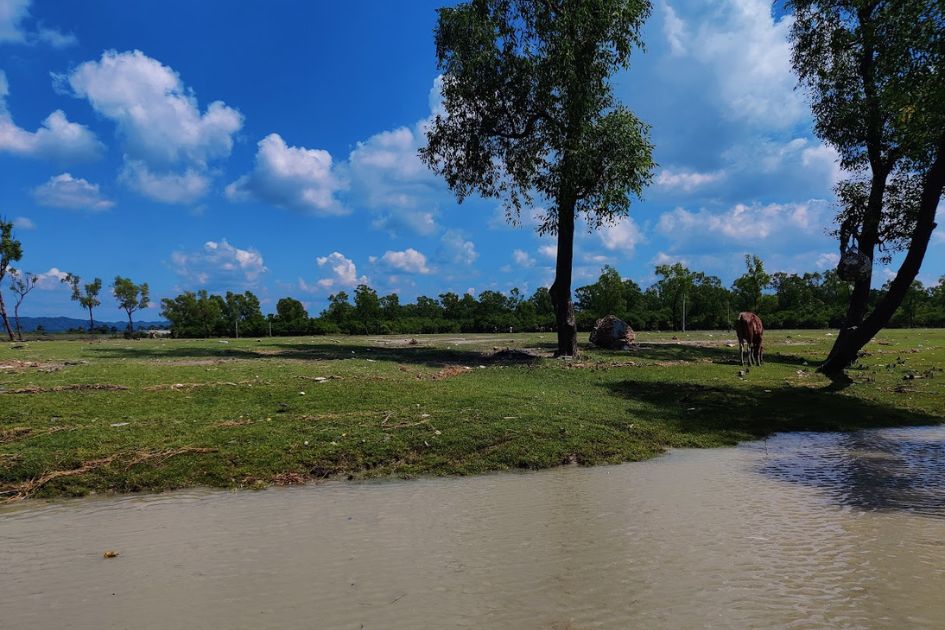
Dense clusters of keora, bain, geowa, goran, pankata and nuniya trees form a natural green barrier along the coast, protecting the ecosystem from erosion and environmental degradation.
Concerned by increasing tourist activity and environmental pressure, the Chattogram regional office of the forest department launched an initiative in 2018 to protect the area under a project titled “Guliakhali Coastal Bay-View Eco Park.” The plan aimed to preserve the sensitive coastal forest while promoting sustainable tourism management.
However, on January 10, 2022, the Ministry of Civil Aviation and Tourism declared 259.10 acres of the area a “tourism protected zone.” Forest officials say the move weakened the forest department’s planned management structure and created administrative overlap that contributed to uncontrolled tourism, expansion of commercial activities, illegal land occupation and indiscriminate tree cutting.
The coastal forest was once considered a safe refuge for spotted deer, birds and reptiles. According to forest department records, 10 spotted deer were released into the forest in 1994. Based on monitoring by forest officials and accounts from local residents, the deer population had increased to around 500 by 2018-19.
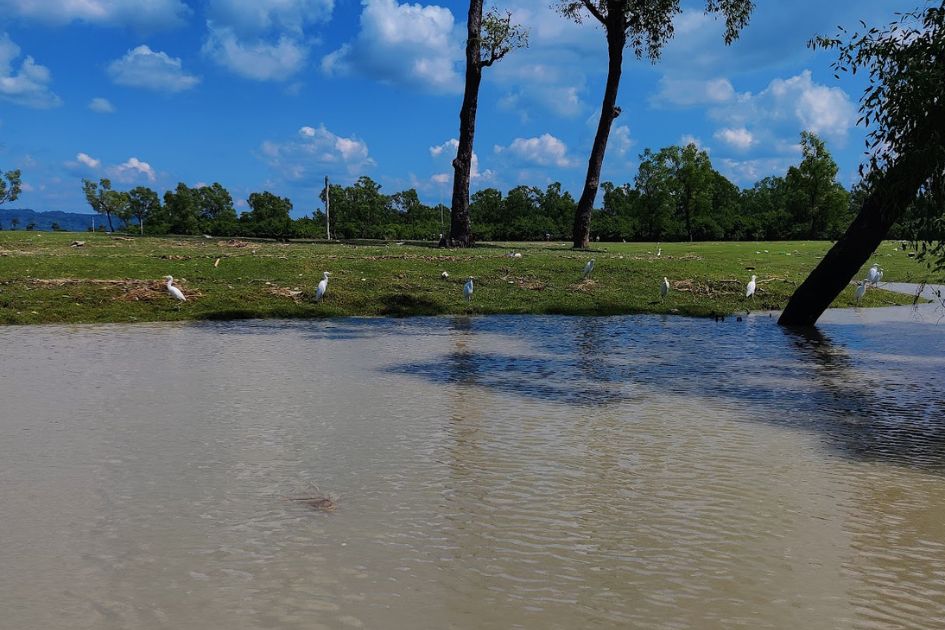
The area is also home to parrots, woodpeckers, several species of kingfishers, herons, cranes and doves. Other wildlife includes jackals, squirrels, wildcats, monkeys, mongooses, monitor lizards and various snake species.
Forest officials warn that growing human activity and environmental imbalance are now pushing the region’s biodiversity toward severe decline.
According to the forest department, converting the area into an ecopark would provide long-term environmental protection by preserving biodiversity, strengthening climate resilience, protecting food chains and maintaining ecological balance.
Officials say the initiative could also help safeguard the forest from threats linked to population growth, habitat destruction and shrinking forest land. Planned tourism and science-based conservation projects could improve both environmental protection and visitor management.
The canals and wetlands within the coastal forest serve as breeding grounds for endangered turtles and red crabs, while the keora forests provide natural habitats for honeybees.
To prepare the proposal, the forest department formed a five-member committee led by the deputy chief conservator of forests from the forest management wing. After reviewing proposals from different regions, the committee recommended formally declaring the area the “Guliakhali Coastal Bay-View Eco Park.”
Forest department data show that the coastal forest covers 4,616.77 acres in total. In Guliakhali mouza, 545.12 acres are transferred land and 2,225.79 acres are reserved forest land. In Bhaterkhil mouza, 1,115.86 acres are transferred land while 730 acres are reserved forest land.
Since the area was declared a tourism protected zone, tourist crowds have increased sharply and permanent and temporary businesses have expanded throughout the beach area. Allegations have also emerged of tree cutting in both reserved and transferred forest land.
Plastic waste, polythene and garbage left behind by visitors are heavily polluting the coastal environment, officials said.
In a recent incident, fires were allegedly set at night in an attempt to illegally occupy government forest land, causing extensive damage to mangrove plantations and wildlife habitats.
The forest department has sent several letters to the administration seeking stronger action to address the situation.
“Although the area falls under the tourism ministry, the forest department still regularly carries out tree plantation and maintenance work at Guliakhali beach,” said Mohammad Rony Ali, range officer of the Sitakunda coastal forest division.
“But because the area has been declared a tourism zone, the forest department no longer has effective control there. As a result, we cannot take meaningful action to stop illegal occupation, tree cutting or biodiversity destruction,” he said.
Ali added that declaring the area either an ecopark or a specialised coastal tourism zone was urgently necessary to protect the important coastal forest.
Environmental observers and forest officials also warned that the broader Mirsharai region has already suffered environmental damage due to the construction of economic zones across 33,000 acres of reserved forest land.
They said more than a hundred shipbreaking yards and various industrial facilities stretching from Mirsharai to the Sitakunda coastline have already destroyed large portions of coastal forest.
Without immediate protection and regulated tourism management across the nearly 4,600-acre coastal forest, officials fear the remaining biodiversity and reserved forest could face irreversible destruction.
Farrokh Ahmed, additional secretary for planning at the Ministry of Civil Aviation and Tourism, said the government was preparing a nationwide strategy to expand domestic tourism.
“The government plans to promote tourism across the country by giving special importance to tourist destinations in every district,” he said.
“As part of that initiative, Guliakhali Sea Beach in Sitakunda will also be managed in a planned way. We hope the unwanted incidents currently occurring at Guliakhali and other tourist destinations will soon be eliminated,” he added.
This post is republished from The Daily Bonik Barta.




