

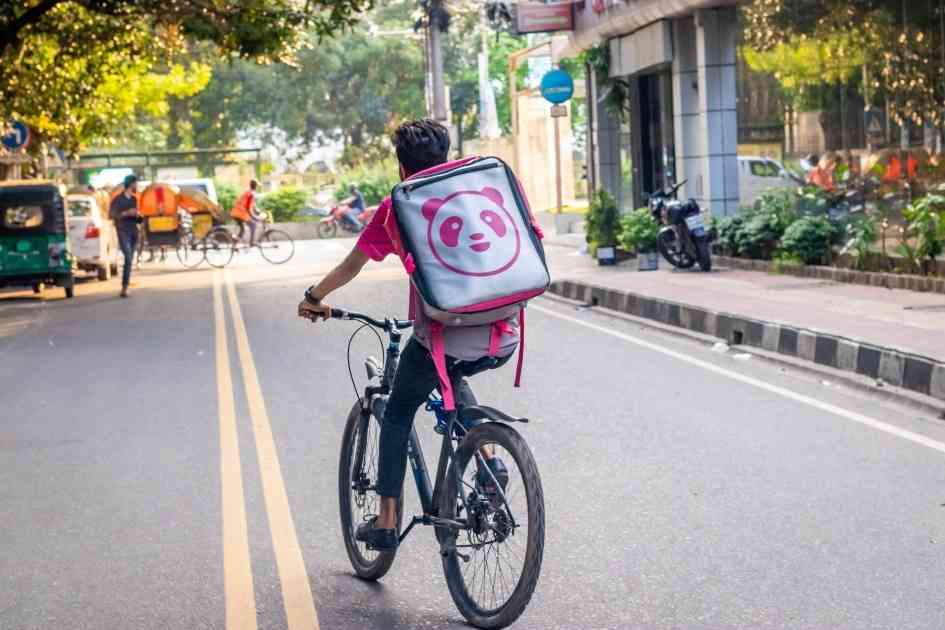

Outdoor workers in Bangladesh’s capital are confronting longer heat exposure, weaker earnings and limited protections as the country debates a just transition for its informal workforce.
From gig riders racing through heatwaves to rickshaw pullers collapsing under the sun, the people who keep the city moving are paying the highest price for a warming world.
Every morning before the city wakes fully, Abdul Karim begins his battle with the heat.
The 50-year-old rickshaw puller spends more than 10 hours navigating Dhaka’s congested streets, carrying passengers through a city where temperatures are rising faster than many workers can adapt.
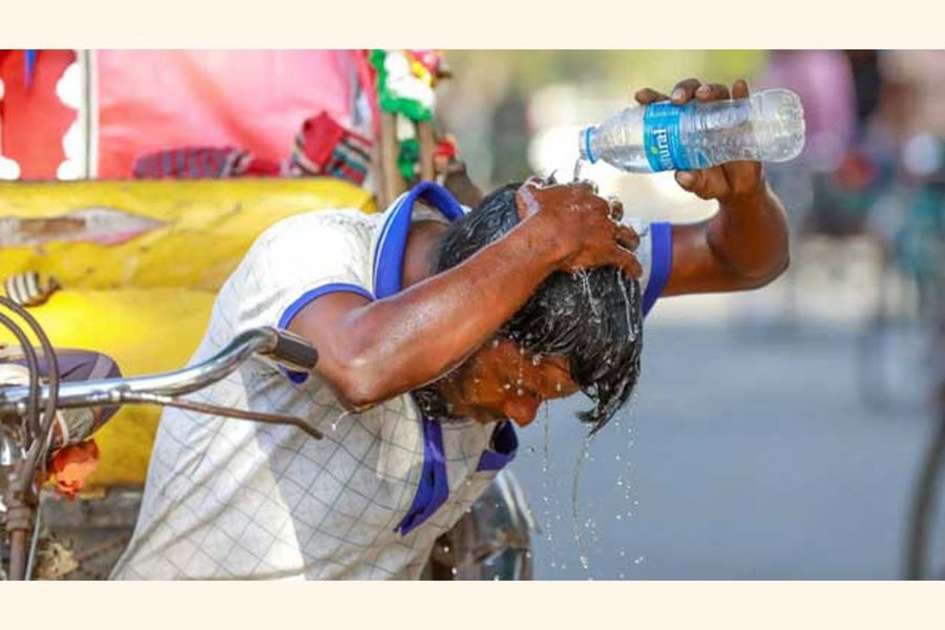
The sun burns through the metal frame of his rickshaw. The roads radiate heat. After hours of pulling, his body begins to weaken.
“Even after a short period of cycling, I feel a burning sensation throughout my body. As the days go by, the suffering keeps increasing. I have grown old, you see. I can no longer endure the heat,” he said.
But stopping is not an option.
“If I do not pull my rickshaw, I earn nothing,” he said.
For millions of informal workers across Bangladesh, climate change is no longer a future threat discussed at international conferences. It is a daily calculation: whether to protect their health or protect their income.
In one of the world’s most climate-vulnerable countries, rising temperatures are transforming workplaces into danger zones. Food delivery riders, ride-sharing drivers, street vendors, construction workers, rickshaw pullers and day labourers are increasingly exposed to extreme heat without adequate protection.
A day lost to heat can mean less food, unpaid rent, interrupted education for children and deeper financial insecurity.
The workers behind the app economy
Bangladesh’s growing digital economy has created new opportunities, but it has also created a new generation of vulnerable workers.
The country now has more than 1 million gig workers, including ride-sharing drivers, freelancers, delivery riders and other platform-based workers. Digital platforms promise speed, convenience and modernity, but behind every click are workers pushing themselves to the limit to survive in Bangladesh’s changing economy.
Sazzad, a Foodpanda delivery rider in Dhaka, said platform workers often feel pressured to complete deliveries regardless of personal emergencies, unsafe roads or extreme weather conditions such as heatwaves and waterlogging.
“We earn our living by working; we do not steal. There can always be important matters in my personal life. But their position is that the food must be delivered on that very day,” he said.
He compared the pressure experienced by gig workers with the exploitation of farmers forced into indigo cultivation during British colonial rule in Bengal.
“Just as indigo cultivation was harmful yet people were forced into it, Foodpanda is similar to that kind of indigo cultivation,” he said.
Foodpanda has not publicly responded to the allegation.
His experience reflects a wider challenge facing Bangladesh’s platform economy. Many gig workers operate without protections normally associated with formal employment, including paid leave, health insurance, accident coverage and guaranteed income.
The rapid growth of digital platforms has created livelihoods, but it has also raised difficult questions about labour rights, workplace safety and who carries responsibility when climate risks intensify.
Heat is becoming a workplace hazard
For workers whose jobs require them to remain outdoors, heat is not simply uncomfortable. It is becoming a workplace hazard.
A scientific study titled ,Forecasting Occupational Survivability of Rickshaw Pullers in a Changing Climate with Wearable Data* measured the physical impact of heat exposure among Dhaka’s rickshaw pullers.
Researchers from the University of California San Diego, Bangladesh University of Engineering and Technology, Cornell University and other institutions used wearable technology to track body temperature, heart rate, sweat response and movement patterns among 100 rickshaw pullers.
The findings showed that extreme heat affects workers’ physical capacity, health and ability to continue earning.
Abdus Salam, another rickshaw puller in Dhaka, said rising temperatures have already reduced his income.
“During periods of extreme heat, the number of passengers drops, and I cannot work as long as I normally do. As a result, my daily income falls from around Tk1,200 to Tk700-800,” he said.
For workers living day-to-day, climate change is directly becoming an economic crisis.
A city becoming hotter and more unequal
Dhaka’s heat problem is not caused by rising global temperatures alone.
Rapid urbanisation, disappearing wetlands, shrinking green spaces, expanding concrete surfaces and traffic congestion have intensified the city’s heat burden.
A study documented 35 heatwave events in Dhaka between 2001 and 2022, showing increasing frequency and duration. Researchers also identified expanding urban heat island zones, where concrete structures absorb and retain heat, making some parts of the city significantly warmer.
Around 120,000 people living in 32,000 households across selected slum communities in Dhaka and Gazipur are among those most vulnerable to extreme heat, according to icddr,b.
Many live in tin-roofed homes with poor ventilation, where indoor temperatures can become unbearable.
For informal workers, however, the city itself is the workplace.
Roads, markets, construction sites and pavements are their offices, leaving them directly exposed to rising temperatures.
“The city has become unsafe for everyone, but it is even more unsafe for informal workers,” said Dr Mohammad Moniruzzaman Khan, associate professor and director of Disaster Management and Vulnerability Studies at the University of Dhaka.
He said urban planning must include workers who spend their lives outside, including access to shaded areas, safe drinking water and climate-resilient workplaces.
Digital adaptation is not enough
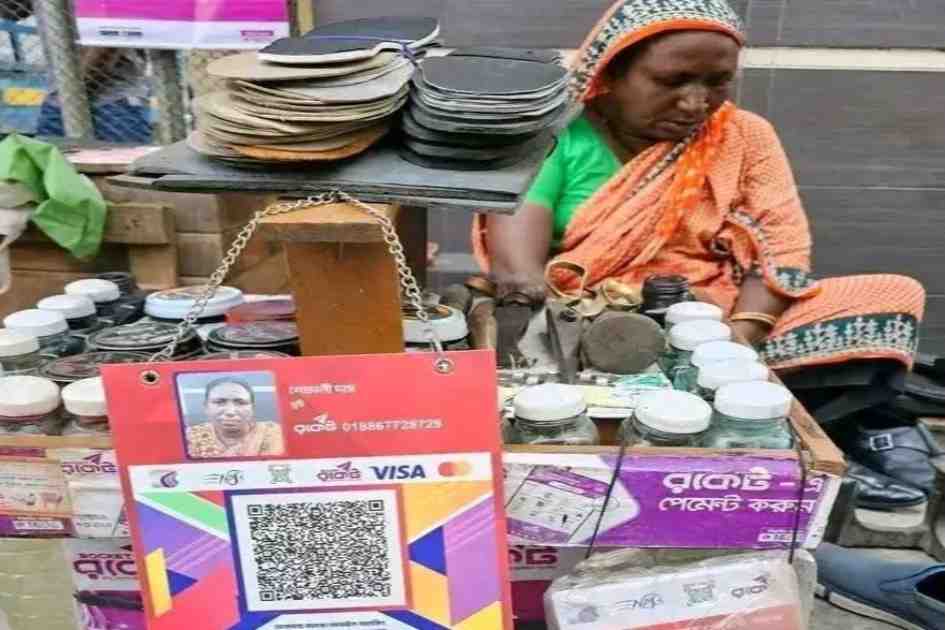
Shefali Das, a cobbler in Dhaka, represents another side of Bangladesh’s changing informal economy.
She has adopted digital payment systems to make transactions easier and adapt to changing patterns of urban commerce.
But technology alone cannot protect workers from extreme heat.
For millions in Bangladesh’s informal economy, the challenge is not only accessing digital tools. It is surviving in an economy where climate risks are increasing while protection systems remain limited.
Individual adaptation can help workers respond to change, but it cannot replace stronger systems that guarantee safe working conditions, income security and dignity.
Women workers face a double burden
Climate change does not affect all workers equally.
Women workers face additional challenges because extreme heat combines with existing gender inequalities.
Khaleda Begum, 35, a female battery-run rickshaw driver in Dhaka’s Mugda-Manda area, carries drinking water while working. But after hours under direct sunlight, the water often becomes too hot to drink.
She spends additional money buying cold drinks while continuing to work because she needs to support her son’s education.
Many women workers also face limited access to sanitation facilities, safe rest areas and secure workplaces.
Climate shocks increase unpaid care responsibilities for women, creating another burden often overlooked in climate adaptation planning.
A transition that cannot leave workers behind
Bangladesh is preparing for major economic changes, including graduation from the Least Developed Country category, industrial transformation, automation, rising energy costs and new climate-related trade requirements.
At the same time, around 85% of the country’s workforce remains engaged in informal employment.
Syed Sultan Uddin Ahmmed, former chairman of the Labour Reform Commission and executive director of Bangladesh Institute of Labour Studies, said Bangladesh’s labour policies must reflect the reality of an economy where the majority of workers remain outside traditional formal employment systems.
He argued that stronger systems of social protection, health coverage, accident insurance and climate-related income support are essential to prevent workers from carrying the full burden of climate disruption.
Without these protections, workers risk carrying the costs of economic and climate transitions they did not create and were rarely consulted about.
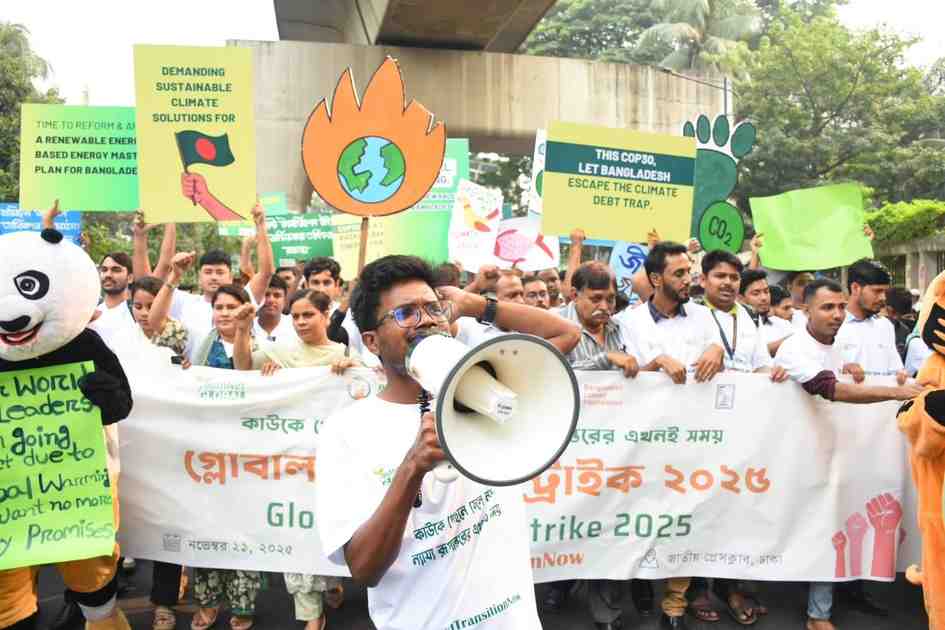
Bangladesh’s third Nationally Determined Contribution (NDC 3.0) includes, for the first time, a dedicated Just Transition chapter. A national Just Transition policy and action plan is expected to be developed by early 2027.
But climate action cannot succeed if workers are asked to sacrifice their livelihoods in the name of sustainability.
A just transition must include heat protection standards, access to drinking water and rest facilities, climate-resilient urban planning, social protection for informal workers, opportunities for reskilling without income loss and gender-responsive adaptation measures.
Digital platforms and companies that depend on outdoor labour must also accept responsibility for worker safety during extreme weather.
“This is a labour rights crisis”
Sohanur Rahman, Executive Coordinator of YouthNet Global, said climate change is increasingly becoming inseparable from labour rights and economic justice.
“Climate change is becoming a labour rights, public health and economic justice crisis. Millions of informal workers are facing the harshest impacts of rising heat without adequate protection,” he said.
“Climate policy should focus not only on reducing emissions but also on ensuring fairness in people’s lives and livelihoods. That is at the heart of a just transition,” he added.
Bangladesh contributes less than 0.5% of global greenhouse gas emissions, yet its workers are among those experiencing some of the earliest and most severe impacts of climate change.
For Dhaka’s invisible workforce, climate change is no longer measured only through temperature records.
It is measured in lost wages, exhausted bodies and the daily choice between health and survival.
As Bangladesh moves towards a greener economy, the success of its transition will depend not only on reducing emissions, but on whether the workers who built the economy can continue to live and work with dignity in a hotter world.




