

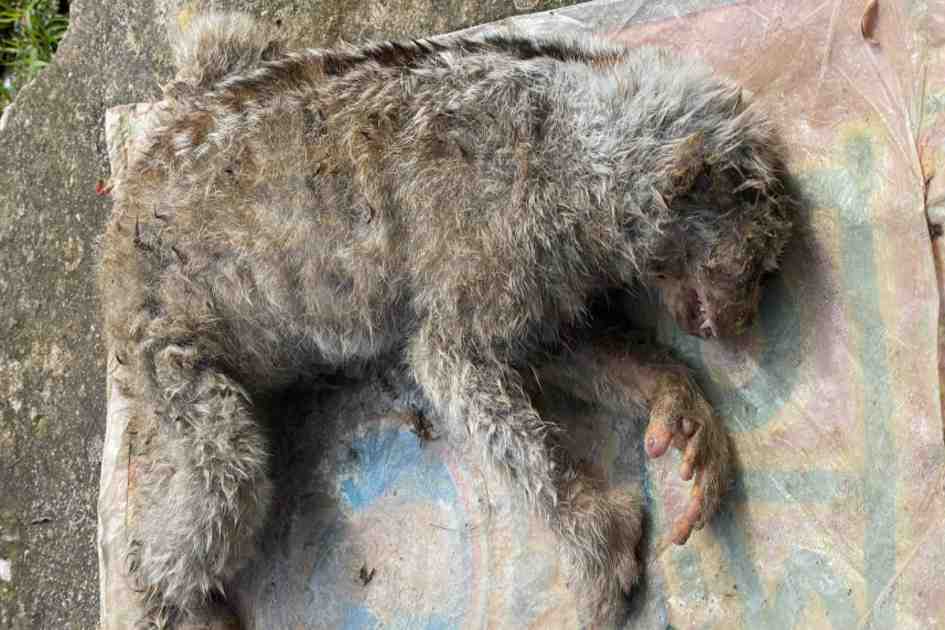

Conservation workers say the injured nocturnal primate is under observation at Janakichhara Rescue Centre, as habitat degradation and tree felling push slow lorises toward human-made threats.
A rare slow loris remained in critical condition after suffering severe burns from an apparent electric shock in Kamalganj upazila of Bangladesh’s Moulvibazar district today.
Two tea workers, Khokon Madraji and Sagar Kahar, found the endangered primate, locally known as “lajjaboti banor”, at about 9:00am in the Jerin Tea Garden area.
The workers noticed severe burn injuries and alerted the tea garden authorities, who later informed the Forest Department. The animal was subsequently rescued.
Tajul Islam, a wildlife scout at Lawachhara National Park, said the slow loris appeared to have come into contact with a live electric wire, causing severe burns to its eyes, face, lips, chin and several other parts of its body.
It was taken to the Janakichhara Rescue Centre, where a team is providing treatment. The team includes staff from Plumploris e.V. Bangladesh, a Germany-based voluntary organisation working on slow loris conservation and rehabilitation.
Mohammad Fayaz Hasan, deputy manager of Plumploris e.V. Bangladesh, said the animal had suffered a high-voltage electric shock and remained in critical condition.
Its prognosis would become clearer after a period of observation, he said.
Slow lorises are nocturnal primates belonging to the genus Nycticebus. Depending on the species, they are listed as Vulnerable or Endangered on the International Union for Conservation of Nature Red List.
Swapan Deb Sajal, director of the Bangladesh Wild Animal Care Foundation, said habitat degradation had sharply reduced the insects, fruits, tree gum and nectar that make up the animals’ natural diet.
Nurul Muhaimin Milton, a network member of the Bangladesh Environmental Lawyers Association, alleged that illegal felling of old trees had further depleted their food sources.
He said this was forcing slow lorises to leave their habitats and increasing their exposure to threats such as electrocution.
Source: The Daily Star




