

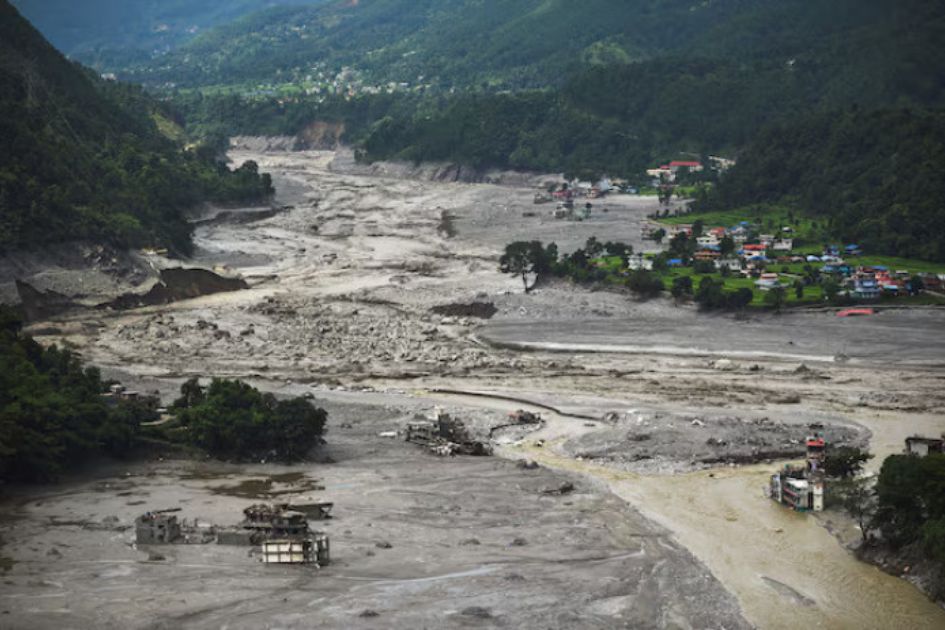



UNDP says faster glacier melt is intensifying pressure on fragile mountain systems, exposing Nepal’s river communities, hydropower plants and projects under construction to sudden, destructive floods.
The Himalayan region faces a growing risk of devastating floods triggered by collapsing glaciers and melting ice, potentially threatening hydropower systems and making vast riverbank areas home to millions of people effectively uninhabitable, a senior United Nations official has warned.
The warning comes after the death toll from last week’s glacier-triggered flooding in Nepal surpassed 1,000.
Kanni Wignaraja, a United Nations assistant secretary-general, told Reuters that technology was not advancing fast enough to prevent destruction in areas downstream of vast river systems carrying excess water from glacial lakes.
“Technology is not moving fast enough to prevent damage in the areas where the excess water from glacial lakes flows downstream through these huge river systems,” she said.
Researchers in 2020 identified 47 potentially dangerous glacial lakes in Nepal, China and India. The actual number has since been estimated to be significantly higher.
Wignaraja, who also serves as the United Nations Development Programme’s Regional Director for Asia and the Pacific, said the number of people at risk had reached “several million”, citing updated information compiled in June by the UNDP and partner organisations.
Last week’s devastating flooding in Nepal began after part of a glacier near the Langtang Lirung mountain peak collapsed onto the valley floor. The collapse triggered a landslide that surged downstream through the Trishuli River as a powerful flood wave.
Glacial lake outburst floods occur differently. They happen when meltwater from glaciers accumulates behind a natural barrier until rising pressure causes the barrier to collapse or the water to overflow, sending sudden floods into downstream areas.
UN officials said climate change was increasing both types of risk as glaciers across the region melt more rapidly. The process is loosening mountain rocks while also increasing pressure on natural barriers holding back water in glacial lakes.
Wignaraja said the mountains in the region were also relatively young, making them more prone to movement and geological changes beneath the surface that could cause glaciers or natural lake barriers to collapse suddenly.
Researchers have identified potentially dangerous glacial lakes across large areas of the Hindu Kush mountain region.
But Wignaraja said Nepal was more dependent on glaciers than any other country in the region for both water supplies and people’s sources of income, leaving the country facing “very, very difficult decisions”.
Moving to higher ground may not be financially possible for many people living along riverbanks.
Critical infrastructure will also remain at risk.
Damage to Nepal’s electricity-generating capacity could be even more severe than some assessments have suggested.
The UNDP said last week’s flooding damaged or disabled operating power plants as well as 15 major electricity projects under construction.
Wignaraja said new technologies could be used to make power transmission systems and hydropower plants more resilient to flooding.
But the “surge of mud and ice” that swept through Nepal last week was so severe that most existing protective systems would have been unable to withstand it.
“There is no construction or infrastructure that could have stopped it,” she said.
A Reuters photograph showed the current state of the Trishuli River following the flash flooding in Nepal.
Source: Reuters




