

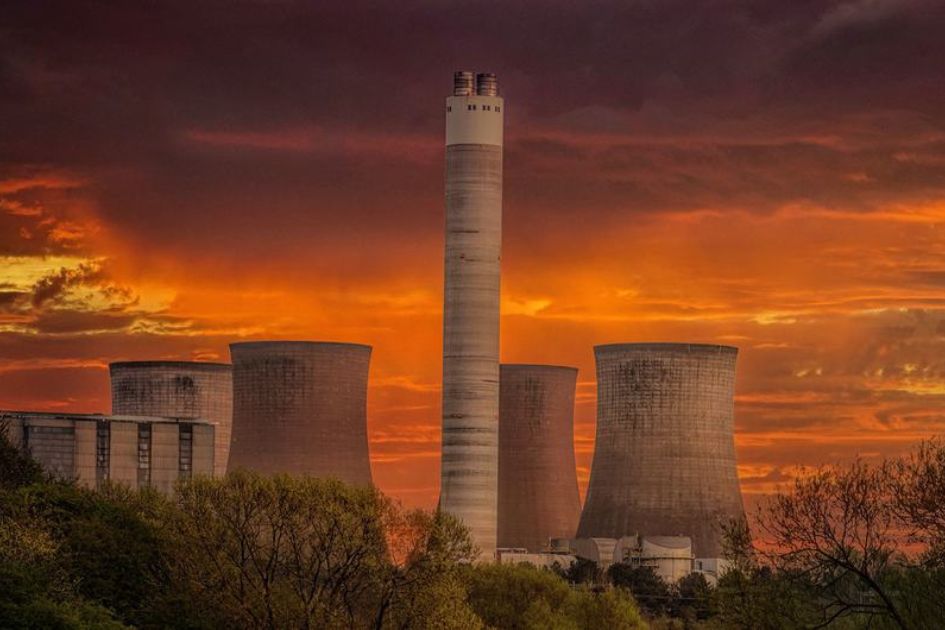



At the Palau forum, island governments linked rising seas, tuna losses and fisheries decline to calls for a legally backed, financed shift from coal, oil and gas.
Pacific leaders called for an end to fossil fuel expansion on Wednesday, warning that a new UN Environment Programme report on limiting global temperature overshoot showed the survival of small island states was already under threat.
The warning came as leaders gathered in Palau for the 55th Pacific Islands Forum Leaders Meeting, where the UNEP spotlight report, Limiting Overshoot, said the world was already pushing beyond the critical 1.5°C threshold.
For Small Island Developing States, Pacific leaders said the overshoot was not a future risk but a present-day emergency, with the report identifying a transition away from fossil fuels as a key strategy to reduce the trajectory threatening the region’s survival.
Pacific nations contribute only 0.03% of global greenhouse gas emissions, but leaders said fossil fuel extraction was directly driving displacement across the region.
They said 57 countries at the Santa Marta Conference had called for international cooperation and a global binding climate mechanism to manage a just and equitable transition away from oil, gas and coal.
Scientific models estimate that if global temperatures surpass 1.8°C, returning to a stable climate will be difficult and protracted.
In Tuvalu and other atoll nations, sea-level rise is turning 1-in-100-year coastal inundation events into recurring crises, with damages projected to exceed 110% of Tuvalu’s current GDP by 2100.
Pacific waters supply 30% of the world’s annual tuna catch, but stock displacement threatens a key pillar of the region’s economy and could cost US$90 million annually in lost revenue.
Coastal fisheries also face a decline of up to 65% by 2050, threatening to create a food gap of 29kg of fish per person each year.
Pacific nations are seeking to strengthen their diplomatic position through what they describe as a unified toolbox, including the Tassiriki Call for a Fossil Fuel Free Pacific, launched in April as a regional blueprint for survival.
They are also using the International Court of Justice Advisory Opinion to reinforce what they say is the legal duty of states to cooperate, building legal and moral arguments for a global Fossil Fuel Treaty to govern an orderly, fair and financed transition away from coal, oil and gas.
“To maintain a high ambition scenario, we need urgent climate action on transitioning away from fossil fuels,” said Vanuatu’s Minister of Climate Change, Adaptation, Meteorology and Geo-Hazards, and Energy, Ralph Regenvanu.
“This means a rapid transition away from fossil fuels and fossil fuel subsidies. There is no other way. Pacific leaders also call for a 1.5 degree line pathway in the Pacific that includes a 100% renewable energy future for the Pacific small island developing states. That’s why Vanuatu and other countries made the Tassiriki Call earlier this year and I urge you to look at the details in that call.”
Australia, which is also attending the Pacific Islands Forum, faced criticism over its continued approval of fossil fuel projects.
Since taking office, the Albanese government has approved 36 new coal, oil and gas developments, according to the press release.
One project, Woodside’s North West Shelf extension, is projected to generate 4.3 billion tonnes of climate pollution, more than the combined annual emissions of all Pacific Island nations for more than two centuries, it said.
“Australia’s not doing enough. Australia is a major producer of fossil fuels. We all know fossil fuels are the primary driver of the climate crisis, as I said,” Regenvanu said.
“So the very least a country like Australia should be doing is stopping future expansion. And it’s not doing that. You need to stop expansion and you need to start transitioning away.”
Tuvalu’s Minister for Home Affairs, Environment and Climate Change, Maina Talia, said the UNEP report had underscored the dangers facing low-lying atolls.
“The overshoot report launched today really struck those who live in low lying atolls,” Talia said. “We know for sure that climate change falls disproportionately on the Pacific countries. The costs that we have to bear in Tuvalu are incomparable to other countries that may be impacted by the climate crisis.
“The message is very clear from the report that we need to do more. And that’s why we are hosting the Second International Conference on Transitioning away from Fossil Fuels in the Pacific next year with the whole idea not just to bring leaders across, but to demonstrate that these are the impacts that we are going through.
“We need the political will to transition away from fossil fuels. That’s my message for all the oil-producing countries and fossil fuel countries.”
Tina Stege, climate envoy of the Republic of the Marshall Islands and regional envoy for Oceania for COP31, said the report showed that 1.5°C remained the safe limit for the Pacific and the wider world.
“This report tells us in no uncertain terms that 1.5 is the safe harbor, not just for the Pacific, but for the entire world,” Stege said.
“But with the overshoot that is now certain ahead of us, we are fighting against a very strong current that’s sweeping us into very dangerous waters. And we have to do everything in our power to fight our way back to 1.5 by minimizing that overshoot and minimizing the size and the length of that overshoot.
“And how do we do it? We’ve heard it has to be through immediate and deep emissions cuts. That means we have to tackle methane as a priority, it means ending investments in fossil fuels and phasing them out and leapfrogging to renewables.
“The 1.5 overshoot report is new and it is news, but the message that it delivers is not. Our leaders and our Pacific peoples have said time and again that 1.5 to stay alive is not a slogan, it’s a lifeline. And this report is just yet another alarm bell to wake up the rest of the world.”
Pacific leaders are expected to carry their climate demands from this week’s forum in Palau to a series of diplomatic meetings, including the pre-COP31 in Fiji in October, COP31 in Turkiye and the Second International Conference on Transitioning away from Fossil Fuels, which Tuvalu and Ireland will co-host next April in the Pacific.




