

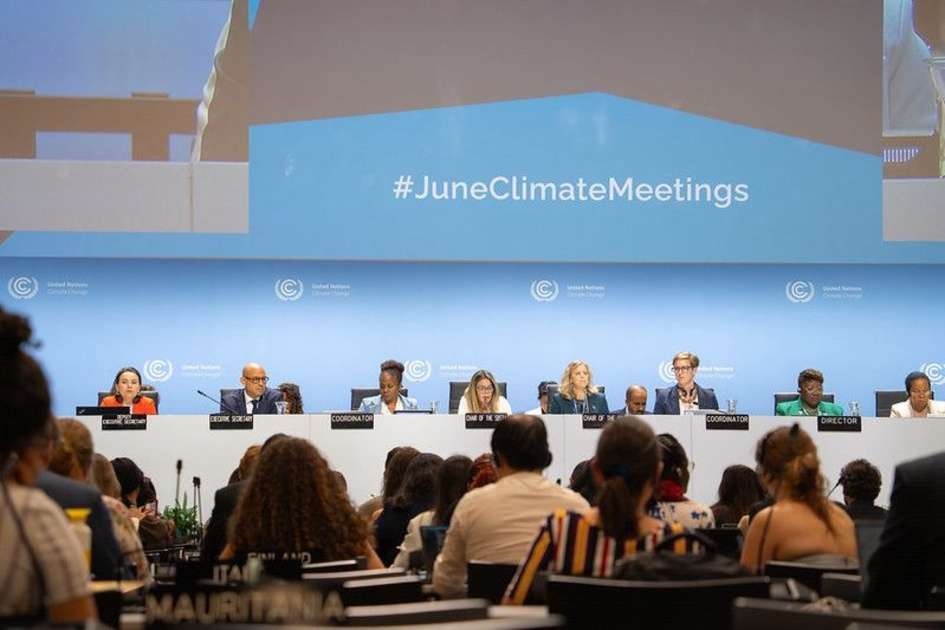



Bonn climate talks ended with limited progress as UN climate chief Simon Stiell warned that “you-first-ism” and stalled finance talks threaten global climate cooperation before COP.
The latest round of UN climate negotiations in Bonn ended with limited progress and widening political divergence on climate finance, adaptation and mitigation, as the UN climate chief warned that procedural stalling and “you-first-ism” are undermining global climate cooperation.
The June 2026 sessions, formally the 64th meetings of the Subsidiary Bodies (SB64) under the United Nations Framework Convention on Climate Change, were held from June 8 to 18 at the World Conference Center Bonn, bringing together more than 6,500 participants in a key mid-year checkpoint ahead of the COP process.
While negotiators made incremental progress on technical cooperation, the talks were again overshadowed by entrenched disagreements over climate finance, adaptation support, loss and damage, and emissions reduction pathways. Central issues, including scaling up predictable finance flows, delivering on adaptation commitments and setting long-term global finance mobilisation targets, remained unresolved.
UN Climate Change Executive Secretary Simon Stiell issued a sharp warning against what he described as growing “you-first-ism”, where countries delay action by insisting others move first.
“We must deliver on all existing commitments, without cherry-picking. To protect 8 billion people,” Stiell said.
He stressed that existing commitments under the Paris Agreement and the first Global Stocktake must not be reopened or weakened, including obligations linked to $300 billion in climate finance, the broader ambition of mobilising $1.3 trillion, and efforts to triple adaptation finance alongside strengthened loss and damage support.
“All Parties must be comfortable and confident in restating our existing global commitments without cherry-picking those that suit tactically in the moment,” he said.
Stiell cautioned that such behaviour risks creating “a recipe for gridlock” at a time when climate impacts are intensifying worldwide and warned against “side-stepping and stalling” in negotiating rooms.
Despite the deadlock on major political questions, delegates recorded limited but meaningful advances in specific technical areas. One of the most significant was progress on the just transition agenda, where parties moved closer to operationalising a mechanism aimed at supporting workers, communities and vulnerable groups affected by the shift away from fossil fuels. This included steps towards strengthening the just transition work programme and preparing its future review process.
Progress was also made under Action for Climate Empowerment, which lays the groundwork for broader societal engagement in climate action. Meanwhile, discussions under the COP implementation and Action Agenda tracks highlighted emerging convergence on electrification, energy efficiency, waste reduction and urban resilience, seen as key delivery areas outside formal negotiation texts.
Stiell described these developments as modest in procedural terms but significant for communities on the frontlines of climate change.
“While these might feel like modest steps for our process, they are big strides in the right direction for communities and working people everywhere,” he said.
Looking ahead, attention now shifts to the next phase of negotiations under the COP cycle, with continued intersessional work expected before political decisions are taken at the ministerial level. The evolving COP process will test whether countries can translate technical convergence into political agreement, particularly on finance and implementation gaps.
Stiell urged governments to bring ministers into the process earlier and engage more directly on the most difficult issues, warning that delays in Bonn risk carrying unresolved divisions forward.
“We simply cannot afford to re-open previous decisions, renegotiate existing targets or backslide,” he said.
He also thanked delegates, observers and UNFCCC staff for their work during the 10-day session, acknowledging the strain of prolonged negotiations and the importance of continued engagement.
“We must press forward. It’s cooperation, not competition, that will protect 8 billion people from this climate crisis,” he said.
The Bonn climate meetings are widely regarded as the central mid-year technical sessions of the United Nations Framework Convention on Climate Change process, shaping the agenda and negotiation pathways for annual COP summits.




