

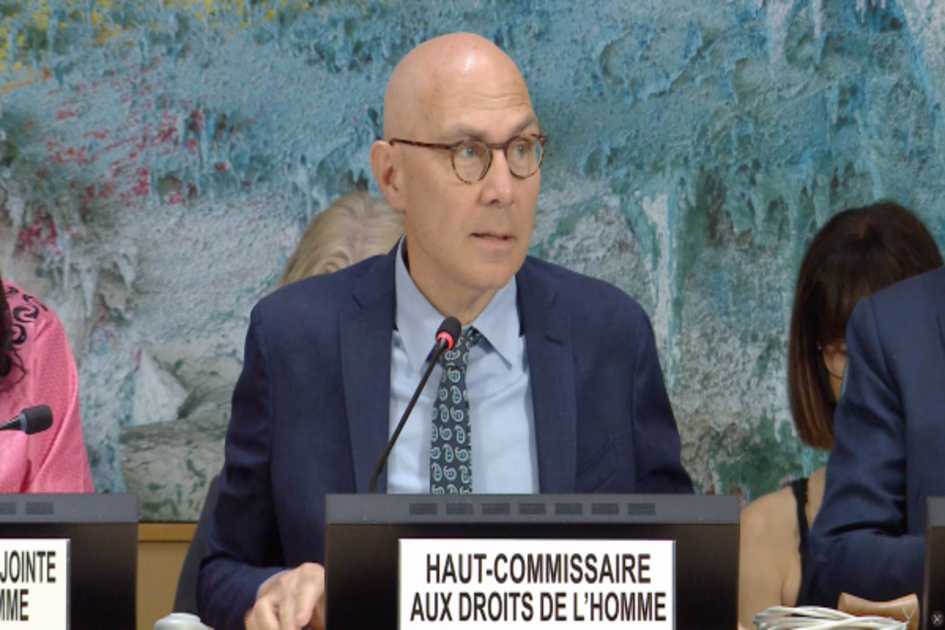



UN rights chief Volker Türk urged states to treat climate finance as a binding human rights obligation, warning that loans and weak accountability deepen injustice for vulnerable communities.
United Nations High Commissioner for Human Rights Volker Türk has called for a sweeping overhaul of global climate finance, warning that the current system is failing vulnerable communities and deepening global inequality.
“Climate finance needs to deliver on people’s rights,” Türk told a high-level panel in Geneva, urging a decisive break from what he described as a broken global approach that treats climate action as discretionary charity rather than a legal and moral obligation.
Speaking at the Human Rights Council during its 62nd session, he said climate funding must be firmly grounded in human rights principles and reframed as a binding obligation under international law, not optional assistance.
At the June 19 panel discussion on the adverse impacts of climate change on human rights, titled “Facilitating Actionable Pathways for Gaining Momentum in Climate Financing in the Context of Addressing the Adverse Impacts of Climate Change on the Full Realization of Human Rights for All People,” Türk reiterated that climate finance must be rights-centred and designed to serve people, not geopolitical or corporate interests.
He criticised the global economic architecture for continuing to prioritise powerful corporate and state interests while communities in the Global South bear the brunt of climate impacts. According to Türk, affected populations are increasingly left to confront climate disasters while also facing rising debt burdens incurred to finance recovery and adaptation.
He warned that increasing reliance on loans rather than grants is forcing climate-vulnerable countries to divert limited public resources away from essential services such as health and education in order to cope with escalating climate shocks.
Diplomats, climate experts and civil society representatives echoed these concerns during the session, saying frontline communities are routinely excluded from decisions on how climate finance is designed, accessed and distributed.
Rights groups also called for stronger accountability mechanisms and binding international commitments to ensure financial institutions respect the right to a clean, healthy and sustainable environment while protecting environmental defenders from intimidation and harm.
As the session continues, pressure is mounting on member states to move beyond voluntary pledges towards enforceable reforms that align global climate finance with human rights obligations.




