

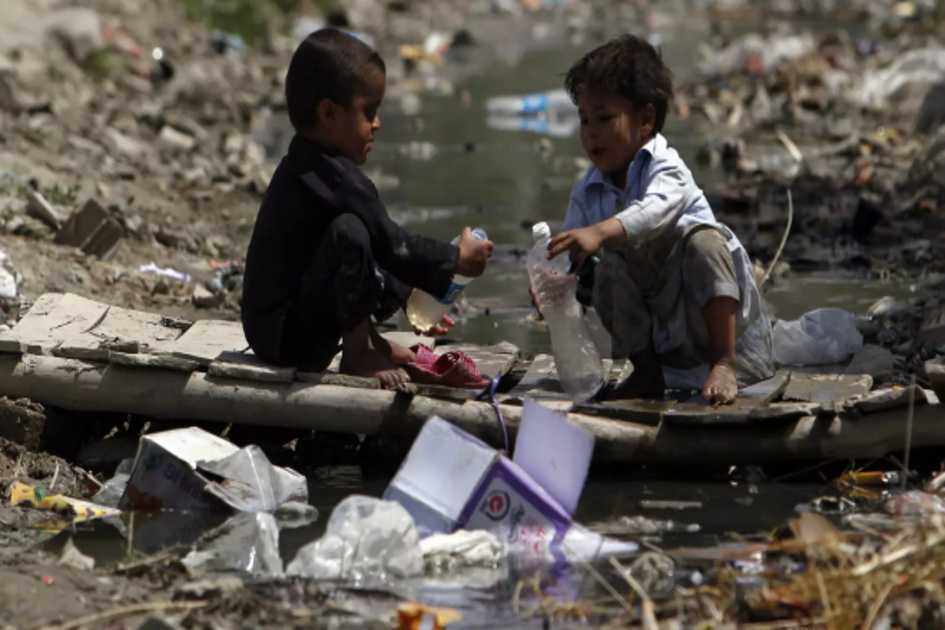



Every child in Bangladesh is now exposed to at least one climate-related hazard and nearly 90 percent face multiple overlapping climate threats, according to Unicef’s 2026 Children’s Climate Risk Report released on Tuesday.
The report paints a stark picture of growing climate vulnerability among children in one of the world’s most disaster-prone countries, showing that all 5.9 crore children in Bangladesh are exposed to at least one climate hazard, including riverine flooding, drought and tropical storms.
It found that 5.3 crore children, equivalent to 89.5 percent of the country’s child population, are exposed to at least three climate shocks at the same time.
Among the most common overlapping risks are riverine floods, tropical storms, drought and extreme heat, which together expose more than 2.4 crore children to multiple climate hazards simultaneously.
Drought was identified as the most widespread climate threat affecting children in Bangladesh. According to the report, 5.79 crore children, or 98.44 percent of all children, are exposed to drought conditions.
Of those, 5.4 crore children (91.83 percent) are affected by agricultural drought while 5.3 crore (90.26 percent) face exposure to meteorological drought.
Tropical storms impact 5.4 crore children across the country, representing 91.23 percent of the child population, while riverine flooding affects 3.2 crore children or 54.18 percent.
“In countries with large child and youth populations, such as Bangladesh, India, Nigeria and Pakistan, even when the percentage exposure appears moderate in some cases, the absolute number of affected children remains extremely high,” the report said.
Unicef also highlighted that countries with heavily agriculture-dependent economies, including Bangladesh, Nigeria, Pakistan and Tanzania, have some of the highest numbers of children exposed to both agricultural and meteorological droughts.
The report ranks Bangladeshi children among the most climate hazard-exposed in the world.
Nearly 80 percent of global child exposure to riverine flooding is concentrated in just 10 countries, among them Bangladesh, Iraq, Egypt, Pakistan and the Philippines.
Extreme heat has also emerged as a major concern in Bangladesh, with 4.9 crore children, or 82.87 percent, exposed to high temperatures.
On Unicef’s global hazard exposure index, Bangladesh scored 9.38 out of 10, placing fourth among assessed countries. Myanmar topped the ranking with a score of 10, followed by Pakistan at 9.44 and Viet Nam at 9.41. India ranked just behind Bangladesh with a score of 9.21.
The index measures children’s exposure to a range of climate hazards, including floods, droughts, storms, heatwaves, fires and sand and dust storms, as well as climate-sensitive threats such as vector-borne diseases and air pollution linked to PM2.5.
The report also underscored the global scale of the crisis.
Nearly half of the world’s children, around 1.1 billion, are exposed to at least three overlapping climate hazards, while almost every child worldwide faces at least one climate-related risk.
More than four million children globally could face as many as six climate threats at the same time, the report warned.
The most widespread combination of hazards worldwide is drought, extreme heat and heatwaves, affecting more than 296 million children. Another 115 million children are exposed to the combined impacts of drought, extreme heat and tropical storms, according to the report.
This article is republished from The Business Standard.




