


Disagreements over adaptation finance at COP31 have intensified demands from climate-vulnerable nations for predictable, accessible grants, as African negotiators seek stronger commitments and Bangladesh presses for climate justice.
Climate activists demand grant-based funding in Antalya as negotiators fail to secure a dedicated agenda item on tripling adaptation finance.
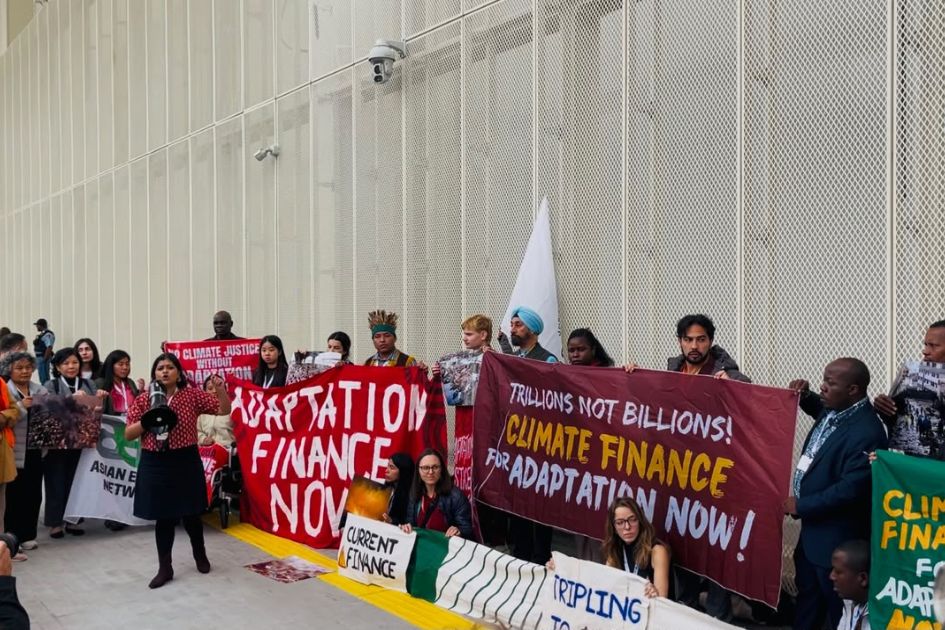
Protesters gathered in the Blue Zone of the COP31 climate summit on Tuesday, demanding urgent, needs-based adaptation finance after African countries failed to secure a dedicated agenda item on tripling adaptation funding for developing nations.
The demonstration was joined by the Climate Action Network (CAN) and the Asia Pacific Movement on Debt and Development (APMDD). Climate campaigner Harjeet Singh and CAN Executive Director Tasneem Essop also attended. The protest was organised by Gambian activist Baboucarr Nyang, Regional Coordinator of CAN Africa, who urged negotiators to deliver finance that reflects the actual needs of climate-vulnerable communities.
Speakers from the Global South highlighted how communities in countries such as Nepal and Mozambique continue to face devastating climate impacts while struggling to access the resources needed to protect themselves. They criticised the gap between international commitments and the financing reaching vulnerable communities and urged need based adaptation fiannace.
One speaker questioned the emphasis on developing indicators under the Global Goal on Adaptation (GGA) without ensuring the financial resources needed to implement adaptation measures.
“What will those indicators tell you when Nepal never got the money it needed to protect itself from the glacier lake outflow?” the speaker asked.
“Unless you give us the means to implement adaptation, you are playing with our lives,” the speaker said, demanding public, grant-based finance rather than loans that deepen developing countries’ debt burdens.
Protesters repeatedly chanted, “What do we want? When do we want?” Campaigners pledged to continue raising the demand throughout the summit.
Africa’s agenda bid falls short
The protest came a day after the African Group of Negotiators (AGN) failed to secure a standalone agenda item on tripling adaptation finance. Ghana submitted the request on behalf of the African group.
During Monday’s adoption of the COP31 agenda, conference president Murat Kurum announced that parties had failed to reach consensus on the proposal.
Kurum said the decision was taken “without prejudice” to the possibility of considering the issue elsewhere during the conference. As a compromise, a climate finance work programme was established to provide space for broader discussions on finance.
The African proposal sought formal negotiating space for the commitment made at COP30 in Belém, Brazil, to at least triple adaptation finance for developing countries by 2035.
Although the agenda request did not succeed, the broader commitment to increasing adaptation finance remains an important issue in the negotiations.
AGN Chair Nana Antwi-Boasiako Amoah said the African group was dissatisfied with the outcome but would continue pursuing the issue through other negotiating channels.
“In negotiation you can’t get everything. You can get some,” he told journalists.
Negotiating positions diverge
Reactions to the agenda decision reflected different priorities among negotiating blocs.
The African group thanked the COP31 presidency for its approach, signalling its willingness to continue discussions through the available negotiating channels.
The Umbrella Group, represented by the United Kingdom, said adaptation finance was “not an orphan” and would continue to receive attention in the negotiations.
India expressed regret over the outcome, while the European Union raised concerns about the handling of several agenda items. The EU argued that including the finance work programme raised questions about compromises reached at COP30.
The differences highlight the continuing tensions over how climate finance commitments should be translated into concrete financial support for developing countries.
Grants, not debt
For African countries, the debate is not simply about increasing the amount of adaptation finance. The quality, accessibility and predictability of that finance are equally important.
Amoah said retaining the finance work programme would allow parties to discuss Article 9.1 of the Paris Agreement, which establishes the obligation of developed countries to provide financial resources to developing countries.
Developing countries argue that adaptation finance should primarily come through public grants and highly concessional funding rather than loans that increase the debt burden of countries already facing severe climate impacts.
For climate-vulnerable nations, borrowing to finance protection against a crisis they contributed relatively little to creating raises fundamental questions of climate justice.
Amoah also identified just transition as one of the most difficult issues facing negotiators at COP31. He warned that early signals suggested hesitation among some developed countries.
“This is where I foresee it’s going to be a battle, but we are ready,” he said.
The African Group also opposes unilateral climate-related trade measures, arguing that such policies could unfairly shift the costs of emissions onto developing countries that bear little responsibility for the climate crisis.
Although the trade proposal did not become a formal agenda item, countries can submit their views ahead of a ministerial dialogue scheduled for next year.
Bangladesh joins the call
Bangladesh is also pressing for a threefold increase in adaptation finance, with particular emphasis on protecting climate-vulnerable communities and advancing climate justice.
Environment Minister Abdul Awal Mintoo said Bangladesh would place the protection of vulnerable communities at the centre of its demands, alongside the finance and technology required to implement its national adaptation plans.
For Bangladesh, the issue has immediate consequences. River erosion, coastal salinity, recurrent flooding and other climate impacts threaten livelihoods, food security and access to essential services across the country.
The country’s adaptation efforts require predictable, accessible and adequate financial support, alongside technology transfer and capacity-building.
As negotiations continue in Antalya, the protest has brought a central question of climate justice back into focus: how can countries and communities adapt to a rapidly changing climate when the resources promised to protect them remain inaccessible?
For campaigners in the Blue Zone, the answer cannot be another set of indicators or another cycle of political promises. They want finance that reaches communities, strengthens resilience and protects lives.