


The pledge brings together governments, global energy agencies and private-sector leaders, with new financing mechanisms and investment commitments aimed at accelerating the transition to electricity-powered economies.
Countries, businesses and financial institutions are stepping up efforts to electrify transport, buildings and industry, with 180 companies representing $1.69 trillion in annual revenues backing a global initiative to increase electricity’s share of final energy consumption to 35% by 2035.
The initiative, known as the COP31 Global Electrification Pledge, aims to raise electricity’s share from around 23% currently. It is part of efforts to strengthen energy security, expand access to energy and reduce costs and emissions.
The target is based on analysis by the International Energy Agency (IEA) and the International Renewable Energy Agency (IRENA) on what is needed to keep global warming within 1.5 degrees Celsius above pre-industrial levels.
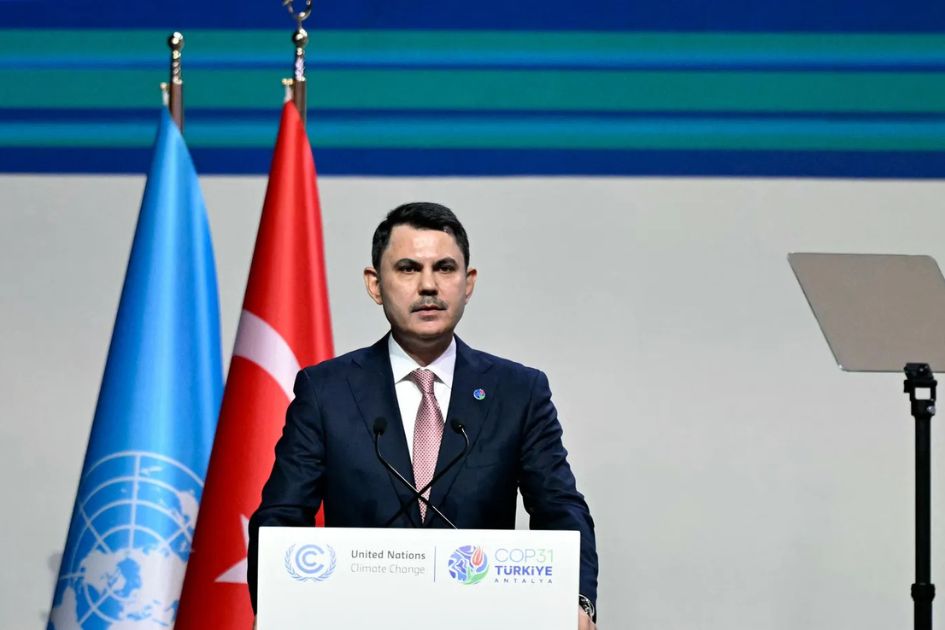
COP31 President Murat Kurum said the target was necessary because electrification had not previously been supported by a clear global goal.
“This year’s energy crisis has shocked us out of our complacency and demonstrated the inherent vulnerability of dependence on energy imports. Electrifying the global economy is now essential to boost energy security, cut emissions and drive economic growth,” he said.
“The age of electricity is taking shape, and COP31 will be remembered as the moment we flicked the switch,” Kurum added.
COP31 President of Negotiations Chris Bowen said the summit was seeking broad support for faster electrification, backed by practical plans for implementation.
“When electrification is backed by clean power, stronger grids and storage, it can improve energy access, strengthen energy security and cut emissions across households, transport and industry,” he said.
He added that ambition needed to be supported by investment, infrastructure and implementation.
The COP31 Presidency is co-hosting the first Electrification Forum with the European Union on Nov 10. The forum will continue after the summit as a regular meeting of governments, institutions, businesses and financiers.
The Electrification Board, chaired by the COP31 Presidency with the IEA serving as its secretariat, will oversee the forum.
The IEA will also lead a Global Electrification Tracking Mechanism to monitor electrification trends worldwide and across regions.
IEA Executive Director Fatih Birol said electric technologies were often cost-competitive and could improve energy security for countries dependent on fuel imports.
The agency would support the COP31 Presidency through data-driven analysis underpinning the 35-by-35 pledge and by tracking progress in the years ahead, he said.
IRENA will support the initiative through its Enabling Distribution Grids for Electrification (D-GRIDS) programme, which will help developing countries identify grid investment needs, prepare projects and access financing.
IRENA Director-General Francesco La Camera said the programme would strengthen electricity distribution networks and help expand electrification, alongside the agency’s Utilities for Net Zero Alliance.
The alliance (UNEZA) is increasing its annual investment commitment for electricity grids, renewable energy and storage from $148 billion to $156 billion.
Martin Pibworth, chief executive of SSE plc and UNEZA co-chair, said clean electrification could help reduce energy bills, strengthen security of supply and improve resilience.
The COP31 Presidency is also launching a Global Green Freight Corridors Initiative with the International Transport Forum to develop greener and more resilient freight routes.
Further initiatives are expected during the summit’s thematic days on resilient cities on Nov 12, finance on Nov 13 and industry on Nov 16.
The Global Renewables Alliance is hosting governments on Nov 10 to present their national electrification plans.
Its chief executive, Bruce Douglas, said the latest fossil fuel crisis was costing energy importers an additional $1.8 billion every day.
Renewable-powered electrification could protect consumers from high and volatile fossil fuel prices, he said, adding that governments needed credible national plans to encourage businesses to electrify industry, buildings and transport.
Türkiye and Australia have worked with Sustainable Energy for All (SEforALL) to assess the implications of electrification for developing economies.
A report titled The Electrification Opportunity, published on Nov 10, examines the challenges and opportunities for emerging markets and developing economies.
SEforALL Chief Executive and Special Representative of the UN Secretary-General Damilola Ogunbiyi said electrification could create opportunities for industrialisation, employment, improved livelihoods and greater energy independence.
The COP31 Presidency is also bringing together governments, development banks and private financial institutions to establish an international coalition focused on financing electrification in emerging and developing economies.
The World Bank and the African Development Bank will serve as the inaugural co-chairs of the Electrify Now Finance Coalition in 2027.
The presidency has also established a strategic partnership with the Organisation for Economic Co-operation and Development (OECD), which is preparing two input notes for COP31 on financing electrification and the economic opportunities of accelerated action.
OECD Secretary-General Mathias Cormann said rising electricity demand would require significantly greater investment in power generation, grids and storage.
He said private investment on the necessary scale would depend on predictable policies, efficient regulation and a strong pipeline of bankable projects.
The initiatives build on support from the private sector, with the We Mean Business Coalition mobilising more than 180 companies, including Volvo, Uber, IKEA and Siemens, representing more than $1.69 trillion in annual revenue.
Coalition Chief Executive Maria Mendiluce said businesses were ready to drive electrification, but governments needed to make it affordable and commercially viable to attract future industrial investment.
Meanwhile, the 2026 Yearbook for Global Climate Action has been released to mark the 10th anniversary of the Marrakech Partnership.
The yearbook highlights progress and gaps in global climate action, drawing on Nationally Determined Contributions (NAZCA) reporting from 83 cooperative initiatives covering more than 200 actions. It reports progress in 84% of Plans to Accelerate Solutions.