

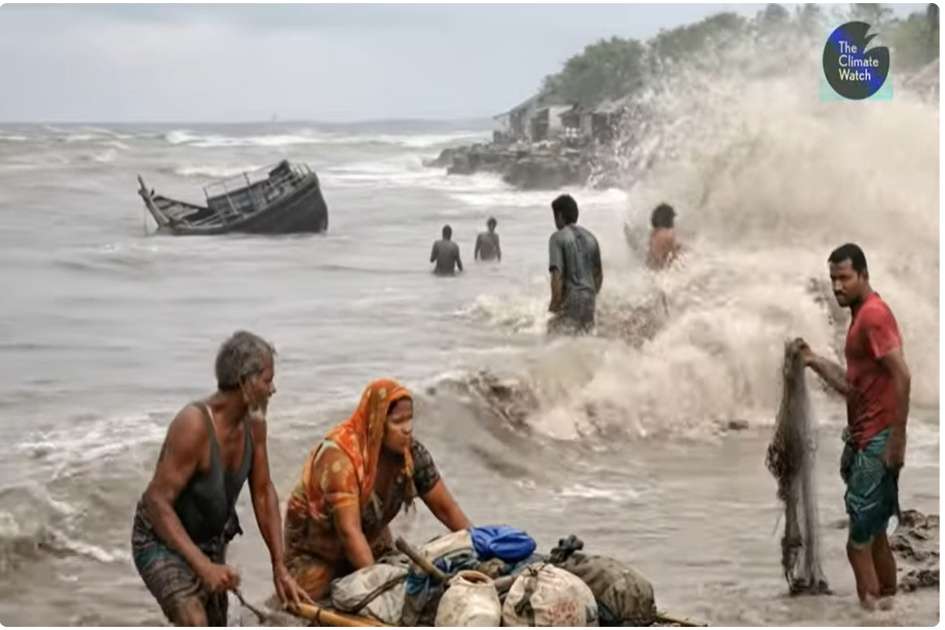



Rivers that have sustained South Asia for centuries are increasingly turning destructive, eroding vast stretches of land and forcing millions from their homes across the region, as climate change intensifies floods and alters river courses.
In Bangladesh, officials estimate that between 5,000 and 6,000 hectares of land disappear every year due to riverbank erosion, particularly along the Brahmaputra, Jamuna and Padma rivers. The loss has made river erosion one of the country’s leading drivers of internal displacement.
The crisis is not confined to Bangladesh. In India, annual riverbank erosion is estimated at 10,000 to 12,000 hectares, while Pakistan loses up to 10,000 hectares a year along the Indus system. Sri Lanka faces smaller but significant losses of up to 2,000 hectares annually, particularly during extreme monsoon seasons.
Experts say the problem is being exacerbated by heavier rainfall, glacier melt in the Himalayas, upstream dams and unplanned river engineering, all of which accelerate bank collapse and sudden channel shifts.
Growing ranks of climate refugees
The human cost is mounting rapidly. More than five million people in Bangladesh are directly affected by river erosion each year, according to development agencies, many of them forced to move multiple times after losing homes and farmland.
Across the region, the number of people displaced by climate-related river impacts is already in the millions. India is estimated to have more than seven million people affected by climate-driven displacement, Pakistan around four million, and Sri Lanka about one million.
By 2050, those figures are projected to rise sharply. Bangladesh could see over 13 million climate-displaced people, while India may face around 20 million, Pakistan 15 million, and Sri Lanka five million, according to UN-backed assessments.
“These are not temporary migrants,” analysts warn. “River erosion permanently removes land, leaving people with no option but to relocate.”
Livelihoods under pressure
Beyond displacement, river erosion is undermining agriculture and rural economies. The floodplains of the Ganges, Brahmaputra and Indus, among the most fertile regions in the world, are increasingly affected by salinity intrusion, unpredictable flooding and the loss of arable land. Farmers who once relied on stable riverbanks now face s




