




Experts warn Bangladesh must act fast to protect climate migrants as disasters force millions into cities, straining housing jobs and social systems while deepening inequality and exposing gaps in policy response.
Bangladesh must urgently protect the rights dignity and livelihoods of people displaced by climate change as intensifying disasters push millions toward already strained cities, experts warned at a roundtable in Dhaka.
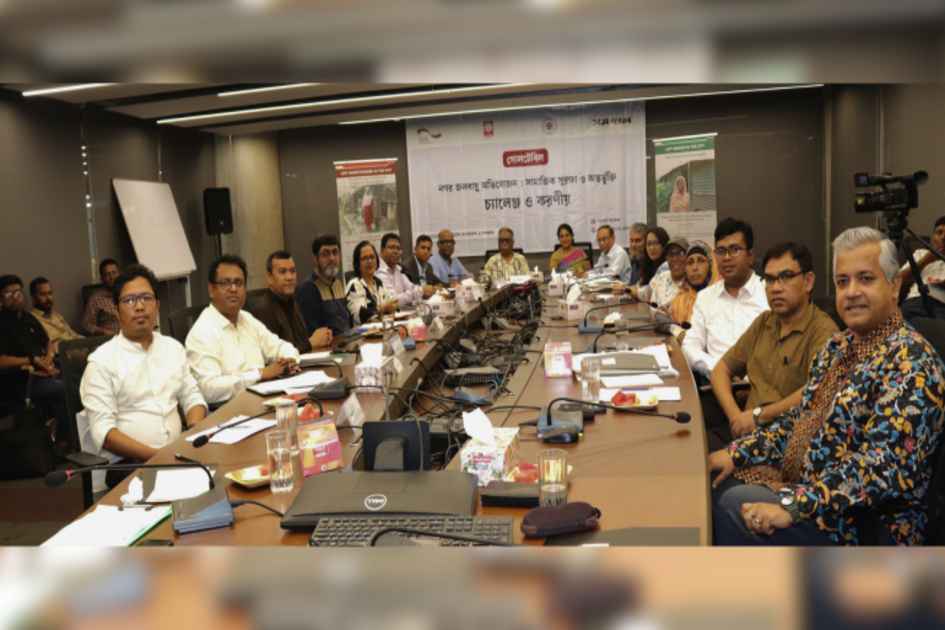
The discussion titled “Toward Inclusive Protection: Social Safety Nets for Climate Migrants, Challenges and Way Forward” was held on April 15 at the Tejgaon office of Samakal, a leading Bengali-language daily. It was jointly organized by Caritas Bangladesh and the newspaper bringing together representatives from government academia civil society and development sectors.
Participants called for a coordinated national plan to ensure social protection dignified living conditions and economic inclusion for climate-displaced people now settling in urban areas.
Daud Jibon Das executive director of Caritas Bangladesh said climate-induced displacement has become a shared reality affecting both migrants and host communities. He said that in 2024 alone about 2.4 million people moved from coastal regions to major cities due to climate-related disasters. Millions more are displaced every year by floods cyclones and river erosion compounded by unemployment and rural economic distress.
Dr Ainun Nishat emeritus professor at BRAC a leading private university in Dhaka said that despite funding through initiatives such as the Delta Plan results have been limited due to weak coordination. He stressed the need to enable people to remain in their home regions warning that large-scale rural to urban migration is unsustainable in a densely populated country like Bangladesh.
Syeda Rizwana Hasan of the Bangladesh Environmental Lawyers Association said at least 21 districts are at severe risk from salinity flooding and erosion. She urged stronger government-led interventions and called for the inclusion of climate-displaced people in national social protection programmes including housing and welfare schemes.
Rezwanur Rahman director general of the Department of Disaster Management said housing support alone would not be sufficient. He emphasised the importance of livelihood opportunities income generation and resilience-building including exploring agricultural and housing insurance.
In a keynote presentation Dr Tasnim Siddiqui of the Refugee and Migratory Movements Research Unit warned that global displacement could reach 26 million by 2050 with up to 19 million people affected in Bangladesh if action remains inadequate. Although Bangladesh adopted a National Adaptation Plan in 2021 implementation has been limited she said.
Voices from affected communities underscored the human cost of displacement. Sabina Khatun from Khulna recalled losing her home during Cyclone Aila and struggling to access assistance. “I did not get a national ID or access to support programs,” she said highlighting gaps in support for displaced families.
Caritas Bangladesh continues to support internally displaced people through climate adaptation and disaster risk reduction programmes in high-risk districts such as Khulna and Satkhira promoting resilience and social inclusion.
Speakers agreed that without urgent and coordinated action climate displacement will deepen inequality and place further strain on urban systems across Bangladesh.
SOURCE: REDIO VERITAS ASIA




