




At Climate Week 3, leaders warned fossil fuels pose growing risks as energy security, AI-driven demand, and renewables reshape priorities ahead of COP31 and global transition efforts.
Global leaders at Climate Week 3 warned that fossil fuels are rapidly becoming a strategic liability as energy security concerns reshape the global climate agenda.
More than 150 countries gathered this week at the Yeosu Expo Convention Centre in Yeosu, shifting focus from long-term climate ambition to immediate action on energy transition.
The message was clear across sessions: the shift to clean energy is no longer just about emissions. It is now a matter of economic stability and national security.
“Clean energy is the antidote to fossil fuel cost chaos,” said Simon Stiell, Executive Secretary of the United Nations Framework Convention on Climate Change.
“Wars don’t disrupt the supply of sunlight for solar power and wind power does not depend on vulnerable shipping routes.”
His remarks come amid continued global uncertainty over energy markets, driven by conflicts, supply disruptions and price volatility.
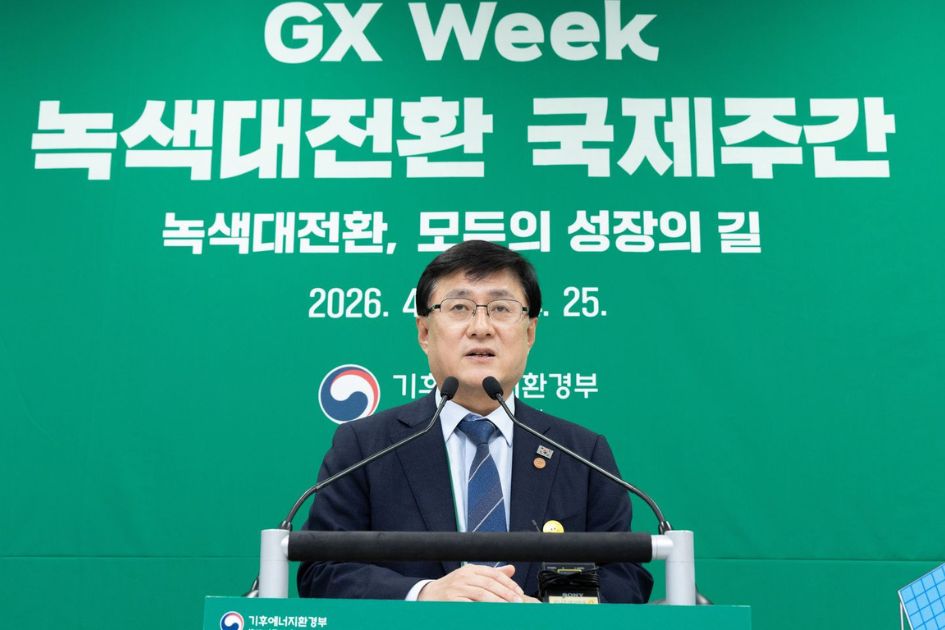
South Korea’s Minister of Climate, Energy and Environment, Kim Sung-hwan, stressed that delay carries economic risks.
“Green transformation is not a matter of choice but a path we must take,” he said.
“If we hesitate, China will capture all the green industries.”
From a European perspective, Ugo Astuto warned that dependence on imported fossil fuels continues to expose countries to external pressure.
“As long as we rely on imported fossil fuels, we remain vulnerable to volatility,” he said.
Wind Power and Rising Energy Demand
Energy discussions also highlighted the rapid growth of renewables, particularly wind power.
At a roundtable organised by the Global Wind Energy Council and the Global Renewables Alliance, Asia’s coastlines were identified as one of the world’s largest untapped offshore wind opportunities.
Participants described wind energy as a “strategic pillar of energy security,” reflecting its expanding role in national planning.
At the same time, a new challenge is emerging.
The rise of artificial intelligence is driving a surge in electricity demand, particularly from data centres. Companies including Naver, GE Vernova and Schneider Electric warned that this growth could put additional pressure on already strained power grids.
Experts cautioned that without careful planning, rapid digital expansion could outpace clean energy supply and risk locking in new fossil fuel capacity.
From Commitments to Action
A central focus of Climate Week 3 was turning pledges into practical results ahead of COP31.
Sessions focused on grid upgrades, financing models and local-level implementation, areas where progress has often been slow.
Local government representatives highlighted a persistent gap between national targets and delivery on the ground.
A Critical Moment Between COP Summits
Climate Week 3 comes between COP30 in Brazil and the upcoming COP31 in Türkiye, serving as a key moment to maintain momentum.
What stood out in Yeosu was a shift in narrative.
Climate action is no longer framed only around emissions targets. It is increasingly tied to competitiveness, resilience and control over energy systems.
For many developing and energy-importing countries, this shift carries particular urgency.
Nations like Bangladesh remain highly exposed to global fuel price shocks, making the transition to locally available renewable energy both an economic and strategic priority.
At the same time, the transition presents an opportunity to expand access to affordable energy and build more resilient economies.
Outside the conference halls, Yeosu’s industrial skyline still reflects the fossil fuel era.
Inside, the focus has shifted to grids, wind power and clean industry.
The challenge now is not ambition but whether countries can move fast enough to turn promises into real change on the ground.




