

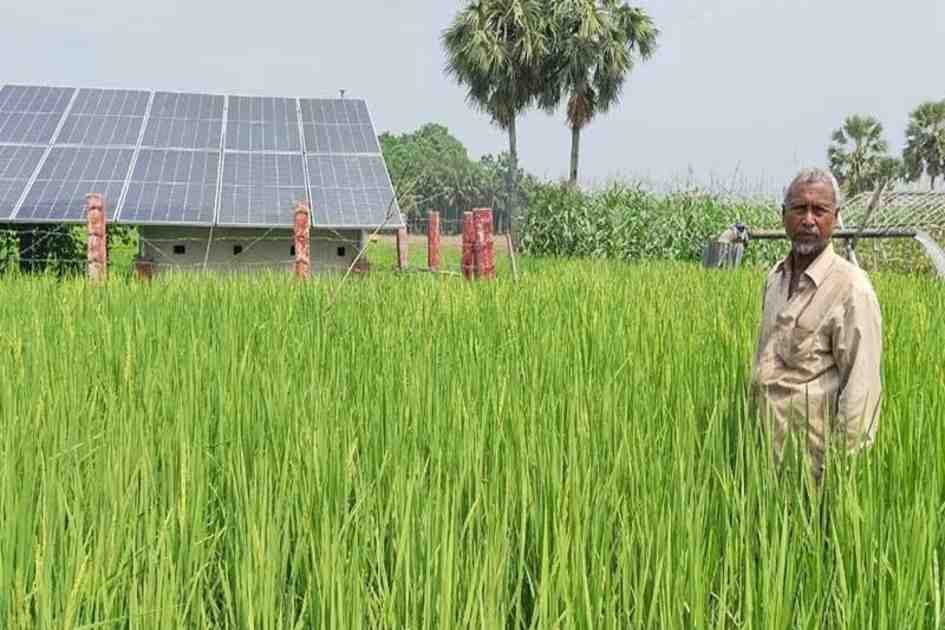

Solar-powered irrigation in Narail is helping farmers cut costs, reduce fuel dependence and improve crop yields, offering a practical and scalable pathway toward sustainable and climate-resilient agriculture in Bangladesh.
Solar-powered irrigation is transforming agriculture in Narail district, pumping around 1.2 million liters of water daily and helping farmers cut costs while ensuring reliable irrigation.
The initiative comes at a time when Bangladesh is facing rising fuel prices and increasing pressure on energy resources. More than 500 marginal farmers are now benefiting from the system, cultivating boro rice, maize, sesame and vegetables with improved water access and reduced production costs.
Field visits show that three solar units, each with an 8-kilowatt capacity, are powering 5.5-kilowatt irrigation pumps capable of lifting 17 liters of water per second. The systems operate for up to 16 hours a day depending on sunlight availability, ensuring continuous irrigation during critical growing periods.
The project has significantly reduced dependence on diesel and grid electricity, saving approximately 36 liters of diesel and 132 units of electricity per day. As a result, irrigation costs for farmers have been reduced by nearly half.
Farmers say the impact is visible in healthier crops and more stable production. While some were initially skeptical, confidence in the technology has grown as they experience its benefits firsthand.
Md Hossain Ali, a farmer from Chachra village, said, “During the boro season, farmers in other areas often face irrigation concerns but we no longer face such worries.”
Naran Biswas, a marginal farmer from Bamonhati village, added, “We are successfully irrigating not only rice but also jute and vegetables. Compared to shallow machines, the cost of irrigation with solar pumps is about half.”
Agricultural officials said the solar pumps are jointly managed by farmers, promoting shared ownership and long-term sustainability. Sudipta Biswas, sub-assistant agriculture officer in Tularampur union, described the initiative as timely in addressing fuel shortages and rising costs, adding that efforts are underway to expand its adoption among more farmers.
Upazila Agriculture Officer Md Rokonuzzaman said wider expansion of such systems could further reduce production costs and strengthen agricultural resilience. “This is a practical and timely initiative. If expanded, it will significantly support farmers and improve productivity,” he said.
As Bangladesh faces ongoing energy constraints and climate challenges, Narail’s solar irrigation model offers a practical, scalable solution for sustainable and climate-resilient agriculture.




