

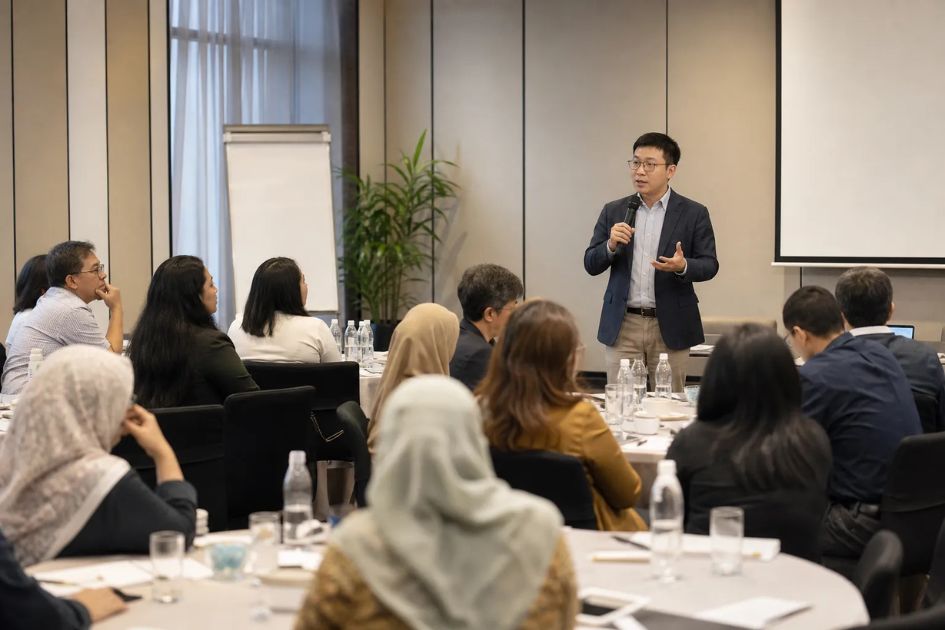



Speakers highlighted youth participation, health risks and cleaner urban transport as regional advocates pressed for stronger policies on energy, finance and low-carbon development across Southeast Asia.
About 800 participants from Southeast Asian countries have gathered in Singapore for a Climate Reality Leadership Corps training aimed at turning climate commitments into practical solutions, Channel NewsAsia reports.
The two-day event, organised by The Climate Reality Project, a nonprofit founded by former US Vice President Al Gore, began on September 8.
According to the organisers, half of the participants are aged 30 or younger. The gathering is the organisation’s 10th training of its kind in the region and the first to be held in Singapore.
The programme focuses on the energy transition, climate finance and regional cooperation, with Al Gore, scientists and climate experts addressing participants.
Phyllis Cuttino, president and CEO of The Climate Reality Project, said the next decade in Asia would be important in determining the trajectory of the climate crisis as global emissions continue to rise and government ambition weakens in some parts of the world.
Cuttino also described Singapore as one of the few countries that impose a carbon tax and do not subsidise fossil fuels.
Jitsai Santaputra, co-founder of Youth for Energy Southeast Asia and a founding member of the Thailand Youth Climate Council, said the presence of young people in consultations did not necessarily guarantee that they had meaningful influence over policy.
She said young people should be viewed not only as recipients of policy decisions but also as people capable of providing feedback on energy consumption and the type of energy model they want.
Renzo Guinto, associate professor of global and planetary health at the SingHealth Duke-NUS Global Health Institute, said climate change was already affecting human health, particularly among vulnerable groups in poorer countries.
He identified extreme heat, air pollution and diseases, as well as threats to food and water security, among the risks linked to climate change. Guinto also highlighted the consequences of flooding in Metro Manila following intense rains and typhoons.
Golda Ilario, urban development director at the Institute for Climate and Sustainable Cities, said cutting transport emissions required measures beyond electrification.
She said cities needed to become more compact and accessible so that people could make greater use of public transport, walk or travel by bicycle.




