

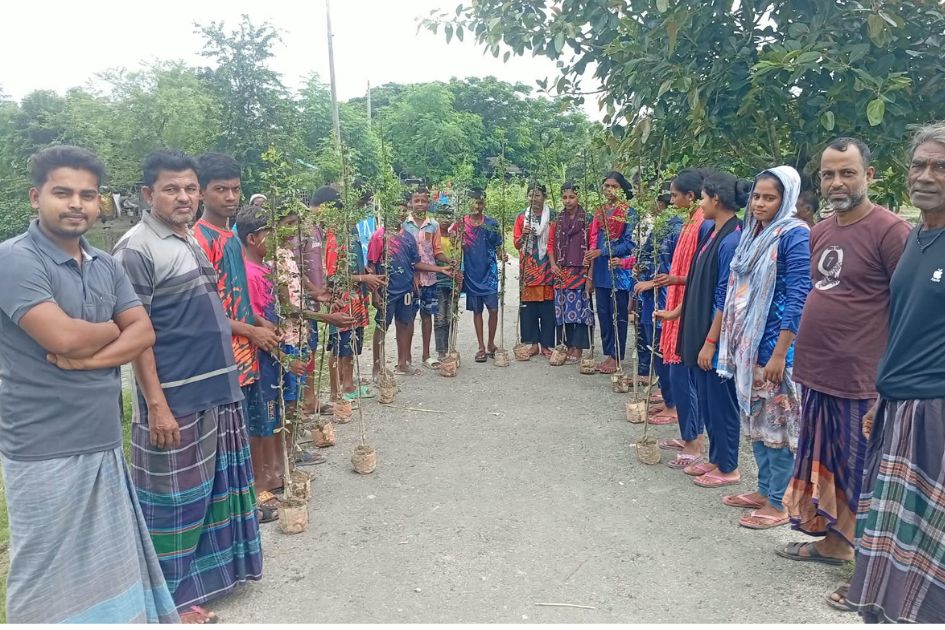



Planting sites ranged from homesteads and school grounds to embankments and riverbanks, with young participants also arranging protection and care to improve sapling survival.
To address the adverse impacts of climate change, protect environmental balance and contribute to building a greener and climate-resilient society, a large-scale tree and seed plantation initiative has been carried out in Satkhira District in southwestern Bangladesh. Under the SPiRiT-CALL Project, implemented by Breaking the Silence with the support of Terre des Hommes (Tdh), 5,400 children and young people actively participated in planting 8,753 fruit and forest tree saplings and 16,800 seeds of various species, including babla, date palm and palmyra palm.
The activities were conducted in 67 villages across 15 unions of Satkhira Sadar, Debhata, Kaliganj, Assasuni and Shyamnagar upazilas of Satkhira District. With the participation of children and youth involved in the project during 2025 and 2026, extensive tree and seed plantation activities were carried out, particularly from 4 June to 8 September 2026.
The programme received participation and support from upazila executive officers, women’s affairs officers, social services officers, youth development officers, agriculture officers, Union Parishad chairpersons and members, teachers, parents and people from different sections of the local community. The involvement of government officials, elected representatives and local community members further strengthened this environmentally friendly initiative led by children and youth.
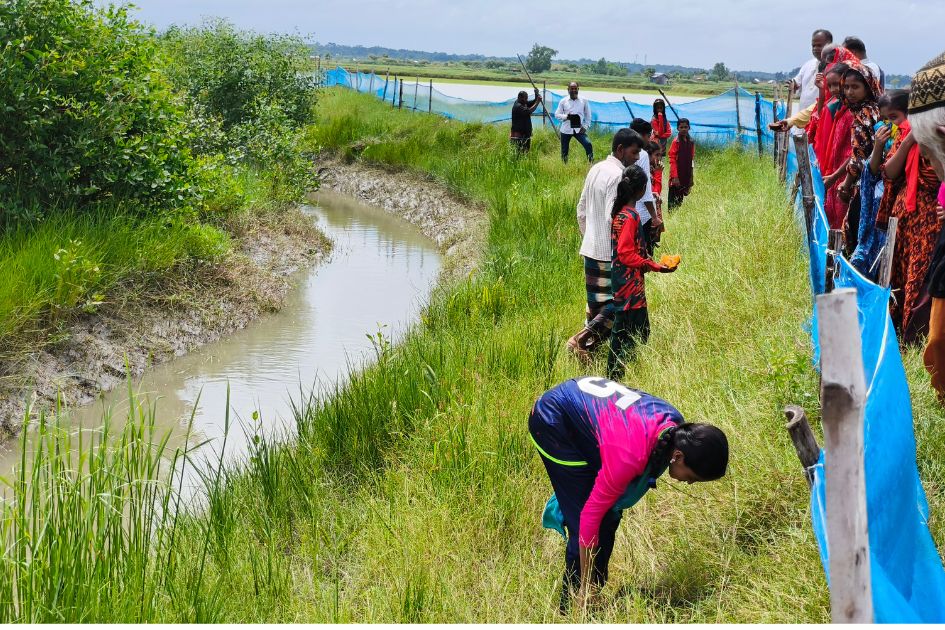
The initiative was undertaken under the SPiRiT-CALL Project with the objective of engaging children and young people in environmental protection and addressing the growing risks of climate change. Alongside actively participating in tree and seed plantation activities, children and youth are also taking various measures to ensure the protection, care and long-term survival of the planted trees.
Trees and seeds were planted in home gardens, along roads and highways, in embankment and coastal protection areas, along the banks of rivers and canals and on the premises of educational institutions. Their activities did not end with planting trees. To protect the planted saplings, children and youth collected nets, bamboo and wooden stakes through their own initiatives and established protective structures around the trees. They have also taken initiatives to ensure their regular care and maintenance.
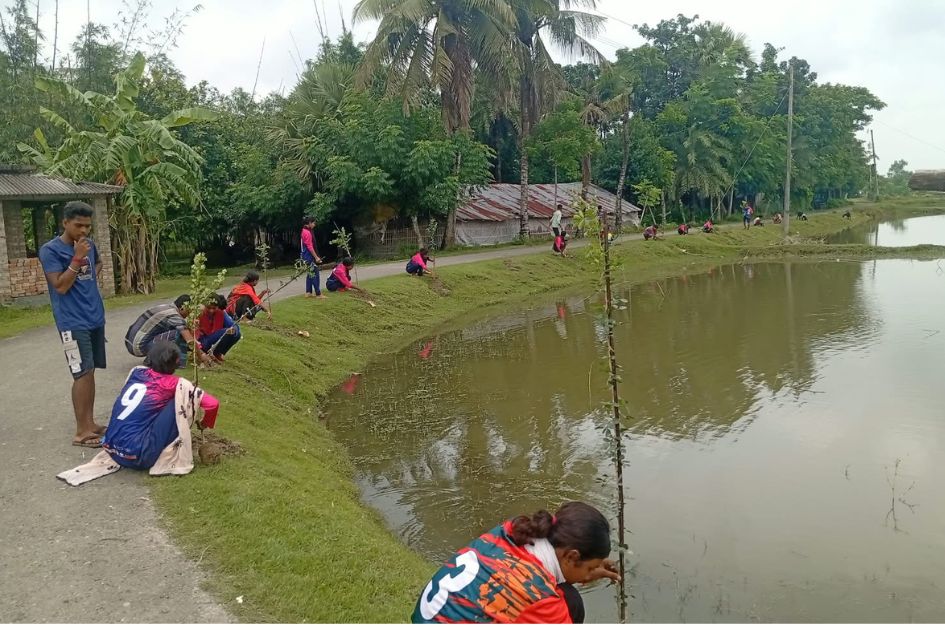
Through this initiative, children and young people have developed a stronger sense of responsibility towards environmental conservation and climate change action. They have realised that planting trees alone is not enough; regular care, protection and ensuring a high survival rate of the trees are equally important.
Emphasis is also being placed on selecting and planting appropriate tree species that are suitable for the local environment and geographical conditions. Stakeholders hope that this voluntary initiative by children and youth will play an important role in developing environmentally responsible leadership, strengthening social responsibility and building a greener, safer and more climate-resilient Satkhira for future generations.




