

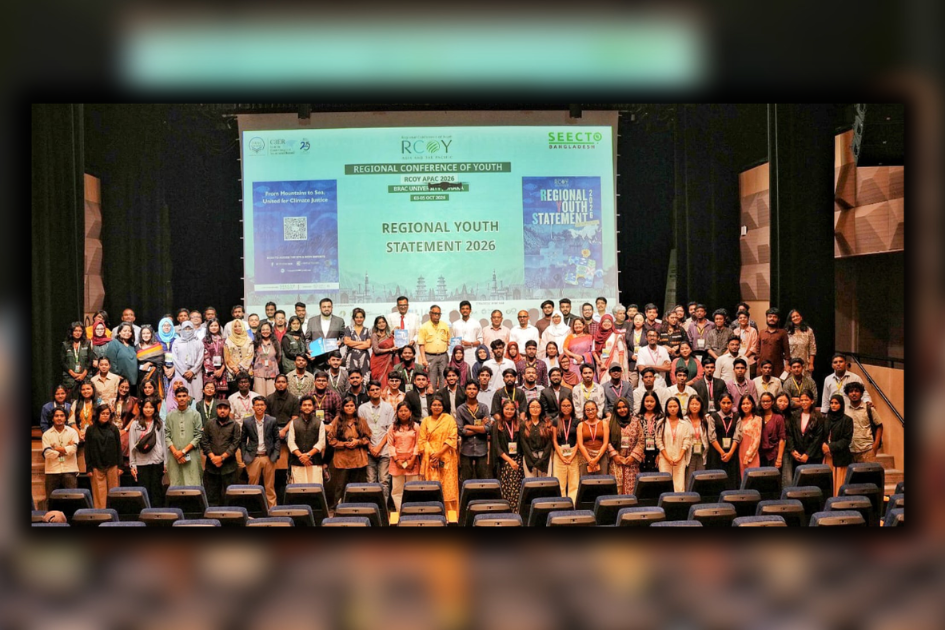



Delegates explored practical adaptation measures addressing salinity and drought before taking part in a simulated COP negotiation to strengthen their understanding of international climate diplomacy.
The Regional Conference of Youth (RCOY) Asia-Pacific 2026 concluded on Tuesday with field-based climate learning at the CCDB Climate Centre in Gazipur and a simulation of international climate negotiations ahead of COP31.
International delegates and selected national delegates visited the centre to learn about climate-resilient initiatives and adaptation practices through practical demonstrations.
The field programme began with a tour of the centre’s projects, where participants explored different approaches to addressing climate-related challenges.
Delegates learned about salinity, including its causes and effects on communities and agriculture. They also examined cultivation techniques suited to drought conditions, plant-based projects and other field-level approaches to climate adaptation and resilience.
The activities demonstrated how climate change affects communities and farming and how locally relevant measures can help address these challenges.
In the second half of the programme, participants took part in a simulation of a Conference of the Parties (COP) negotiation process to prepare for COP31. The session was developed and facilitated in collaboration with the Youth Lead sector of Plan International, whose team worked with the organisers on its design and delivery.
The simulation followed the structure and dynamics of international climate negotiations. Participants were assigned roles representing different countries, while civil society was also represented.
Through the exercise, delegates experienced how different stakeholders participate in international climate discussions, present their positions and negotiate with one another. The simulation was intended to help participants better understand the negotiation process and prepare them to engage more meaningfully with COP31.
A feedback session followed the simulation, allowing participants to reflect on their learning and experiences during the day.
The programme ended with a certificate-giving ceremony, where certificates were presented to participating delegates, formally marking the conclusion of the final day of the conference.




