

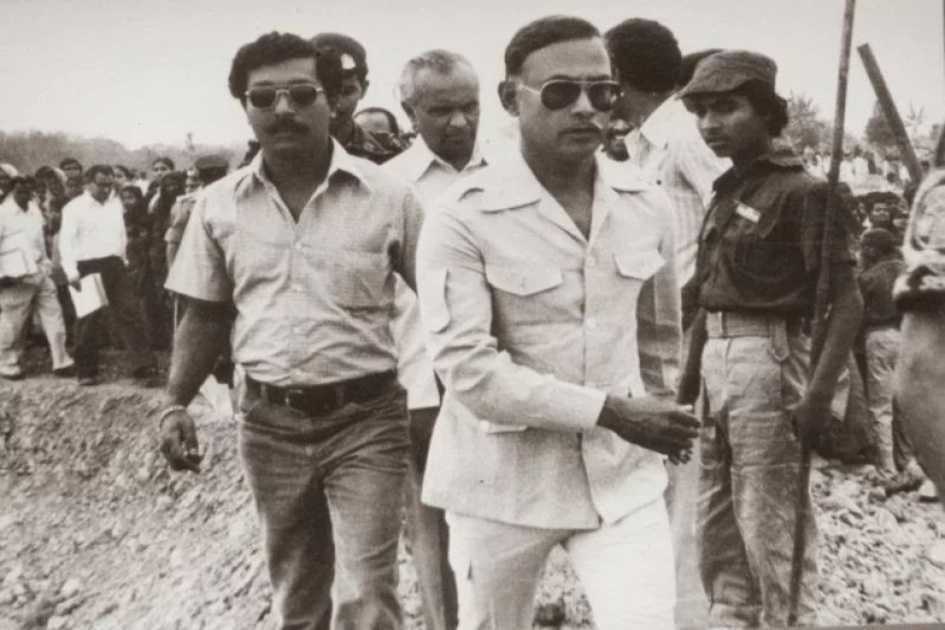



From canals and farming reforms to river restoration, President Ziaur Rahman’s environmental leadership offers lessons for Bangladesh as rapid development collides with climate risks and growing urban and ecological pressures.
Bangladesh is racing toward modern urban growth. Metro rails, flyovers and expressways are reshaping cities. At the same time, rivers are shrinking, wetlands are disappearing, canals are being filled and floods hit every monsoon. Rapid development is clashing with nature, a challenge shared by many developing nations.
The environmental vision of former President Ziaur Rahman, who led the country from 1977 to 1981, offers lessons for today’s climate crisis. Decades ago, Ziaur placed natural resource management at the center of national development, showing that economic growth and environmental protection can go hand in hand.
After independence in 1971, Bangladesh was a war-torn country with destroyed infrastructure, crippled agriculture and chronic food shortages. Ziaur Rahman recognized that agriculture, fisheries, livestock and rural development were key to national self-reliance. Under his leadership, food production doubled, irrigation expanded and cooperative farming systems strengthened rural communities. He also invited foreign investors, boosting the garment sector and developed ties with Middle Eastern countries, laying the foundation for Bangladesh’s remittance economy.
On May 30, 1980, Zia launched the Self-Reliant Village Government system. The program promoted tree planting, fish and poultry farming and local governance for development. Villages could manage irrigation, crops and natural resources themselves, promoting climate-resilient, locally led development. Communities became active participants in agriculture and environmental protection.
With only 15 percent of farmland under irrigation, farmers relied heavily on rain. To address this, Zia launched the Canal Excavation Program between 1979 and 1981, digging over 26,000 kilometers of canals. This ensured water supply during dry seasons, increased crop yields, expanded fish farming and improved rural livelihoods. Farmers fondly called him the Farmer’s President after he personally inaugurated the program in Ulshi, Jessore. Volunteers also restored rivers including Teesta, Arial Khan, Dholeshwari, Karatoa and Dhanshiri. While partial revival was achieved, Bangladesh has lost roughly 520 rivers over the past five decades, worsening floods, water scarcity and ecological degradation.
Zia secured Bangladesh’s water future through the 1977 Ganges Water Sharing Treaty and proposed the Ganges Barrage to secure freshwater and irrigation for 27 districts. With the Padma River flow dropping up to 80 percent during dry seasons, his vision remains vital for water security.
Zia introduced private sector participation in agriculture and passed the 1977 Seed Ordinance, promoting high-quality seeds, fertilizers and machinery. Farmers were encouraged to mechanize, cooperate in production and adopt modern cultivation techniques. He created the Special Agricultural Credit Fund in 1977, providing collateral-free loans to marginalized farmers. By 1980–81, Bangladesh collected 1.03 million tons of rice, enabling rice exports for the first time in the country’s history.
His 1980 land reform policies capped landholdings, redistributed khas land and supported cooperative farming. Farmers could access credit without land collateral. This strengthened rural livelihoods, reduced poverty and boosted self-reliance.
Zia also integrated fisheries and livestock into national development. Hatcheries and fish farming training were expanded, cooperative marketing for fish was promoted and poultry, dairy and meat production increased significantly. In 1981, he established the National Committee for Marine Resource Exploration, laying the foundation for Bangladesh’s Blue Economy, tapping the Bay of Bengal for fisheries, energy, trade and tourism.
Environmental protection was central to Ziaur’s policies. Over 5.5 million trees were planted in a single season in 1979. The Rural Electrification Board, established in 1977, powered irrigation and machinery. The Ministry of Youth in 1978 and the Youth Development Center in 1981 created thousands of jobs and promoted entrepreneurship in rural areas.
During her terms as Prime Minister, Khaleda Zia built on Shaheed Ziaur Rahman’s environmental legacy by enacting the Bangladesh Environment Conservation Act, 1995 and establishing national policies for conservation and pollution control. Her government promoted social forestry, tree planting and sustainable infrastructure while pioneering measures against plastic pollution through a nationwide ban on thin polythene bags and promotion of jute-based alternatives. Urban initiatives included replacing polluting vehicles with CNG-powered ones, relocating tanneries and introducing noise regulations.
Recognizing climate vulnerability, her administration strengthened disaster preparedness, built cyclone shelters, planted coastal vegetation and prepared the National Adaptation Programme of Action. These initiatives demonstrate that bold, legally backed and participatory environmental action is possible, laying a foundation for Bangladesh’s climate resilience and sustainable development.
BNP leaders including Tarique Rahman and Zaima Rahman continue this environmental vision. They emphasize river restoration, reforestation, climate-resilient infrastructure, pollution control, inclusion of women in climate policymaking and youth engagement in green jobs and skills.
BNP leader Tarique Rahman, son of Ziaur Rahman and Khaleda Zia and current chairman of the party, has continued this legacy. On the eve of World Environment Day last year, he said that environmental conservation is not a luxury but a necessity and called on people to protect air, water and soil for the future of all. He pledged that upon taking office, the party will prioritize environmental stewardship by addressing river restoration, reforestation, climate-resilient infrastructure and pollution control, including air and lead pollution, securing public health and protecting ecosystems.
Barrister Zaima Rahman, daughter of Tarique Rahman, emphasized that Bangladesh’s progress on climate action and sustainable development will remain incomplete unless women’s voices are fully included in policymaking and national planning. Speaking at a discussion on Women’s Role in Nation-Building, she highlighted that gender equality is an economic and national priority and must be integrated into climate plans and policies.
Sohanur Rahman, Executive Coordinator of YouthNet Global, said, “Bangladesh is facing unprecedented climate challenges. Adaptation, loss and damage, just transition and pollution control are no longer abstract concepts. They affect millions.” He added, “Bangladesh needs a Green New Deal that protects nature, drives sustainable economic growth, builds climate-resilient infrastructure, develops human capital and safeguards workers’ rights.”
Ziaur Rahman’s hands-on leadership, plowing fields, digging canals and planting trees, symbolized a deep commitment to both people and nature. Combined with Khaleda Zia’s reforms and ongoing BNP initiatives, his legacy provides a blueprint for climate-resilient, sustainable and inclusive development. Bangladesh shows that development and environmental protection do not need to conflict. Political will, community empowerment and nature-centered policies remain essential to address today’s climate challenges.




