

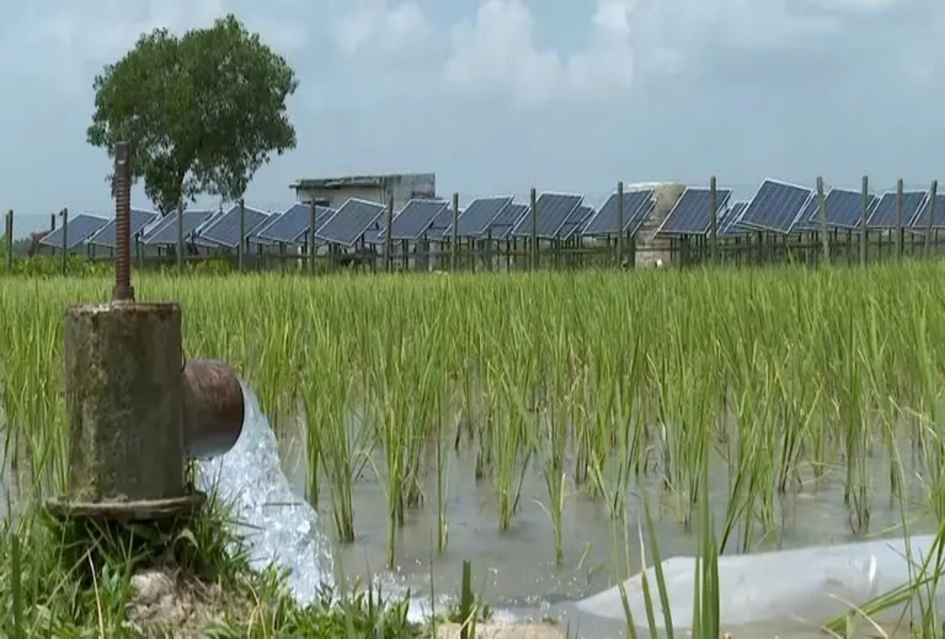



Experts urge Bangladesh to raise renewable energy funding in the next budget, warning that fossil fuel dependence threatens energy security, economic stability and the country’s clean energy transition.
Despite possessing substantial potential for solar, wind, biogas and other renewable energy sources, Bangladesh continues to rely heavily on fossil fuels to meet its energy needs. According to sector data, around 97 percent of the country’s energy demand is currently met through fossil fuels, nearly 70 percent of which are imported.
The dependence on imported fuel has exposed Bangladesh to global price volatility and foreign exchange pressures, contributing to higher electricity and energy costs across the economy. Rising energy prices have increased production costs in industry, agriculture, irrigation and fertilizer use while adding to inflationary pressures on consumers.
Bangladesh spends billions of dollars annually on importing fossil fuels, placing significant pressure on foreign exchange reserves. Experts argue that expanding domestic renewable energy generation could help reduce import bills, improve balance-of-payments stability and shield the economy from global energy price shocks.
Although the government has pledged to expand the use of clean energy and reduce reliance on fossil fuels, experts say the budgetary commitment remains insufficient. Renewable energy currently accounts for only 4.62 percent of the country’s installed power generation capacity, with approximately 4 percent being supplied to the national grid.
The slow progress has raised concerns about Bangladesh’s ability to meet its renewable energy ambitions and climate commitments. Many neighbouring countries have accelerated investments in clean energy technologies in recent years to improve energy security and reduce dependence on imported fuels.
Under the proposed Annual Development Programme (ADP) for fiscal year 2026-27, the government has allocated Tk 32,691.54 crore to the power and energy sector, making it the fourth-largest priority area and accounting for nearly 10.9 percent of total ADP spending. However, analysts note that only a small share of this allocation is directed toward renewable energy development.
Speaking on the issue, CPD Research Director Khandaker Golam Moazzem said the government’s policy commitment to expanding solar, wind and other green energy sources is not adequately reflected in the budget structure.
“Less than 5 percent of the allocation effectively goes to renewable energy. Looking at the budget, renewable energy remains overshadowed by fossil fuel investments. At least 10 percent of the Ministry of Power and Energy’s budget should be allocated to renewable energy projects,” he said.
Energy expert Anu Muhammad said Bangladesh cannot build a sustainable energy system by relying solely on fossil fuels.
“The future of energy worldwide is renewable. We want to see a clear roadmap in the upcoming budget that strengthens national institutions, develops domestic capacity and accelerates renewable energy deployment,” he said.
While the government’s Renewable Energy Policy 2025 has set ambitious targets of sourcing 20 percent of electricity demand from renewable energy by 2030 and 30 percent by 2040, analysts argue that financing and implementation efforts must be significantly strengthened to achieve those goals.
The government has set a target to generate 30 percent of the country’s electricity from renewable sources by 2040 as part of its long-term strategy to establish a sustainable and environmentally friendly energy system.
Minister for Power, Energy and Mineral Resources Iqbal Hassan Mahmood disclosed the targets in parliament on June 7 while replying to a question from ruling party lawmaker Khairul Kabir Khokon.
The minister said the country’s installed renewable energy generation capacity currently stands at 1,781.09 megawatts (MW).
He informed parliament that under the Renewable Energy Policy 2025, the government aims to meet 20 percent of total electricity demand from renewable sources by 2030 and 30 percent by 2040.
According to the minister, the policy includes grid-connected solar projects, rooftop solar systems and floating solar power plants to accelerate the country’s transition toward clean energy.
He also noted that under the Policy for Enhancing Private Sector Participation in Renewable Energy-Based Power Generation 2025, private investors will be allowed to establish renewable energy plants and sell electricity either through government distribution networks or directly to large consumers.
Iqbal Hassan Mahmood said 26 renewable energy-based power plants with a combined capacity of 1,172 MW are currently under construction across the country.
In addition, the tendering process is underway for 15 renewable energy projects with a total capacity of 665 MW, which are expected to be connected to the national grid by 2029, he added.
The minister further said the government has already set a long-term goal of achieving 10,000 MW of renewable energy generation capacity, reflecting its commitment to expanding clean energy and reducing dependence on conventional fuels.
However, experts caution that achieving these targets will require a dramatic acceleration in renewable energy deployment. With renewable energy currently contributing less than 5 percent of installed power generation capacity, Bangladesh would need to add thousands of megawatts of new clean energy projects over the next decade to stay on track.
Experts also recommended avoiding new long-term fossil fuel import agreements and instead prioritising investments in domestic renewable energy infrastructure, technology development, research, innovation and local manufacturing capacity.
Among the proposals is a push for mandatory rooftop solar installations where technically and economically feasible, particularly on government buildings, educational institutions, industries and commercial facilities. Analysts say such measures could help reduce pressure on the national grid while encouraging decentralised energy production.
Experts further noted that promoting domestic manufacturing of solar panels, batteries, mounting structures and related renewable energy equipment could create new industrial opportunities, reduce import dependence, strengthen supply chains and generate thousands of skilled jobs for young people.
They also stressed the need for stronger public accountability and oversight mechanisms to ensure renewable energy systems remain operational and deliver expected benefits. Improved monitoring, transparency and performance evaluation are considered essential for maximising returns on public investments.
Climate and energy advocates emphasised the importance of transparent climate finance governance, arguing that renewable energy investments should be subject to robust monitoring, public accountability and regular performance assessments to ensure public resources deliver measurable economic, social and environmental benefits.
In addition, experts called for nationwide public awareness campaigns on energy conservation and efficiency to help reduce demand-side pressure, particularly during peak electricity consumption periods.
Prime Minister’s Adviser on Economic and Planning Affairs Rashed Al Mahmud Titumir said the government intends to increase the share of renewable energy while reducing dependence on imports through policies that promote domestic production.
“The share of renewable energy will increase and the necessary processes to support that transition will be pursued,” he said.
Climate and energy advocates argue that expanding renewable energy is not only an environmental necessity but also an economic imperative for Bangladesh. Greater investment in clean energy could reduce fuel import bills, strengthen energy security, create green jobs, improve air quality and support a more resilient and inclusive development pathway.
Sohanur Rahman, executive coordinator of YouthNet Global and a youth climate advocate, said Bangladesh cannot achieve energy security through imported fossil fuels alone.
“The upcoming budget should prioritise renewable energy, local manufacturing, green jobs, social protection and a just transition that supports workers, communities and vulnerable populations while building a resilient low-carbon economy,” he said.
“Strong climate finance governance and public accountability will also be essential to ensure that investments deliver lasting benefits for both people and the planet.”
As Bangladesh prepares its next national budget amid rising energy demand, climate vulnerability and economic pressures, experts say the choices made today will determine whether the country remains locked into costly fossil fuel dependence or accelerates toward a more secure, affordable and sustainable energy future powered by domestic renewable resources.




