




Community-built ponds in Nepal’s Tarai-Madhesh are helping recharge local water supplies, support irrigation and reduce the impact of increasingly prolonged dry spells.
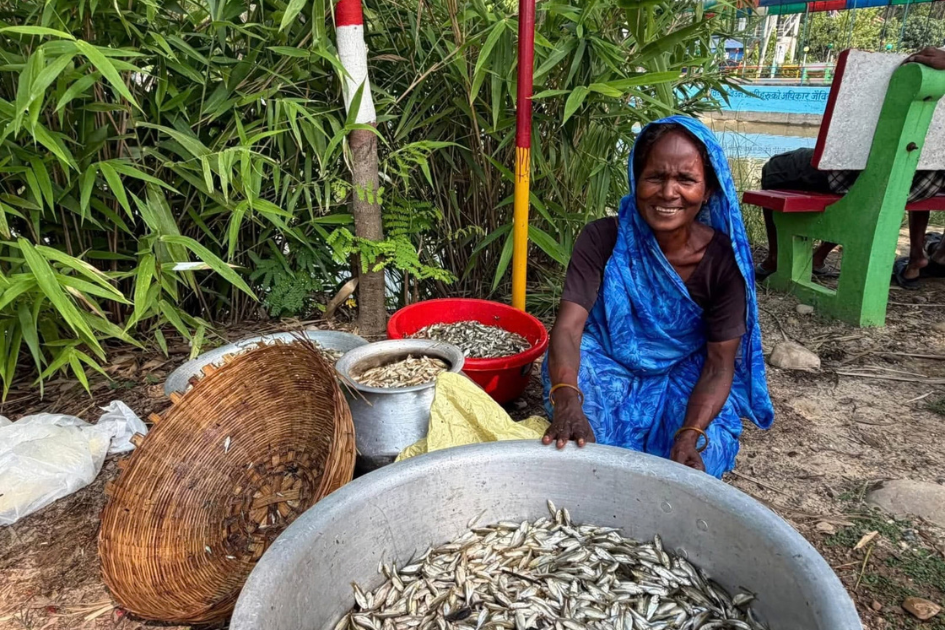
Nathuni Mahato of Amhai Tole in Lahan Municipality-18, Siraha district, finished transplanting paddy on her seven-kattha plot by the third week of Ashadh, the first month of Nepal’s monsoon season.
While farmers in many parts of Madhesh have been forced to leave their fields uncultivated as they wait for rain, Nathuni did not face a shortage of water for planting, even when rainfall was delayed.
Three years ago, things were very different.
“We used to wait for rain from the sky,” Nathuni recalls. “Some years, when the rain did not arrive on time, we could not transplant the rice and had to leave the fields uncultivated.”
Today, the source of water reaching her field is a pond built at the foothills of the Chure hills.
Until a few years ago, water shortages were becoming increasingly severe in Shobhapur, Hattidaha and Amhai areas of Lahan Municipality wards 15 and 18, north of the East-West Highway.
According to local resident Dhiren Chaudhary, many of the hand pumps in the area had stopped functioning. Even when new hand pumps were installed, water could only be found after drilling to depths of around 50 to 60 feet.
“All the hand pumps in the village had stopped working,” he says. “Even when we installed new ones, we had to go down as far as 60 feet before we could finally find water. When there was not enough water even for drinking, farming was out of the question.”
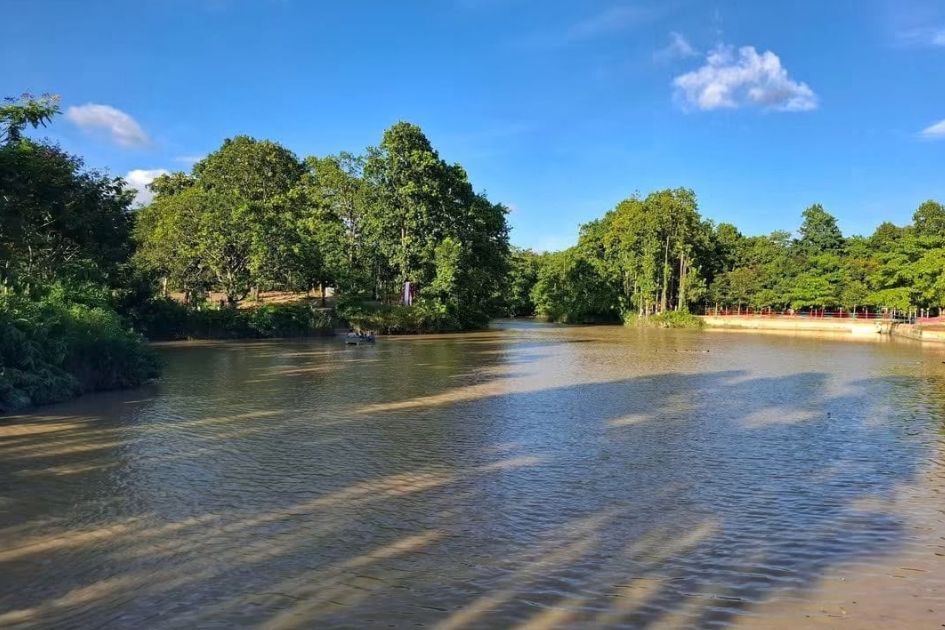
As the water crisis worsened, villagers began looking for ways to address the problem. After discussions, they chose a simple approach: retain rainwater within the village by building large ponds beside seasonal streams.
Construction of the ponds began in 2079 BS under the leadership of the Koiralo Khola Community Forest. Water flowing through the stream during the monsoon, along with runoff from rainfall, was collected in the ponds.
The impact began to become visible within just two years, says Rudranarayan Chaudhary, chairperson of the Koiralo Khola Community Forest.
“We did not expect results to come so quickly,” he says. “But we saw good results within a short period. The deepening water crisis was brought under control, at least for the time being.”
The initiative was initially started by the local community itself. Later, organisations including the Federation of Community Forestry Users Nepal and CARE Nepal provided support.
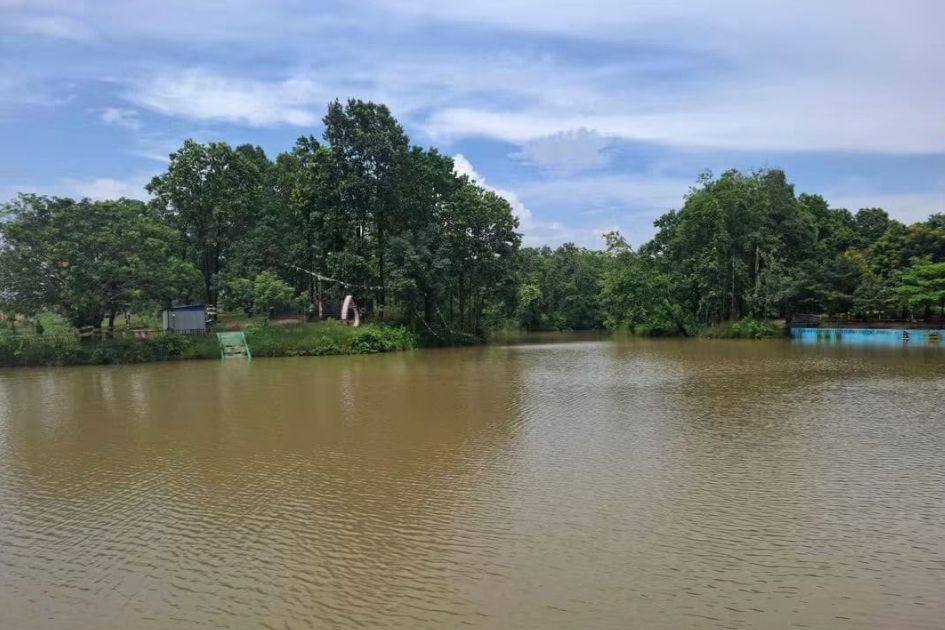
There are now several ponds in the area, including a main pond covering 16 katthas of land.
A noticeable change in water availability
Local residents say they have experienced the change in water availability themselves.
Muwalal Chaudhary of Lahan-15 says that before the pond was built, he could not find water even after digging to a depth of 50 feet. Now, according to his experience, water can be reached at around 25 feet through a hand pump.
“I once dug 50 feet deep right here and still could not find water,” he says. “Now water comes from the hand pump at just 25 feet.”
According to him, extracting water from hand pumps has become much easier in Shobhapur, Amhai and surrounding areas. Some farmers are also using pumps to draw water from the pond for irrigation.
Muwalal himself grows vegetables during the winter using water from a tubewell. During the monsoon, he says, the water collected in the pond helps with paddy transplantation.
“We have reached a situation where we can get water throughout the year,” he says. “Households near the pond have also been able to pump water for irrigation.”
According to local residents, water from the ponds has helped irrigate around 20 bighas of farmland. Nathuni Mahato’s seven-kattha field is among the farmland benefiting from the water.
The challenge of changing rainfall patterns
It is becoming increasingly important to consider not only when rain falls but also how long dry periods last and how intensely rain falls when it does arrive. Significant changes in these patterns have been observed over recent decades.
According to a climate change study by Nepal’s Department of Hydrology and Meteorology, the maximum duration of consecutive dry days in Madhesh is currently around 73 days. Projections suggest that this could increase to 84 days by the 2080s. This means Madhesh could face a growing risk of longer periods without rainfall in the future. When there is no rain for an extended period, demand for water for agriculture and other essential needs increases. However, if rainwater can be collected locally when it does fall, the stored water can then be used during prolonged dry spells.
Locally constructed ponds are not a solution to every water-related problem. How much water a pond can hold, how long that water lasts and how much land can be irrigated depend on factors such as the amount of rainfall.




