

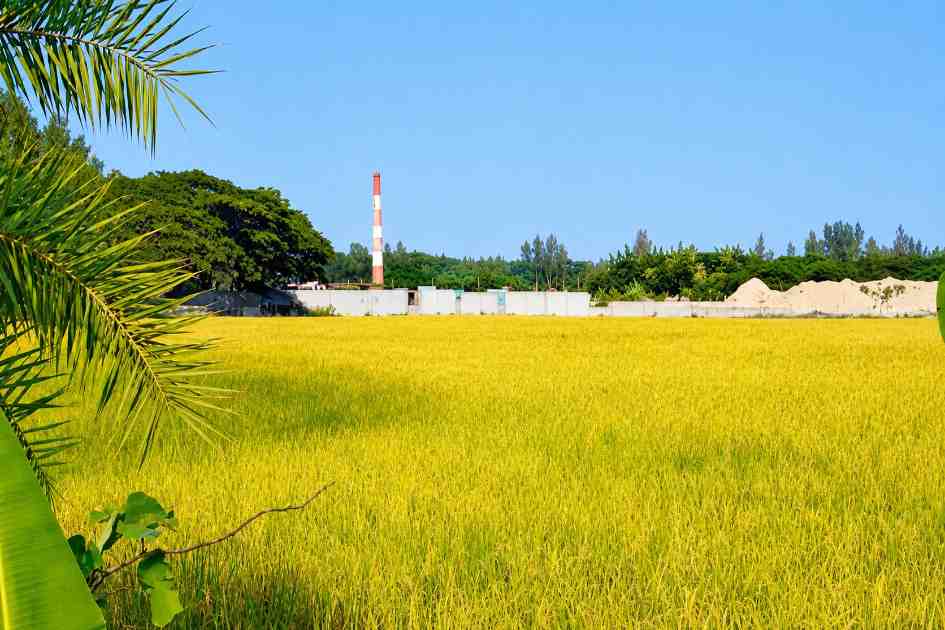

Only two of Ramgati’s 53 brick kilns are licensed, as illegal operations consume cropland, strip fertile topsoil, pollute air and defy court-ordered eviction drives, local officials and residents say today.
The remaining 51 are running without permission, damaging hundreds of acres of cropland, polluting the air and disrupting daily life in surrounding communities, according to local officials and residents.
Most of the kilns have been built on agricultural land, with 25 of them concentrated in Char Afzal village alone. The soil used to make bricks is being taken directly from farmland, stripping away the fertile top layer and reducing the land’s productivity. At the same time, thick black smoke from the kilns is worsening environmental pollution.
The illegal kilns are harming cultivation, roads, houses and the wider environment, while making life increasingly difficult for nearby residents. Kiln owners have also been accused of violating land use conversion rules.
Several kilns have been established in the unions of Char Algi, Char Poragacha and Char Gazi. Each kiln occupies an average of six to eight acres of land. As a result, 400 acres of cropland have been lost to the 51 illegal kilns. In addition, the topsoil of several hundred more acres is being cut away to supply earth for brick production.
Many landowners have alleged that tractors and trolleys carrying soil to the kilns pass through their land, causing damage to several hundred kilometres of rural roads.
In 2024, a writ petition was filed with the High Court demanding the removal of illegal brick kilns, and the court ordered their eviction. At the start of the 2025 season, the Department of Environment, with support from the local administration, used loudspeaker announcements in Ramgati to warn that the kilns must remain closed. Kiln owners were also called to the hallroom of the Upazila Parishad and informed of the court’s order, but the directive was ignored.
Brick kiln owner and president of the Brick Kiln Owners Association Md Khalilur Rahman said he operated two kilns side by side on about 16 acres of land that he had purchased. He said many owners, however, run their kilns by taking soil from other people’s land outside their own property in exchange for annual cash payments.
He said a kiln requires six to eight acres of land to operate and that owners had invested several crore taka in each one. Most of them, he said, had to sell ancestral property to make that investment. By the time the government ordered the kilns to remain shut, many had already borrowed large sums of money to hire workers and buy soil. He added that they would consider whether to continue operating kilns in the future.
Ramgati Agriculture Officer Md Mujibur Rahman said most of the kilns had been set up without approval from the agriculture office.
“The topsoil of triple-crop land is being used in brick kilns, which is a terrible threat to agriculture,” he said.
Harun Or Rashid Pathan, assistant director of the Department of Environment, said eviction drives against illegal brick kilns were continuing under the leadership of an executive magistrate and with support from the local administration.
“So far, drives have been carried out at 45 brick kilns,” he said. “We have received reports that several kilns that were demolished have started operating again. Those kilns will face fresh drives.”
Ramgati Upazila Nirbahi Officer Nilufa Yasmin Nipa said the eviction campaign was being conducted in line with the court order.
“The drives will continue until the eviction is completed,” she said. “Fresh action will be taken against the illegal brick kilns again within the next few days.”
This article is republished from The Daily Samakal.




