

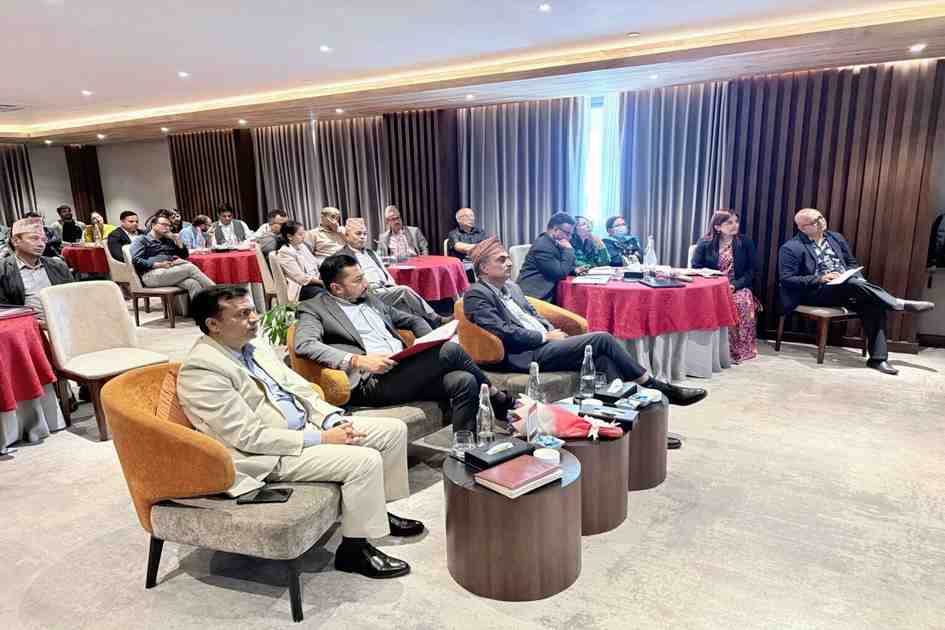



Nepal reviewed its progress on green hydrogen development on Friday as policymakers, researchers and industry representatives gathered in Kathmandu for a national workshop marking World Environment Day 2026.
The Alternative Energy Promotion Centre (AEPC) organized the “Green Hydrogen Initiatives in Nepal: National Stocktaking Workshop” to assess ongoing efforts and future opportunities in the country’s emerging green hydrogen sector.
The event brought together government officials, development partners, private sector representatives and researchers to evaluate achievements made so far and discuss the next steps for expanding green hydrogen initiatives.
Minister for Energy, Water Resources and Irrigation Biraj Bhakta Shrestha inaugurated the workshop and highlighted the growing global importance of green hydrogen in reducing carbon emissions from industry, transport and energy storage systems.
“Green hydrogen is becoming a key solution worldwide to decarbonize industries, transport and energy storage,” Shrestha said.
He noted that Nepal’s policies supporting renewable energy expansion, hydropower development and a clean energy transition have created opportunities to integrate green hydrogen into the national energy system.
The minister said the government has already approved the Green Hydrogen Policy 2024 and allocated funding for a pilot project aimed at launching commercial green hydrogen production during the 2026/27 fiscal year.
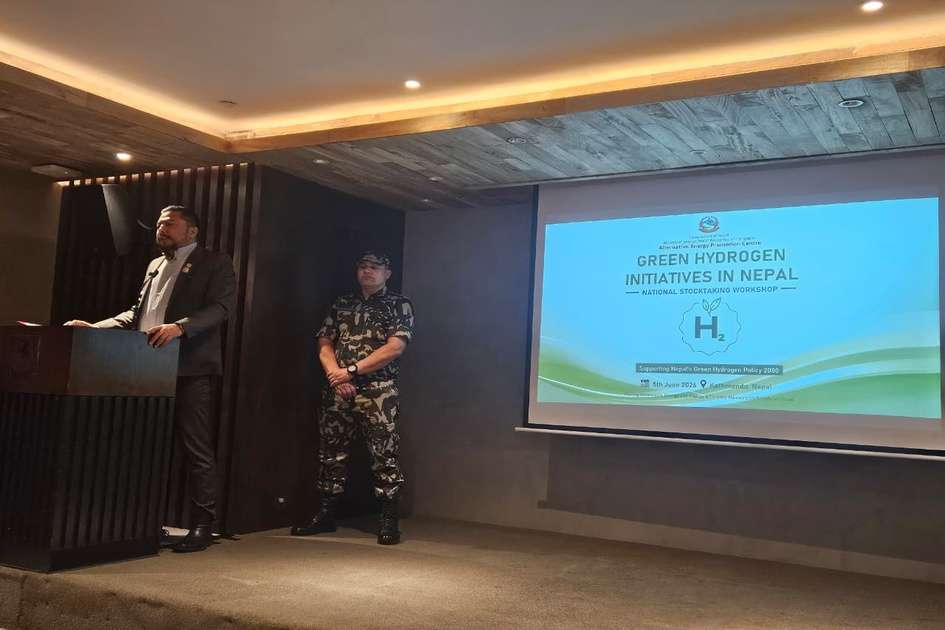
Chiranjivi Chataut, secretary at the Ministry of Energy, said Nepal’s green hydrogen ambitions are driven by the need to make better use of the country’s water resources, reduce dependence on imported fossil fuels and meet national climate commitments.
He added that the government has earmarked funds to establish a 2.5-megawatt green hydrogen plant in Hetauda as a pilot project.
Welcoming participants, AEPC Executive Director Nawa Raj Dhakal said the agency has been working closely with development partners, academic institutions and local governments to advance green hydrogen initiatives across Nepal.
Dhakal said AEPC is currently carrying out a study to identify potential green hydrogen projects and assess both past and ongoing initiatives in the sector.
The workshop also included technical sessions featuring presentations from the Water and Energy Commission, Nepal Electricity Authority, Nepal Oil Corporation, Asian Development Bank, World Bank, Tribhuvan University, Global Green Growth Institute, Nepal Energy Foundation and Butwal Power Company.
Representatives from the organizations shared updates on their work and outlined future plans aimed at supporting the development of Nepal’s green hydrogen industry.




