

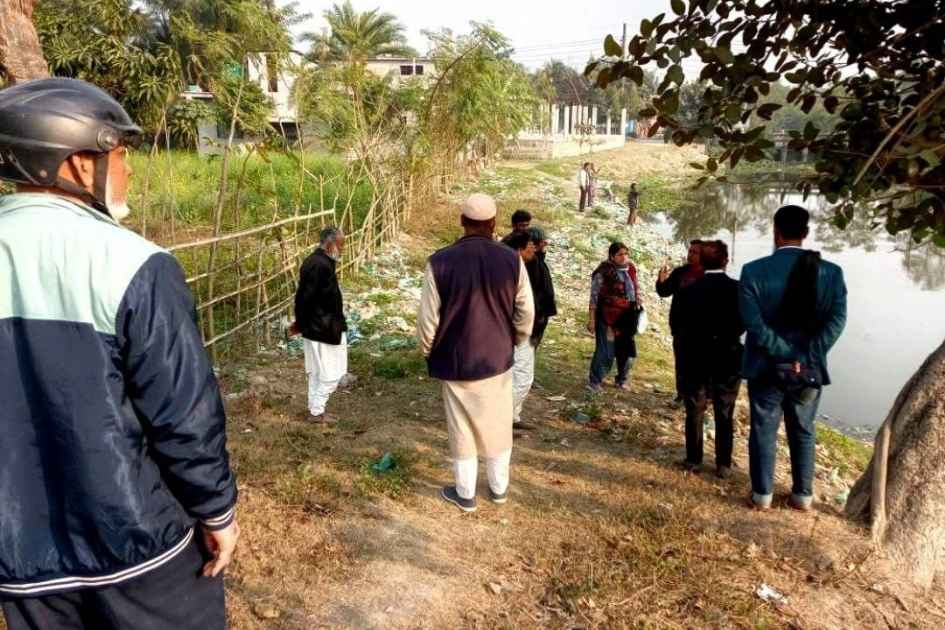



Environmentalists and farmers in southern Bangladesh demand coordinated action to restore the Mayur River and Beel Dakatiya, linking river dredging, canal excavation and wetland management to livelihoods and climate resilience.
Environmental activists and farmers in southern Bangladesh have called for urgent and coordinated action to protect the Mayur River, widely known as the lungs of Khulna, and the Dakatiya wetland, a vast seasonal floodplain critical to agriculture but long plagued by waterlogging.
The call came during a joint meeting and field visit held yesterday in the Aranghata area of Khulna, organised by the Environmental Protection Platform Paribesh Suraksha Moncho and the Dakatiya Farmers’ Forum.
Beel Dakatiya, a seasonal wetland, covers nearly 40,000 hectares across Khulna and neighbouring Jashore districts. For decades, farmers in the area have suffered from chronic waterlogging caused by poor drainage and mismanaged water infrastructure, severely disrupting crop production and rural livelihoods.
At the same time, the Mayur River, around 60 per cent of which flows through Khulna city, is under growing threat from pollution and illegal encroachment. Speakers at the meeting said that although sporadic restoration efforts have been undertaken, weak monitoring and inadequate follow-up have meant that city residents have seen little long-term improvement.
Environmentalists and farmers stressed that the river and the wetland are ecologically interconnected. They argued that planned dredging of the Mayur River and its upstream canals, along with the removal of encroachments, could allow part of Beel Dakatiya’s freshwater to drain through the river system. This would reduce waterlogging in the wetland while helping to lower pollution levels in the river.
As part of the day-long programme, members of the Environmental Protection Platform visited several affected locations, including Boyra Cremation Ghat, Nurnagar Char Gate, Jelepara, Aranghata Lata Bridge and different parts of Beel Dakatiya, before consulting with leaders of the Dakatiya Farmers’ Forum.
Participants identified the planned excavation of upstream canals connected to the Mayur River as one of the most effective solutions to restore natural freshwater flow. They also called on the district administration to immediately stop leasing out rivers and internal canals within Beel Dakatiya, warning that such practices contribute to environmental degradation and poor water management.
Khulna City Corporation Education and Cultural Affairs Officer S K S Tasaddeq Hossain attended the meeting and shared insights from his professional experience, offering recommendations on sustainable river and wetland management.
Advocate Qudrat e Khuda, president of the Environmental Protection Platform, said protecting the Mayur River was essential for both urban sustainability and rural livelihoods. He said saving the Mayur River means safeguarding Khulna’s environment and the lives of thousands of farmers, adding that in the face of climate change, these connected ecosystems must be managed together rather than in isolation.
The meeting concluded with renewed demands for stronger government intervention, effective enforcement and long-term climate-resilient planning to restore the Mayur River and Beel Dakatiya and protect the region’s environmental and economic future.




