




Nepal’s hydropower expansion faces renewed scrutiny as deadly floods expose vulnerabilities in infrastructure, worker safety, disaster preparedness and the country’s reliance on one energy source.
A catastrophic flood linked to a glacier and rock collapse in Nepal’s Himalayan region has killed at least 1,344 people and left nearly 4,887 missing, exposing serious vulnerabilities in the country’s hydropower-dependent electricity system.
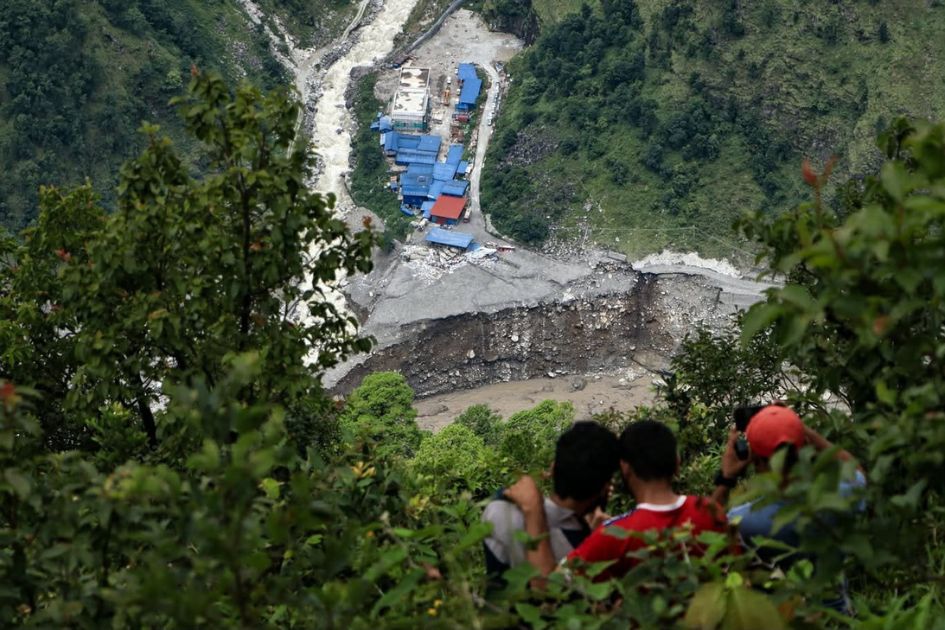
The August 26 floods swept through northern Nepal, destroying roads, bridges and power infrastructure and burying hydropower facilities under rock, mud and debris. Rescue teams are still searching affected sites, where hundreds of workers were reported missing.
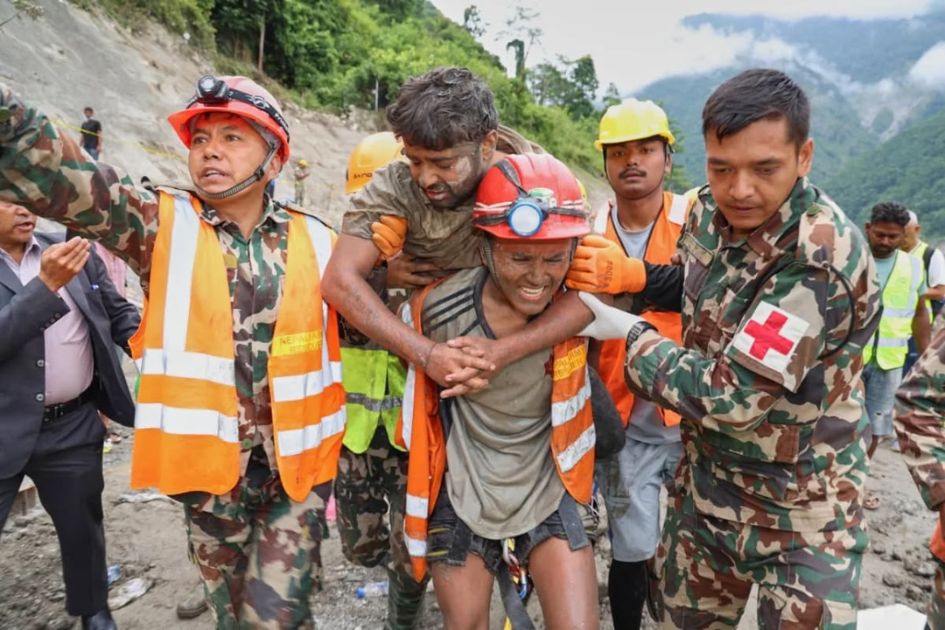
The human toll has been particularly stark underground. Two workers were pulled alive from the Upper Trishuli-3A hydropower project after nine days in a tunnel. A Chinese national, Lu Haitao, was later rescued alive from a 225-metre tunnel at Upper Trishuli-1 after about 10 days.
The latest figures reported Saturday put Nepal’s death toll at 1,344, with nearly 4,887 people missing, according to Reuters. The disaster has been described by United Nations officials as Nepal’s deadliest natural calamity since the 2015 earthquake.
Workers trapped underground
The hydropower sector has suffered an unusually heavy human cost. Around 900 workers were initially reported missing across affected hydropower facilities, with about 500 believed to be trapped in tunnels.
The survival of workers for more than a week underground has highlighted both the resilience of those caught in the catastrophe and the risks associated with operating major infrastructure in remote Himalayan valleys.
It has also raised questions about emergency communication, early-warning systems, evacuation procedures and the ability of operators and authorities to mount rapid rescues when roads and surface infrastructure are destroyed.
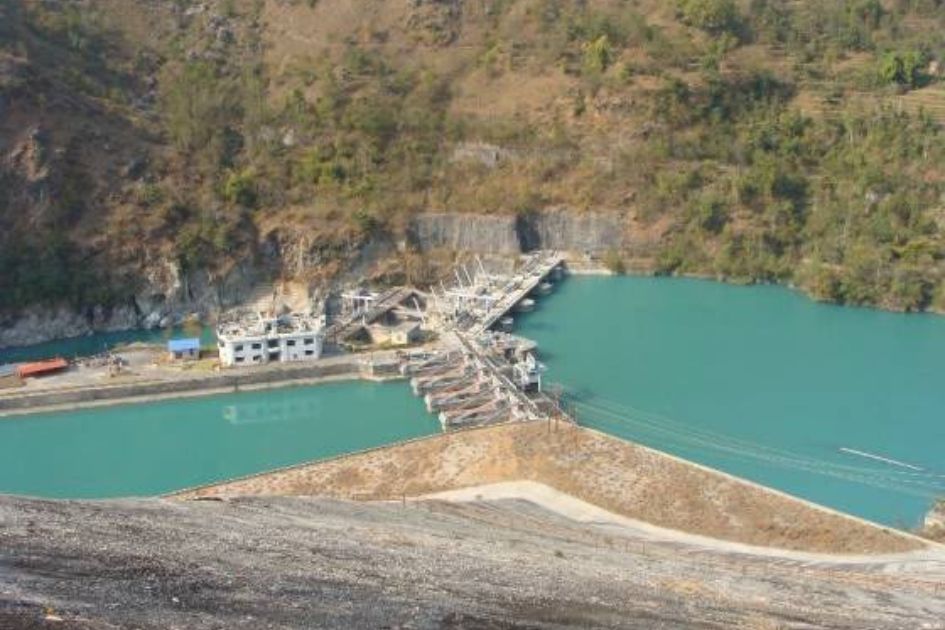
At least 12 hydropower projects were affected by the floods. Officials said the damage temporarily removed more than one-tenth of Nepal’s electricity-generation capacity from the system.
The distinction is important. The figure refers to generation capacity affected by the floods, not necessarily permanent loss or destruction of all that capacity.
For a country whose development strategy has increasingly centred on hydropower, the disruption is a warning that renewable-energy infrastructure is not automatically climate-resilient infrastructure.
From power shortages to regional exporter
The destruction is a major setback to one of Nepal’s most significant development successes.
As recently as 2010, the country endured load-shedding of up to 16 hours a day. Rapid investment in hydropower transformed the electricity system, lifting installed generation capacity to more than 3,900 megawatts across roughly 225 plants.
Nepal subsequently moved from chronic electricity shortages towards becoming a regional power exporter, supplying electricity to neighbouring markets including India and Bangladesh.
Hydropower is now central to domestic electrification, economic development and Nepal’s ambitions to expand regional electricity trade.
But much of this expansion has taken place in narrow and steep Himalayan valleys, where infrastructure can be exposed to floods, landslides, glacier-related hazards and extreme rainfall.
The lesson from the August catastrophe is not that Nepal should abandon hydropower. It is that the next stage of renewable-energy development must be safer, more diversified and designed around the realities of the Himalayan landscape.
Rethinking hydropower policy
The August 26 flood followed the collapse of a glacier and surrounding rock and debris along the Nepal-China border, according to geological researchers.
Scientists have cautioned that the precise contribution of climate change to this particular event requires further assessment. The immediate trigger may have been geological, while climate change can influence the wider risk environment through glacier loss, changing precipitation patterns and other factors that can increase exposure to cascading hazards.
Rajan Dhakal, spokesperson for the Nepal Electricity Authority, said the increasing frequency of climate-related disasters should force a reassessment of Nepal’s hydropower strategy.
“With climate-related disasters occurring more frequently, it is time to rethink our hydropower policy,” Dhakal said, adding that existing infrastructure “may not have been designed accordingly.”
The challenge goes beyond individual power plants. It raises questions about how sites are selected, how tunnels and surface infrastructure are engineered, how extreme hazards are modelled and how workers and nearby communities are protected.
Former Nepal Electricity Authority chief Kulman Ghising said future plants would need stronger protection against extreme flooding.
“Plants need to be designed to be more resilient against floods,” Ghising said, calling for stronger early-warning and rescue systems.
Diversification becomes urgent
The destruction has also revived calls for Nepal to reduce its heavy dependence on hydropower by expanding other renewable sources.
Renewable-energy specialist Kushal Gurung warned against concentrating the country’s energy strategy around a single technology.
“In this dangerous time, we should not put all our eggs in one basket,” Gurung said, urging greater investment in solar and wind energy.
Vivek Shastri of Columbia University’s Center on Global Energy Policy has similarly supported diversification.
A German development agency assessment estimates Nepal’s technical solar potential at roughly ten times its hydropower potential. That figure represents technical potential, not immediately deployable or economically viable generation.
Turning that potential into electricity would require investment in transmission, storage, grid management, land and other infrastructure.
The objective is therefore not to replace hydropower overnight. It is to build a diversified renewable-energy system that can continue supplying electricity when floods, landslides or other hazards disrupt generation in one region.
Billions of dollars at risk
The financial stakes are considerable.
The $647 million Upper Trishuli-1 project, backed by the Asian Development Bank and International Finance Corporation, suffered severe damage. The China Exim Bank-financed Upper Trishuli-3 project was also affected.
Private operators have already faced substantial losses from extreme weather. Uttam Bholon Lama of Nepal’s Independent Power Producers Association said insurers paid around $40 million over three years for flood-related damage to more than 20 private hydropower plants. Insurance premiums are now rising sharply.
The financial consequences extend beyond the immediate cost of repairing damaged facilities. Higher insurance premiums, reconstruction costs and stricter financing requirements could affect the economics of future projects.
The catastrophe has also raised a difficult question for governments, developers, insurers and international lenders: were climate and geological risks adequately reflected in project design, financing and safeguards?
Himanshu Thakkar of the South Asia Network on Dams, Rivers and People said the risks were not unknown.
“They were aware of the extreme risks faced by thousands of workers, officials, residents, rivers, infrastructure and landscapes,” Thakkar said.
His criticism raises questions about whether existing safeguards were sufficient for projects exposed to extreme floods, landslides and cascading geological hazards.
A climate justice question
The consequences are particularly significant for Nepal because the country contributes very little to global greenhouse-gas emissions while facing substantial exposure to climate-related risks.
Manjeet Dhakal, a prominent Nepali climate diplomacy expert and Lead Advisor to the Chair of the Least Developed Countries (LDC) Group on Climate Change, said Nepal should not be expected to shoulder these risks alone.
“Among the countries that emit the least greenhouse gases, Nepal is one of them,” he said. “Therefore, we should not have to deal with this risk alone, and we cannot.”
For Nepal, the issue is not simply compensation after a disaster. It is also whether international climate finance can help vulnerable countries build infrastructure capable of withstanding increasingly complex hazards.
That could mean greater support for resilient infrastructure, stronger disaster preparedness and the additional costs associated with designing, insuring and maintaining projects in high-risk environments.
What a just transition means for Nepal
The catastrophe also exposes a broader gap in the global understanding of a just transition.
A transition to renewable energy is not automatically just because the electricity itself is low-carbon. The people who build, operate and live alongside renewable-energy infrastructure must also be protected.
The workers trapped underground bring this principle into sharp focus. For Nepal, a just transition must include stronger occupational safety standards, emergency preparedness, reliable communication systems, compensation for affected workers, social protection for families that lose income, retraining and alternative livelihood opportunities where disasters disrupt local economies.
It also means giving communities a meaningful voice in decisions about where major infrastructure is built and how risks are assessed.
The question after the floods is therefore not simply how quickly lost megawatts can be restored. It is also who carries the physical and economic risks of rebuilding.
That is at the heart of a just transition: ensuring that the benefits of clean energy do not come at the expense of workers and communities who are least able to absorb the consequences when infrastructure fails.
The road ahead
Nepal is unlikely to abandon hydropower. The resource remains central to its electricity system, economy and regional power-trading ambitions.
But the August 26 catastrophe has changed the terms of the debate.
Future hydropower projects will need stronger climate and geological-risk assessments, more resilient designs, better early-warning systems, reliable emergency communication and stronger rescue capacity. Expanding solar and wind can provide additional resilience by reducing the country’s dependence on generation concentrated in vulnerable Himalayan corridors.
International financiers will also face growing pressure to treat climate and geological resilience as a core requirement of infrastructure lending, rather than a safeguard considered after major project decisions have already been made.
Nepal’s hydropower boom helped turn electricity scarcity into a story of development and regional opportunity. The next phase will require a broader measure of success.
It will not be enough to ask how many megawatts a project can generate. Nepal will also have to ask whether its infrastructure can withstand the hazards of the mountains, whether workers can be protected, whether communities can recover after disasters and who will bear the costs when projects fail.
Nepal’s catastrophe is not proof that hydropower has failed. It is evidence that the next generation of hydropower must be more resilient, diversified and accountable, while the people who build and depend on that infrastructure must be protected.




