

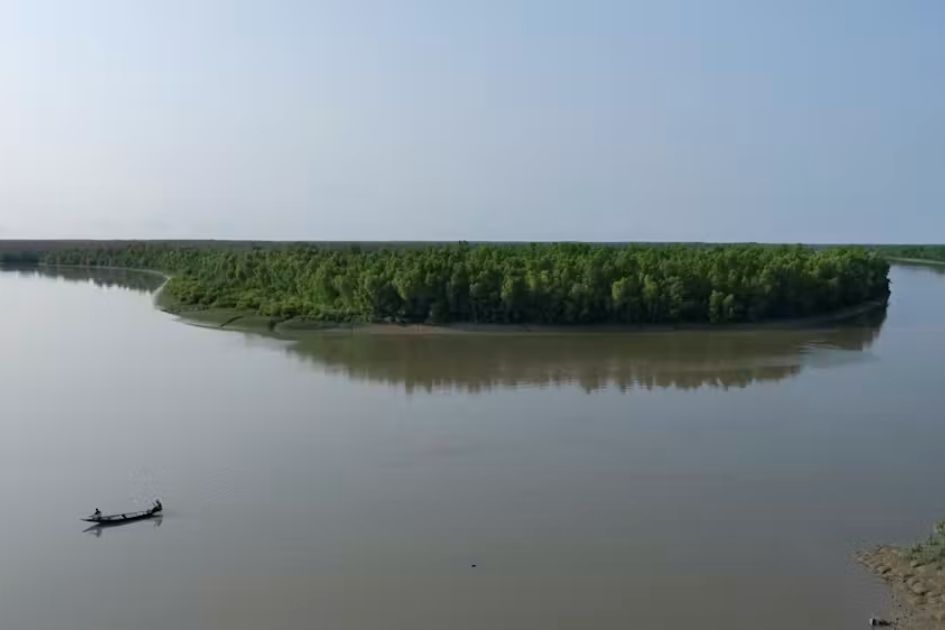



The Sundarbans shows how salinity, failing embankments and limited adaptation funding are steadily undermining the livelihoods of delta communities.
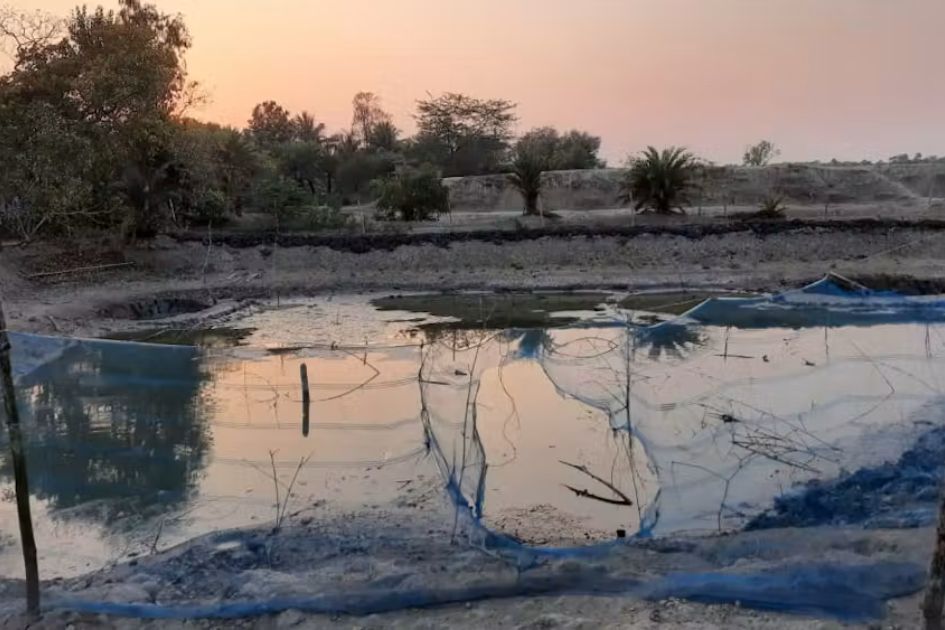
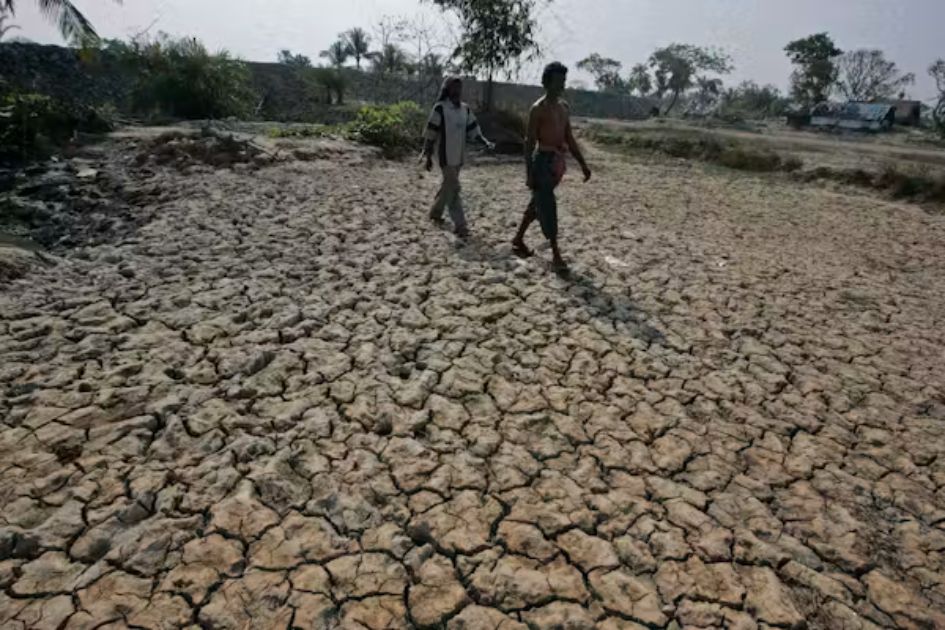
The first sign of ecological decline in the Sundarbans in May 2026 was not missing trees but missing water, as a pond that had once provided fish for a family was found dry, cracked and empty in the world’s largest mangrove forest.
The Sundarbans lies in the delta where the Ganges, Brahmaputra and Meghna rivers meet the Bay of Bengal. The mangrove forest, known for its tangled salt-tolerant trees, is widely seen as a last line of defence against cyclones and rising seas.
But a visit to the forest in May 2026 found communities confronting a broader and slower crisis. The pond, which only months earlier had contained fish that helped feed families, was now empty. The family that had depended on it had joined a self-help group, pooling savings with neighbours in an effort to make ends meet.
That single pond offered a small but specific picture of a wider ecological decline affecting an ecosystem on which four million people depend for food, income and shelter.
The Sundarbans is often presented primarily as an environmental story. It is the world’s largest mangrove forest, a UNESCO World Heritage Site and a nursery for water and land creatures. But that description does not capture the pressures facing the people living around it.
Embankments built to protect communities from tidal rivers are deteriorating faster than they can be properly repaired. Increasingly, repairs are temporary measures, with mud and bamboo used to patch damaged sections ahead of the monsoon instead of carrying out proper reinforcement.
At the same time, saline water is advancing into farmland that once produced rice. Fields that previously supported two harvests a year are increasingly able to produce barely one.
Ponds once used by families for freshwater aquaculture are also becoming brackish. Once that happens, they do not return to their previous condition. Fish that can survive in brackish water are smaller and less valuable than those that previously supported household incomes, and residents interviewed said they could feel the difference in their livelihoods.
For many families, the response is not dramatic. Instead, they form co-operatives, take waged labour or send a child to a city where they had never planned to live. Such decisions show what climate adaptation looks like when it moves beyond policy and becomes a household choice made under pressure.
Climate vulnerability rarely comes in the form of a single catastrophic event. Instead, pressure accumulates within a system until a threshold is crossed. By the time the consequences become visible, the damage is already structural.
The Sundarbans offers that threshold in human terms. Rising salinity does not destroy a pond overnight. It builds over years until the pond is no longer usable.
The self-help groups encountered during the visit were not NGO showcases. They were groups of neighbours who had decided, out of necessity, to pool the little capital they had left after the loss of water and livelihoods.
Embankments likewise do not necessarily collapse because of one storm. They deteriorate when repairs fail to keep pace with erosion. From inside the delta, this is what ecological collapse looks like, and it is not a distant scenario. It has already happened to the family whose pond dried up.
The problem also points to a wider gap in the way climate adaptation funding is structured. Funding often focuses on specific disasters, such as cyclones and floods, because such named events offer donors and governments a clear before-and-after picture.
Slower forms of decline are less likely to receive the same attention. Gradual salinization may appear as an empty pond rather than a headline, even though it can ultimately force families to abandon fishing and farming.
Emergency assistance may arrive after a cyclone has swept through the delta. But little arrives for the years of gradual salinization between disasters, despite the cumulative pressure that pushes families away from fishing and farming permanently.
The Sundarbans is a live example of that gap. Both the Bangladeshi and Indian sides of the delta receive climate finance, but very little reaches the households where decisions are being made about whether to abandon farming, take factory work or sell the last of their livestock.
Much of the funding goes towards embankment contracts and mangrove-planting programmes. Such projects are worthy, but they do not directly address the choices facing a family whose fishing pond is becoming progressively less productive.
Other major deltas are experiencing similar processes, although on slower timelines. The Mekong in Southeast Asia, the Nile in Egypt and the Niger in southern Nigeria are seeing their own versions of the same pressures, including deteriorating embankments and salinity moving upstream.
The Sundarbans has simply reached that point first.
What is happening to its fishing and farming communities is not a warning about a distant future. It is evidence of what happens when an ecosystem’s gradual collapse moves faster than the systems designed to prevent it, and a reminder that the next delta to run out of options may not give the world as much warning as the Sundarbans has.
This post is republished from The Conversation.




