

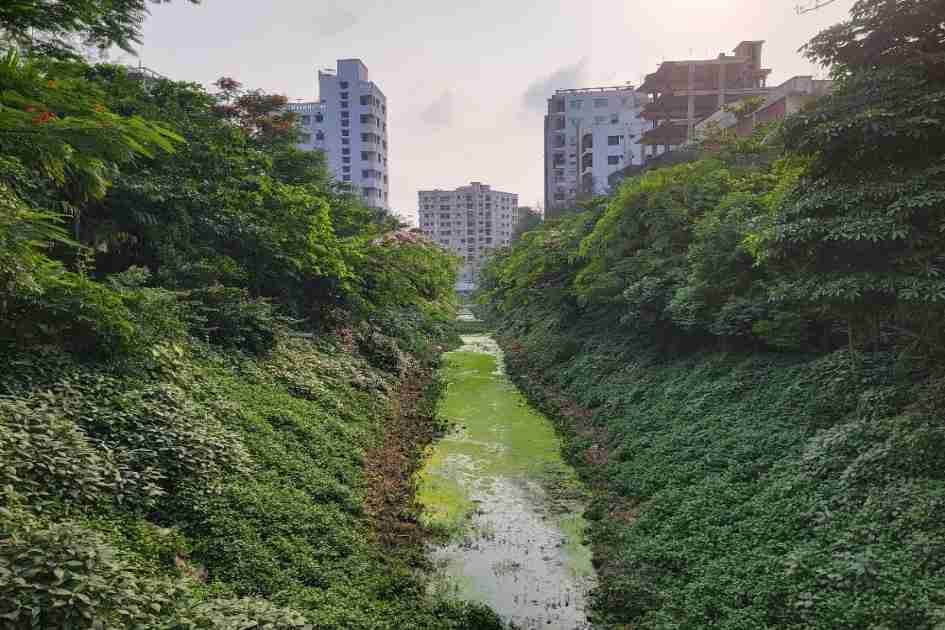



In Dhaka’s Lautala Forest, neem leaves, native trees and inclusive urban greening are transforming reclaimed canal land into a refuge for health, biodiversity and climate resilience.
The sun is sinking into the golden light of late afternoon. Its glow fades among the concrete canyons of Dhaka, blurred by dust and smoke. Seventy-year-old Salma Khatun walks slowly along a dusty path through a small garden in Lautala. She wears an old clay-colored saree and walks barefoot, carrying a worn cloth bag. She has come to collect neem tree branches.
In a tiny one-room home in a nearby slum, her six-year-old granddaughter, Moina, lies covered in chickenpox blisters. The itching is relentless and unbearable. Tears and discomfort fill the small room. Salma’s heart aches. Unable to watch the child’s suffering any longer, she leaves home in search of something that might bring immediate relief.
Salma trusts an old remedy. She remembers from her childhood in the village that neem leaves cool the body, soothe itching, help dry blisters, and may reduce the risk of secondary skin infections. She gently breaks a few tender branches from a neem tree. As her fingers brush the leaves, a sharp, bitter scent fills the air- the smell of childhood remedies and memories of her grandparents. Back home, she plans to spread the leaves beneath Moina’s bedding, boil some for a bath, and gently apply others to her granddaughter’s irritated skin.
“Applying neem leaves will give my granddaughter some relief,” Salma says confidently. “The itching will subside, and the sores will dry more quickly.” Her voice is calm and certain, as though generations of inherited knowledge still survive amid the chaos of the city.
Neem trees have become increasingly rare in Dhaka. Their place has gradually disappeared beneath apartment buildings and expanding urban development. Yet in Lautala, inside a small community garden known locally as Lautala Forest, pockets of greenery remain.
The story of this forest is not simply about neem trees or medicinal plants. It is the story of a city’s effort to reclaim neglected land, confront climate change, and reconnect people with nature.
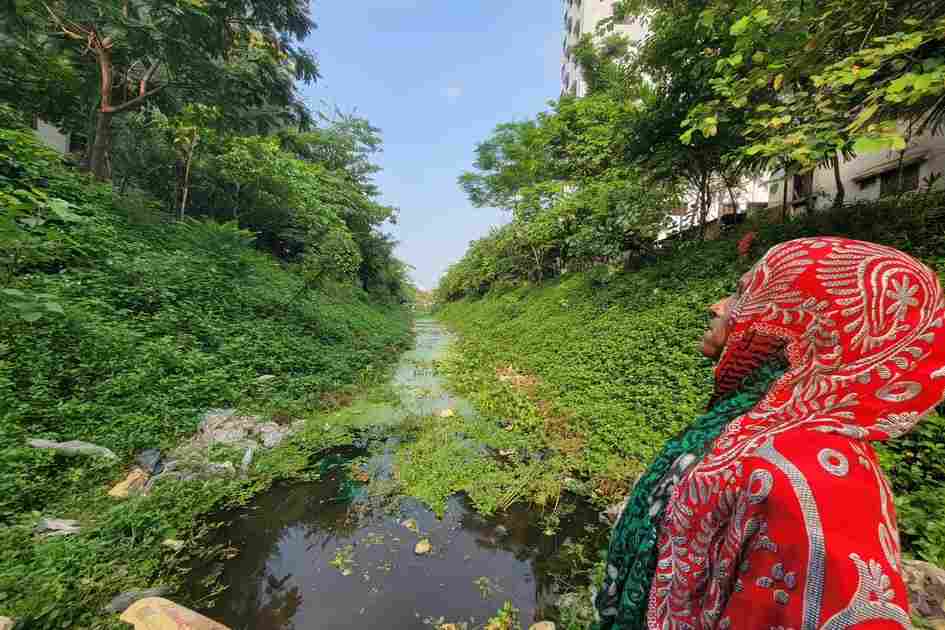
Lautala Forest: From Neglected Canal to Green Garden
When Shakti Foundation first began working here in 2022, the area looked very different. The banks of the Ramchandrapur Canal had been occupied by illegal vehicle repair workshops and truck terminals. Thick smoke, oil, dust, and waste polluted the area, making life difficult for nearby residents. Then Change Began.
Dhaka North City Corporation, HSBC Bank, and Shakti Foundation jointly launched a canal restoration and land reclamation project. Today, more than 10,000 trees representing 72 native, medicinal, fruit-bearing, and endangered species have been planted here. Neem is among them.
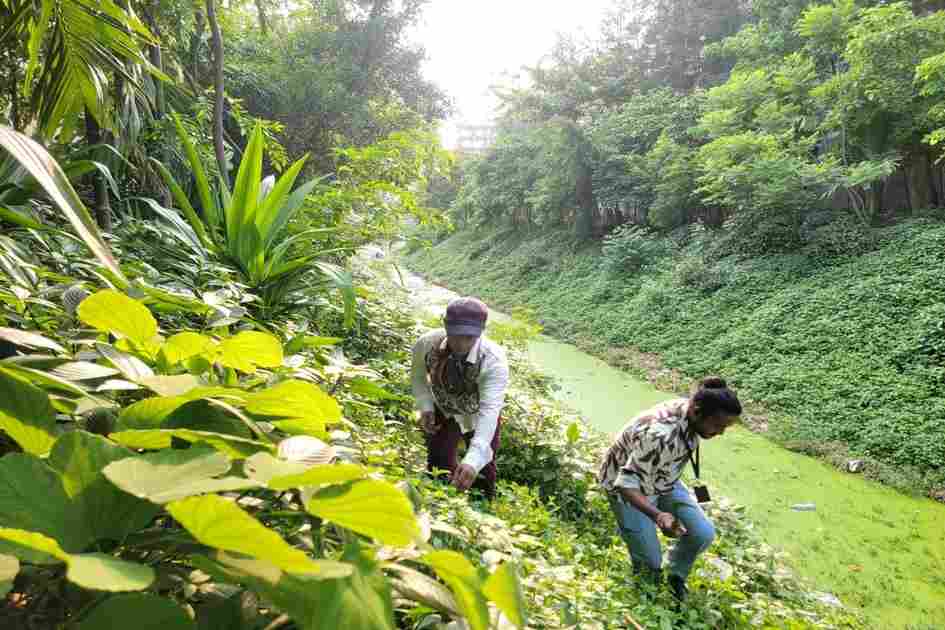
Standing quietly in one corner of the garden is Zakir Hossain, one of Shakti Foundation’s trained transgender gardeners. He waters the roots of a newly planted sapling while working alongside fellow transgender activist Russell Mia. Together, they help nurture the growing forest.
“Earlier, there was only smoke and noise,” Zakir says. “Now I hear birds singing. People come here in the evenings to sit and relax. We are growing these trees so they can become the lungs of this city.”
Shahriar Alam, an agronomist with Shakti Foundation, walks through the garden explaining the project’s vision. “This is about much more than planting trees. It is a nature-based solution. During the first phase, we focused on increasing biodiversity and helping reduce the urban heat island effect. Now we are working to create a sustainable model that combines environmental restoration, recreation, and community wellbeing.”
Shakti Foundation’s Journey: From Women’s Empowerment to Climate Action
Labiba Rahman, Strategic Advisor to Shakti Foundation’s Climate Change Program, explains that the organization’s environmental work grew naturally from its longstanding mission. She said, “Shakti Foundation primarily works to empower disadvantaged women economically and socially. But these same women are among those most affected by climate change. Extreme heat and air pollution pose serious health risks for women living in Dhaka’s informal settlements. Afforestation therefore became a natural extension of our mission.”
The Lautala initiative is the result of multiple partnerships. Launched in 2022, the project is led by Dhaka North City Corporation, funded initially by HSBC Bank, and implemented by Shakti Foundation. MetLife Foundation later joined as a partner. The restoration was driven by concerns over illegal canal encroachment, worsening air pollution, and the rapid loss of urban green spaces.
Today, Lautala Forest has become more than a neighborhood park; it forms part of Dhaka’s broader climate resilience strategy. Labiba mentioned. “Dhaka is one of the world’s most densely populated cities. Rapid urbanization, megaprojects, and continuous construction are steadily reducing green spaces. Air pollution shortens life expectancy by several years and poses risks greater than many other public health threats. Heat is no longer just uncomfortable; it threatens lives and livelihoods. Restoring abandoned spaces like Lautala can make a meaningful difference.”
Where Tradition Meets Science
Thousands of residents like Salma Khatun continue to rely on traditional knowledge. Modern scientific research has also identified biologically active compounds in neem, including azadirachtin, that possess antimicrobial and insecticidal properties. Some studies suggest neem may help relieve itching and reduce the risk of secondary skin infections, although it is not a treatment for chickenpox itself.
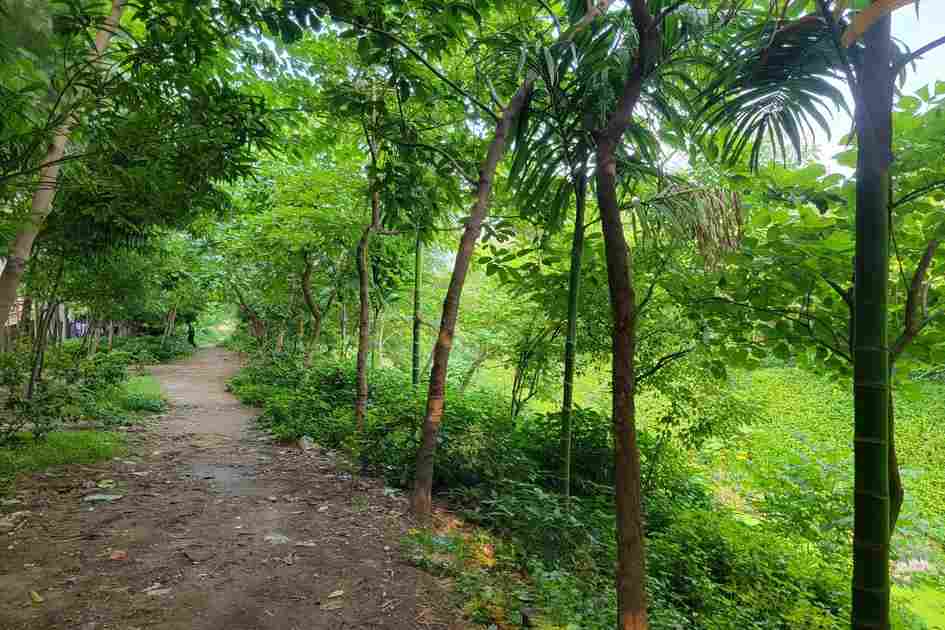
For families like Salma’s, the neem trees growing in Lautala Forest provide easy access to a familiar home remedy. But the forest offers much more than medicinal plants. Fruit trees, shrubs, flowering vines, and native vegetation have transformed the once-abandoned land into a small pocket of biodiversity. Every evening, residents come to sit beneath the trees, breathe cleaner air, and briefly escape the noise and congestion of the city.
A Vision for Greener Cities
Lautala is only the beginning. Shakti Foundation is implementing several urban greening projects across Dhaka. Its Miyawaki Forest in Uttara’s Sector 17 contains more than 6,000 trees representing 93 species. Green corridors stretching from Army Stadium to Jahangir Gate and from Bijoy Sarani to Farmgate now include more than 22,000 trees. Similar work is underway in Hatirjheel, Purbachal, Motijheel, and other parts of the city.
The organization aims to plant one million healthy trees across Bangladesh by 2030, with half located in Dhaka. For Shakti Foundation, a “healthy” tree means more than simply planting a sapling. It means preparing the soil, ensuring regular maintenance, and monitoring the tree’s survival over time.
Labiba Rahman said, “Climate change affects women disproportionately. That is why we must consider health, livelihoods, and the environment together.” The project’s transgender gardeners are also central to its success. For Zakir and Russell, nurturing trees has become a way of nurturing inclusion. The forest they help maintain offers not only shade and biodiversity but also dignity, purpose, and belonging.
Salma’s Return
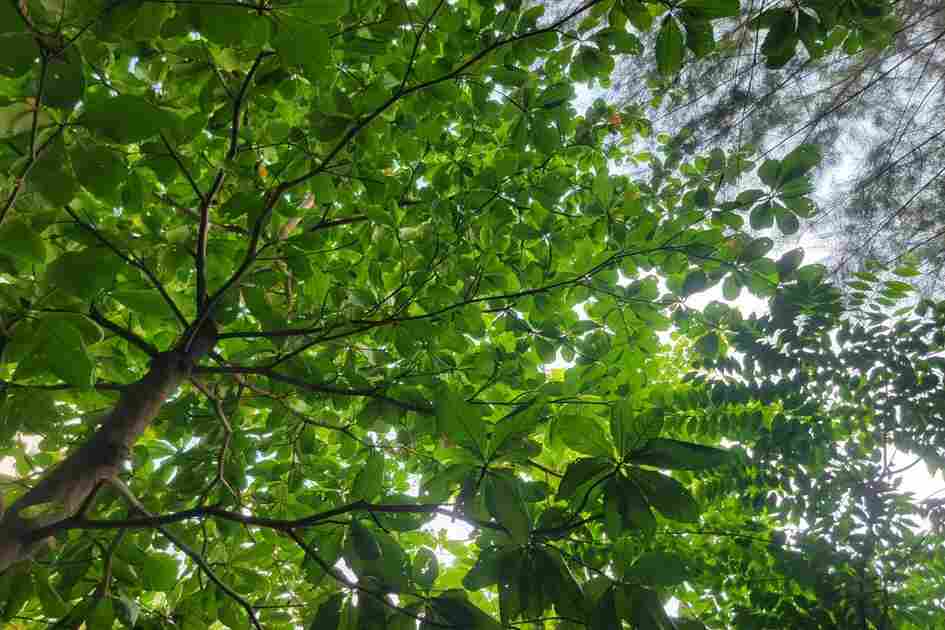
As evening approaches, Salma walks home carrying a bundle of freshly cut neem branches. Behind her stretches the cool green canopy of Lautala Forest.
The city lights begin to glow, but an older, quieter peace still lingers beneath the trees. The neem leaves she carries home are more than medicine. They are a bridge between generations, a delicate connection linking tradition and modernity, village and city, people and nature.
Salma may never know about Shakti Foundation’s climate strategy, the Miyawaki forests, or the ambitious goal of planting one million trees. But she knows the scent of neem. She knows how its leaves can soothe an aching child. That small piece of inherited knowledge gives her hope.
Like Lautala Forest itself, meaningful change often begins with small, green steps. Even in the concrete landscape of Dhaka, there are still places where an elderly woman can find neem leaves for her granddaughter. And perhaps, in that simple search, lies a glimpse of the city’s greener future.




