

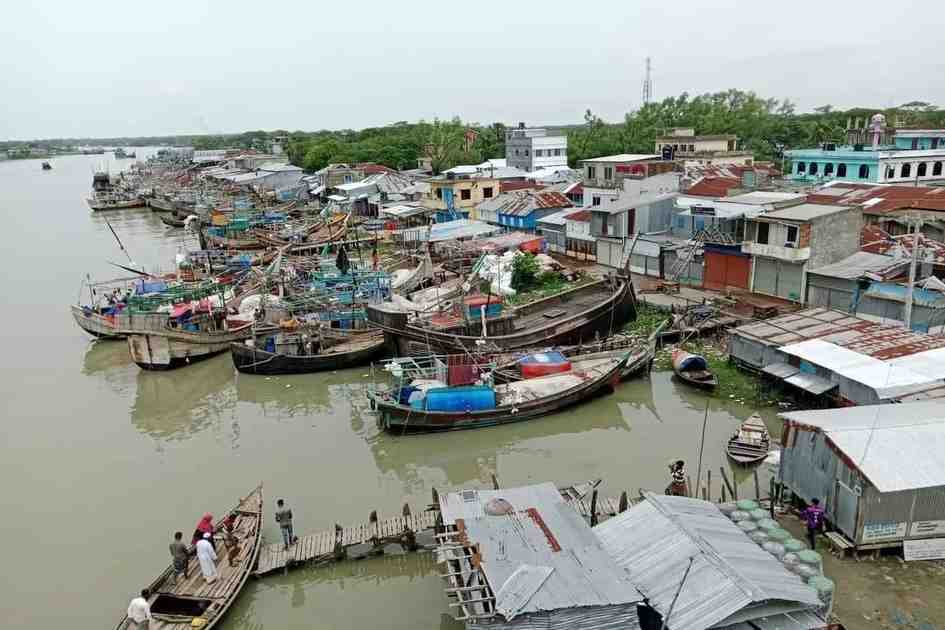

Illegal bottom trawling in Bangladesh’s coastal waters is destroying fish breeding grounds, depleting stocks and pushing thousands of small-scale fishers toward economic hardship, raising fresh concerns over marine biodiversity, food security and the country’s blue economy.
The coastal waters of the Bay of Bengal, long a lifeline for Bangladesh‘s fishing communities, are facing growing pressure from illegal and modified trawling operations. In fishing hubs near Kuakata and across the coastal belt of Kalapara Upazila in Patuakhali district, including Mahipur and Alipur, traditional fishers report declining catches, damaged gear and mounting economic distress.
Trawlers Multiply as Investment in Illegal Fleet Expands
Local fishers say the region has seen a steady rise in converted wooden boats operating as industrial-scale trawlers. The number is estimated to have increased from around 45 vessels last year to nearly 60 this year as boat owners invest more than BDT 3.5 million to retrofit vessels with GPS, radar and mechanised bottom-trawling equipment.
Although regulations require such vessels to remain in deep-sea waters, fishers say many are increasingly encroaching into shallow coastal zones that serve as critical breeding and nursery grounds for fish stocks.
Seabed Destruction Raises Alarm Over Ecological Collapse
Fisheries experts warn that bottom trawling is among the world’s most destructive fishing practices. They say dragging heavy nets across the seabed destroys seagrass beds, shellfish habitats and micro-ecosystems that are essential for marine reproduction.
Experts also caution that the combined pressures of illegal fishing, marine pollution and climate change are pushing the Bay of Bengal’s coastal ecosystem towards a critical ecological tipping point.
“Nothing Left for the Next Generation,” Fishers Warn
Abu Kashem, a fisherman from the Mahipur-Alipur region, said small fish are being destroyed before they can grow.
“If this continues, there will be nothing left for our children to harvest,” he said.
Fishers in Mahipur and Alipur report frequent damage to nets and other fishing gear caused by large trawlers operating in nearshore waters. Many say they are unable to recover their investments as fish stocks continue to decline.
Livelihoods on the Brink as Fishermen Face Empty Nets
Anwar Hossain, a fisherman from Mahipur, said: “We go to the sea every day and return empty-handed. A few influential trawler owners are destroying our heritage and our future. If authorities acted, this could be stopped in a day.”
He added that fishers also face intimidation and threats when they protest.
Enforcement Gaps Persist Despite Legal Action
Local authorities confirmed that legal proceedings are under way against several trawling vessels, but enforcement at sea remains difficult. Officials cited logistical constraints, particularly limited capacity for deep-sea patrols, as a major challenge in controlling illegal fishing activities.
Raju Ahmed Raja, vice-president of the Mahipur Fish Market Association, said the situation was worsening despite repeated discussions.
“There has been little improvement. Without strict and consistent monitoring and enforcement, the destruction will not stop,” he said.
Sohanur Rahman, executive coordinator of YouthNet Global, said the crisis reflected a broader climate justice and governance failure.
“What is happening in the Bay of Bengal is not only an environmental issue but also a question of justice for coastal communities. When destructive and illegal practices erode marine ecosystems, it is the most vulnerable fishers who suffer first and most severely. Protecting the ocean means protecting livelihoods, biodiversity and intergenerational justice,” he said.
Authorities Vow Joint Crackdown as Pressure Mounts
Moniruzzaman, officer-in-charge of the Bangladesh Coast Guard Kuakata Naval Police Outpost, said cases were under legal process and authorities remained active against illegal fishing, but deep-sea enforcement continued to face logistical limitations.
Bakhtiar Ahmed, a fisheries official, said illegal nets were accelerating the depletion of fish stocks.
“Egg-bearing fish and juveniles are being destroyed. Strict enforcement of the law is essential to protect food security and biodiversity,” he said.
Bijon Kumar Nandi, district fisheries officer of Patuakhali, said the issue was being treated as urgent and remained under court proceedings. Joint operations involving the Coast Guard, police and local stakeholders would be strengthened to improve monitoring and enforcement.
“Law Alone Is Not Enough,” Expert Calls for Social Protection
Mir Mohammad Ali, associate professor at Sher-e-Bangla Agricultural University and a fisheries researcher, said:
“Coastal fisheries cannot be protected through law enforcement alone or short-term drives. We need integrated social initiatives and inclusive recognition of marginal fishers. Unless women fishers and small-scale local fishers are formally brought under government support and recognition, exploitative networks will continue to dominate coastal waters and weaken fisheries governance.”
Fast Facts: Inside the Coastal Fisheries Crisis
The main threats include illegal bottom trawling using fine-mesh nets in protected coastal and nursery zones. The impacts include declining stocks of hilsa, pomfret and shrimp, destruction of seabed habitats and growing pressure on artisanal fishing communities.
An estimated 60 modified trawlers are now operating in the Mahipur-Alipur corridor, up from about 45 last year. The resulting risks extend to Bangladesh’s blue economy, export earnings and coastal food security.
Experts warn that the combined pressures of illegal fishing, climate change and marine pollution may be pushing the ecosystem towards an irreversible tipping point.
Bay Ecosystem Near Tipping Point as Warnings Grow
Local observers and fisheries stakeholders warn that without urgent and coordinated enforcement, Bangladesh’s southern coastal fisheries face long-term ecological degradation.
They say the Bay of Bengal may be approaching a critical tipping point, raising serious concerns for biodiversity, food security and the livelihoods of future generations.




