

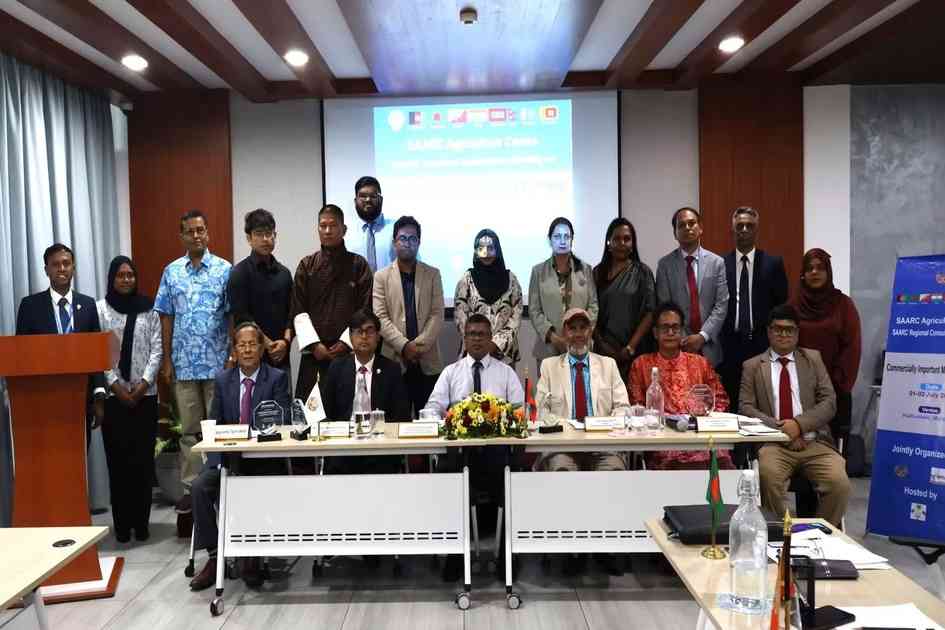



South Asian nations have opened talks in Malé to address declining marine fish stocks, overfishing, climate stress and weak regional governance threatening food security and coastal livelihoods.
Policymakers, fisheries experts and development partners from across South Asia have gathered in Malé amid growing concern over declining marine fish stocks, climate stress and fragmented governance of shared ocean resources in the Bay of Bengal and the Indian Ocean.
The two-day SAARC Regional Consultation Meeting on Commercially Important Marine Fin Fishes, which began on Wednesday, July 1, 2026, has added urgency to regional cooperation on species critical to food security and coastal livelihoods, including hilsa, tuna and other high-value pelagic fish.
The event is jointly organised by the SAARC Agriculture Centre (SAC), the Ministry of Fisheries, Agriculture and Ocean Resources of the Maldives and Bangladesh-based development organisation Shushilan. The consultation is expected to contribute to a regional roadmap aimed at strengthening coordinated fisheries governance, improving sustainability and safeguarding food security across South Asia.
A shared ocean under mounting pressure
Delegates warned that South Asia’s marine ecosystems are under increasing pressure from overfishing, illegal, unreported and unregulated (IUU) fishing and climate-driven habitat degradation.
In his keynote address, Professor Dr Md Abdul Wahab of Bangladesh Maritime University said the region could no longer rely on fragmented national responses.
“Shared regional challenges, ranging from overexploitation and illegal, unreported and unregulated fishing to climate-driven habitat loss, require a unified cross-border response,” he said, calling for urgent collective action to prevent long-term ecological and economic damage.
Calls grow for a coordinated regional fisheries framework
A key focus of the opening session was the need for a structured regional mechanism to manage transboundary marine resources more effectively.
Dr Md Harunur Rashid, Director of the SAARC Agriculture Centre, said fragmented approaches were no longer sufficient to address rapidly changing ocean conditions and enforcement gaps across borders.
He described the proposal for a specialised regional marine fisheries management platform under SAC coordination as “a timely necessity” to strengthen data sharing, harmonise policies and improve enforcement cooperation among member states.
Linking ecology, livelihoods and inclusion
Beyond environmental concerns, discussions highlighted the central role of fisheries in sustaining coastal economies and food systems across South Asia.
Tanvir Ahmad Torophder, Director at the SAARC Secretariat, called for an integrated strategy to strengthen regional scientific collaboration, expand seafood processing and value addition and increase women’s participation across the fisheries value chain.
Mostafa Nuruzzaman, Chief Executive of Shushilan, said marine fisheries remain a critical lifeline for millions of people in vulnerable coastal communities, where livelihoods and nutrition are increasingly at risk because of ecological decline.
Toward a shared regional roadmap
Dr Md Shariful Islam, Senior Programme Specialist at the SAARC Agriculture Centre and coordinator of the consultation, said the meeting was intended to move beyond dialogue towards practical cooperation, including joint research priorities, shared monitoring systems and policy alignment among member states.
As discussions continue, delegates increasingly agree that the Bay of Bengal and adjoining waters form a shared ecological and economic system that cannot be managed in isolation.




