




Bangladesh’s first eco-friendly brick kiln in Lakshmipur pilots cleaner production, with researchers monitoring emissions and experts urging regulation, incentives and independent validation before wider adoption across the country.
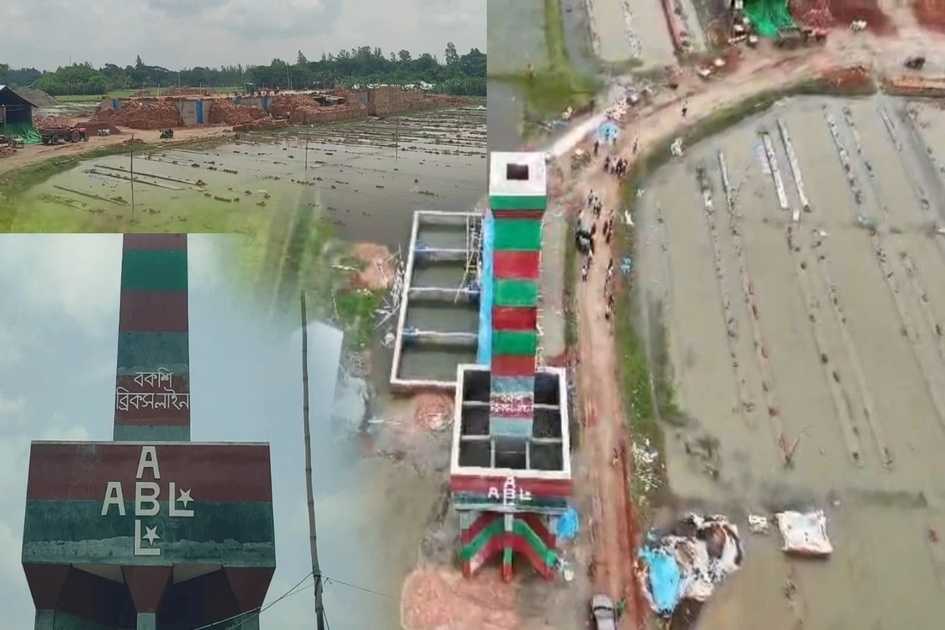
Bangladesh has launched its first eco-friendly brick kiln in the coastal upazila of Ramgati in Lakshmipur district, marking an early attempt to reduce emissions from one of the country’s most carbon-intensive construction sectors amid growing concerns over air pollution and climate vulnerability.
The facility, Bokshi Bricks, began operations on June 20, 2026 in the Char Neamat area under a pilot environmental monitoring initiative involving researchers from Bangladesh Agricultural University’s Institute of Environmental Science and Pollution Management.
According to people involved with the project, the kiln is equipped with a specially designed seven-chamber boiler system built at a cost of around BDT 6 million. It operates through a rotational firing process, with three chambers used each day for brick production in an effort to improve combustion efficiency and reduce emissions.
Air quality monitoring and emissions assessments are being carried out under the supervision of Professor Dr. M. A. Faruk of Bangladesh Agricultural University with technical support from Engineer Ali Hossain.
Dr. Faruk said the project is primarily focused on building evidence for future policy direction rather than delivering an immediate nationwide transformation.
“Our main objective is to identify pollution sources using advanced monitoring and collect scientifically reliable data,” he said. “This will support future environmental policymaking and strengthen air pollution control frameworks in Bangladesh.”
However, he added that independent validation of the kiln’s long-term emissions performance would be essential before the technology could be replicated on a larger scale.
Engineer Ali Hossain, who has introduced similar systems in other parts of the country, said the technology offers potential benefits but requires wider adoption to achieve meaningful environmental gains.
“If this method is adopted widely, it can reduce environmental harm while maintaining production efficiency,” he said. “It also improves brick quality and can support better productivity for kiln owners.”
Local reaction in Ramgati has been broadly positive. Ramgati Upazila BNP General Secretary Siraj Uddin described the initiative as a matter of local pride.
“We are extremely happy and proud that such an environmentally friendly brick kiln has been established in our area,” he said.
Researchers involved in the project said continuous monitoring and data-driven analysis would be key to understanding whether the technology can deliver sustained environmental benefits. They argued that stronger evidence-based policymaking could help Bangladesh improve its response to air pollution and climate-related risks over time.
Environmental analysts also cautioned that isolated pilot projects, while promising, would not significantly reduce national emissions without stricter regulation, financial incentives and a phased transition away from traditional high-emission kilns.
Sohanur Rahman, executive coordinator of YouthNet Global, said the construction sector remains a critical but often overlooked source of carbon emissions in developing economies.
“The construction sector is one of the most carbon-intensive parts of our economy yet it is rarely treated with the urgency it deserves. A just transition means cutting emissions from building materials while also ensuring workers, small producers and communities are not left behind in the shift to cleaner technologies,” he said.
While the Ramgati project is being viewed as a promising pilot, experts said its real-world impact would depend on regulatory enforcement, investment incentives and the pace of the transition away from traditional brick kilns, which remain a major source of particulate pollution in Bangladesh.
If successfully scaled and independently verified, the model could provide a useful reference for other rapidly urbanising countries in South Asia seeking to balance infrastructure growth with emissions reduction and long-term climate resilience.




