




Two regional workshops equip frontline agricultural extension officers with knowledge and practical skills to help farmers adopt solar-powered irrigation
The International Water Management Institute (IWMI), in collaboration with the Department of Agricultural Extension (DAE), has strengthened the capacity of frontline agricultural extension personnel to support the sustainable adoption of solar-powered irrigation in Bangladesh.
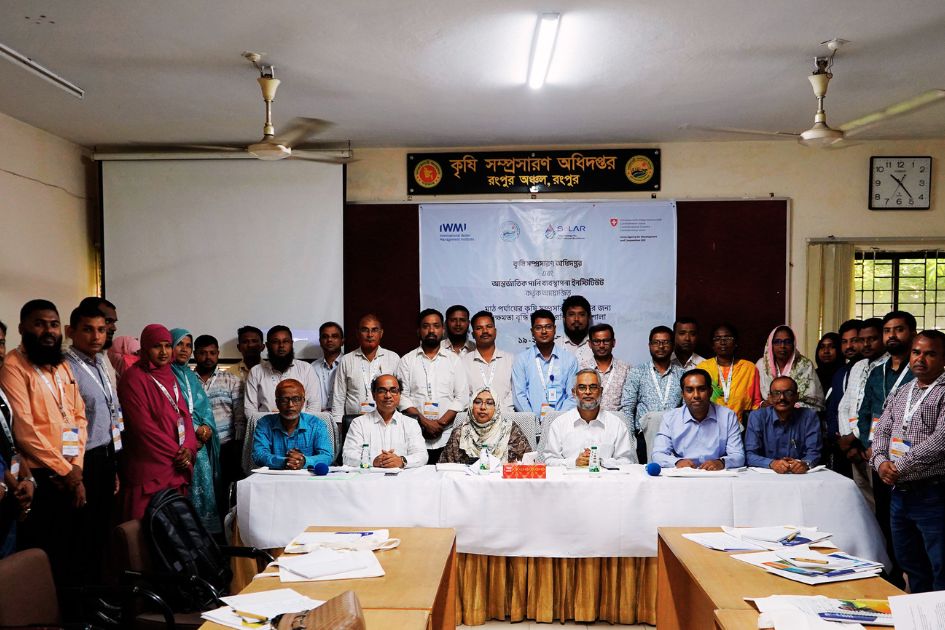
Two capacity-building workshops were held over two days at Office of Additional Director, DAE in Rangpur on 19–20 August and at Office of Additional Director, DAE in Jashore on 23–24 August, bringing together 60 Sub Assistant Agriculture Officers (SAAOs), NGOs from six districts and 19 upazilas, with nearly 30% women participants. The programme was organised under IWMI’s Solar Energy for Agricultural Resilience (SoLAR) Phase II project supported by Swiss Agency for Development and Cooperation (SDC) to strengthen extension capacity for sustainable solar-powered irrigation systems.
Bangladesh is highly dependent on irrigation for agricultural production, with more than 7.9 million hectares of irrigated land. Diesel-powered irrigation pumps remain an important source of irrigation energy, while rising fuel costs, energy insecurity and climate-related pressures on water availability are increasing the importance of renewable energy solutions for agriculture.
Solar Irrigation Pumping Systems (SIPS) have expanded in Bangladesh, with more than 1,500 solar irrigation pumps installed across the country as of 2026, particularly in drought-prone northern areas and the southern coastal region. However, wider adoption continues to face challenges including limited awareness, inadequate financing linkages and capacity gaps among frontline extension personnel.
“Scaling solar irrigation is not simply about installing more solar pumps. It requires farmers and frontline extension personnel to understand where, when and how these systems can be used sustainably. This training is about building that practical capacity, so extension officers can provide better advice, connect farmers with appropriate technologies and financing, and promote solar irrigation alongside responsible water use,” said Jayanta Bhattacharya, Country Lead for IWMI’s SoLAR project in Bangladesh.
The workshops focused on strengthening the ability of agricultural extension personnel to advise farmers on solar irrigation technologies, assess requirements for solar pump installation, facilitate technology adoption and connect farmers with relevant institutions and financing opportunities. The project also introduced communication and behaviour-change approaches to support adoption among smallholder and marginal farmers, including women and youth.
“The transition to solar-powered irrigation is not only about technology-it is also about people and institutions. We have seen in India how strengthening the capacity of agricultural extension workers can help translate solar irrigation innovations into practical support for farmers. We are now applying and adapting these lessons with national partners in Kenya and Ethiopia as well. By investing in the people who work closest to farmers, we can build stronger national systems for scaling solar irrigation in ways that are inclusive, climate-resilient and sustainable,” said Darshini Ravindranath, Project Lead, IWMI’s SoLAR project and Senior Researcher at IWMI.
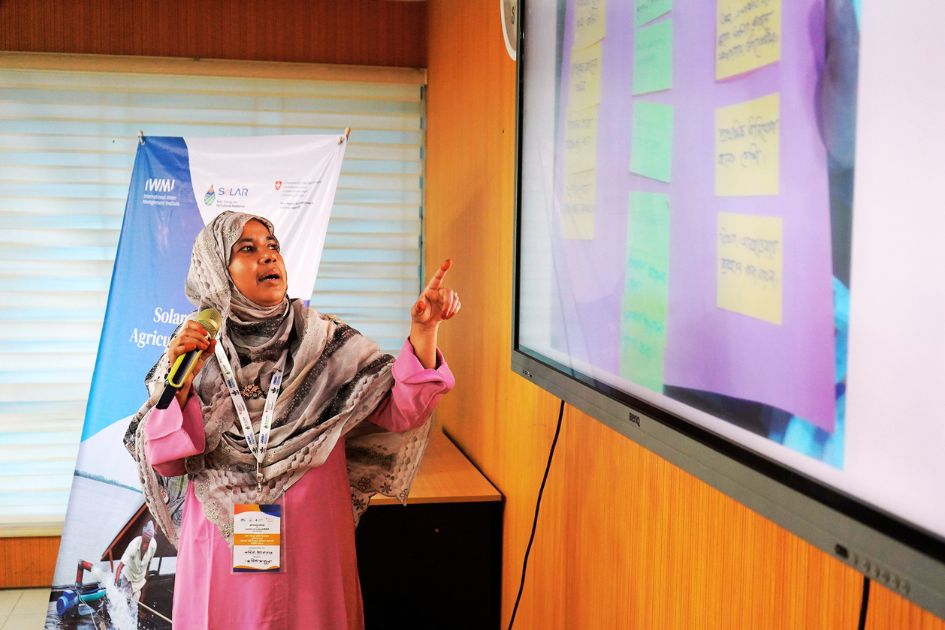
The training combined technical sessions, group discussions and field-based learning. Participants covered solar irrigation fundamentals, solar panels, pumps and motors, system selection and installation, maintenance, irrigation systems and water-saving technologies. They also discussed the challenges and opportunities for scaling solar irrigation and explored inclusive approaches to solar-powered irrigation.
The programme was designed for SAAOs working in solar irrigation implementation areas. Trainers included DAE agriculture engineers and solar irrigation project personnel, alongside specialists with experience in solar irrigation technology and business models. Participants were drawn from northern and south-western regions of Bangladesh.
“Agricultural extension officers are often the first point of contact for farmers when they consider new technologies. This training has helped strengthen our understanding of solar irrigation, including the technical requirements, operation and maintenance of systems. The knowledge gained will help us provide more informed advice to farmers and support the wider adoption of solar irrigation,” said Ashok Kumar Biswas, Project Director, DAE and Focal Person for Solar Irrigation.
For participants, the combination of classroom learning and field experience was an important part of the programme.
“The training helped us understand solar irrigation from a farmer’s perspective. We learned how to assess farmers’ needs, identify the factors that should be considered before adopting a solar irrigation system, and address practical issues related to its operation and maintenance. These insights will be valuable in our day-to-day extension work, particularly when farmers seek advice on whether and how solar irrigation can work for their farms,” Meshbah Ahmed, SAAO in Jhenaidah Upazila.
A participant from Rangpur highlighted the importance.
“I had never attended a training on solar irrigation before. Through this programme, we learned about the technical aspects of solar irrigation as well as its practical use and applicability. The field visit was particularly useful because it gave us a clearer understanding of how the technology works in practice. I believe the knowledge and practical experience gained from this training will help me explain solar irrigation more effectively to farmers and support them in understanding the benefits and use of the technology,” said Shamoli Rani Biswas, SAAO in Nageshwari Upazila.
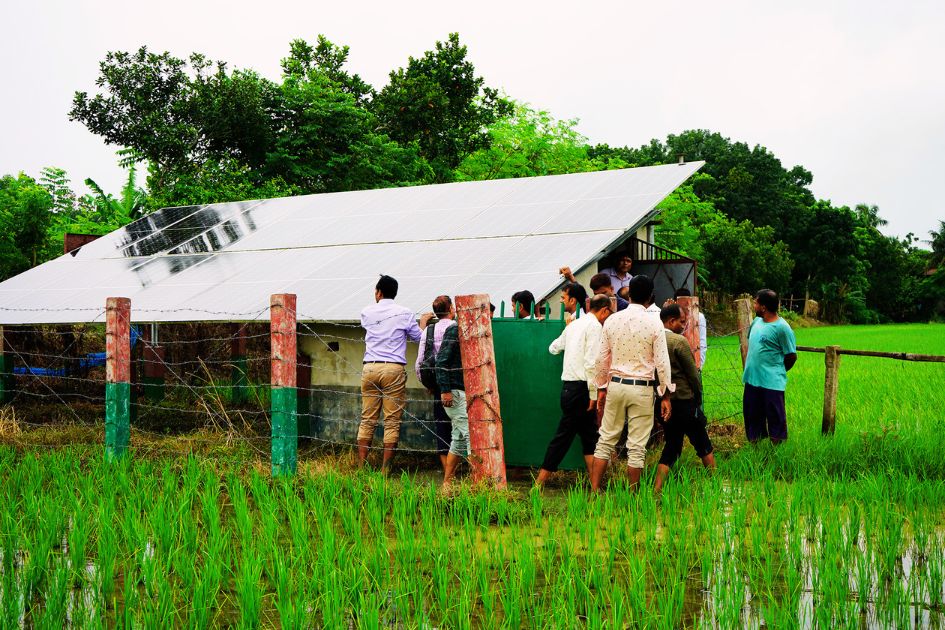
The workshops concluded with field visits, participant reflections and post-training assessments. The field-based sessions allowed participants to observe irrigation systems and discuss practical lessons and challenges associated with solar irrigation.
The capacity-building activity is part of SoLAR Phase II, through which IWMI is working with partners to advance socially inclusive and climate-resilient solar irrigation solutions. By strengthening existing agricultural extension systems, the project aims to help ensure that farmers receive the knowledge, technical guidance and institutional support needed to make informed decisions about solar-powered irrigation.




