

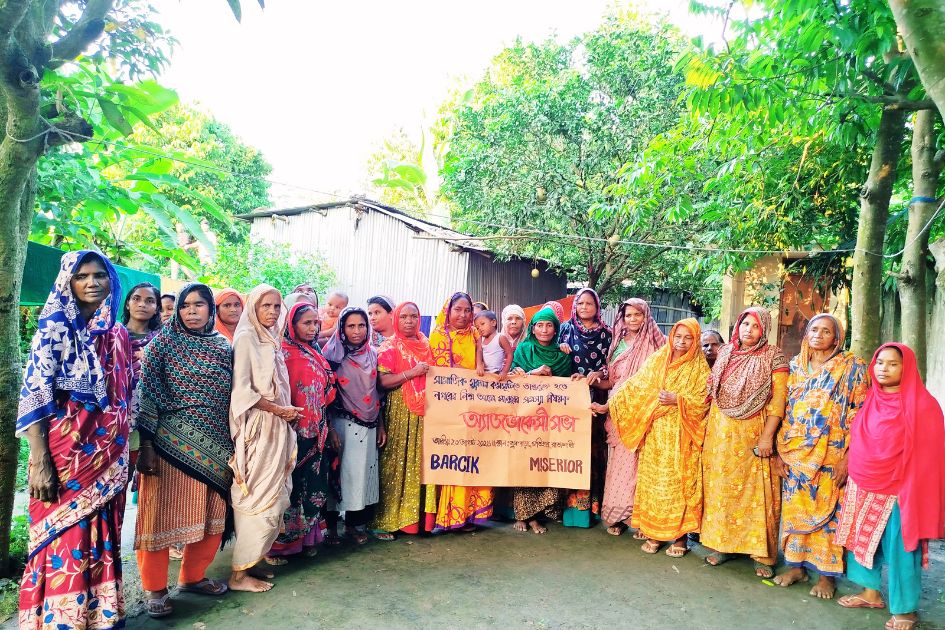



Speakers urged authorities to remove paperwork, address and administrative barriers that prevent Rajshahi’s urban poor from receiving state support during economic and climate-related shocks.
Low-income and marginalised residents of a slum in the northwestern Bangladesh city of Rajshahi have demanded effective access to government social protection programmes, saying many eligible urban poor people remain excluded despite facing poverty, insecure work, rising prices, health risks, unsafe housing and growing climate-related threats.
The demands were raised on Sunday, August 23, at an advocacy meeting titled “Problems faced by low-income urban people in being included in social protection programmes” at Budhpara slum under Motihar police station in Rajshahi city.
The meeting was jointly organised by BARCIK, a development research organisation and the Barind Youth Forum with members of the urban poor community living in the slum.
Speakers said the purpose of social protection programmes was to reduce poverty and inequality and ensure security for the lives and livelihoods of vulnerable people. But they said many eligible slum residents were still being left out because of a lack of information, shortages of necessary documents including national identity cards and birth certificates, problems over permanent addresses, complicated application procedures and barriers in communicating with relevant offices.
They said urban poverty differed from rural poverty, with most slum residents working in the informal sector, earning irregular incomes and facing insecure jobs and housing.
Sudden crises such as heatwaves, heavy rainfall, waterlogging, fires, disease or loss of employment can push a poor family deeper into poverty, the speakers said.
“Social protection is not charity or a donation; it is a human right and a responsibility of the state,” they said.
Slum residents play an important role in keeping the city’s economy and daily life functioning, but the social and institutional protection they receive remains very limited compared with their labour and contribution, the speakers said.
Domestic workers, rickshaw and van drivers, construction workers, small traders, cleaners, hawkers and large numbers of people in informal work are an important part of the urban economy, they said. But their incomes and livelihoods remain highly insecure, making it urgent to make social protection life-cycle-based, employment-sensitive and responsive to disaster risks.
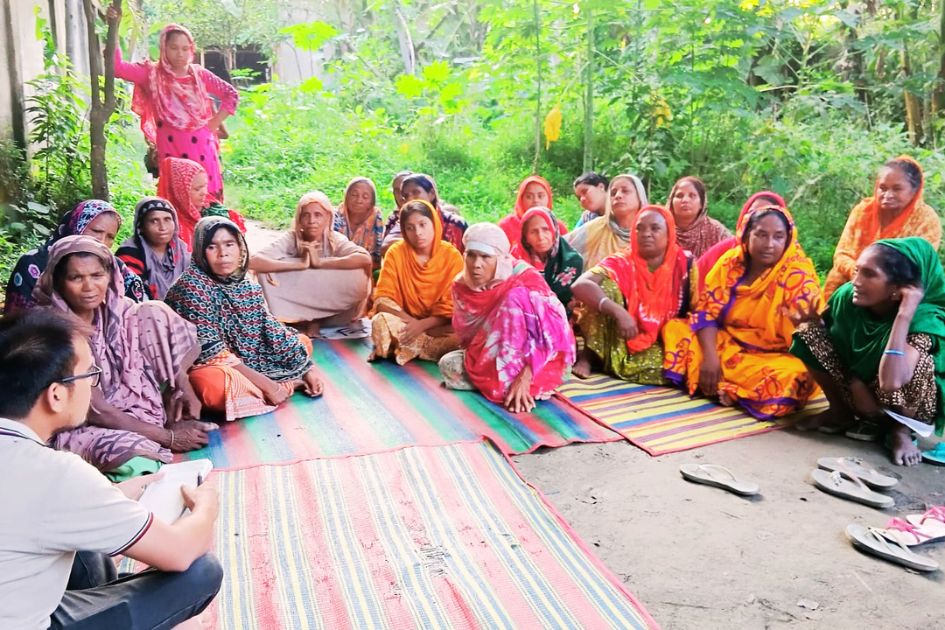
Rahima Khatun, 60, a resident of Budhpara slum, said many people in the area did not know how to access government services.
“We live in the city, we work in the city but many of us do not know about government opportunities and services. We do not know where to go, how to apply or what papers are needed. Because of paperwork or address problems, we often do not receive benefits even when we are eligible. We want the government and relevant offices to come to the slum, give us information and help us apply,” she said.
Another resident, Jaheda Begum, 55, said income insecurity made poor families especially vulnerable to shocks.
“Our income is not the same every day. If there is no work, there is no income. If illness, an accident, extreme heat, rain and waterlogging or fire causes damage, it becomes difficult to recover. Families with elderly people, women, children and members with disabilities face even more problems. We want social protection not to remain only on paper but to reach poor people like us in reality,” she said.
Rahela Begum, 62, said residents often gave up after repeated attempts to seek services.
“When we go to the councillor’s office for services, they send us away saying the papers are not correct or it cannot be done now. After going again and again, we stop going,” she said.
Md Atikur Rahman, president of the Barind Youth Forum, said the exclusion of slum residents reflected both administrative weakness and social inequality.
“The purpose of social protection programmes is to protect the most vulnerable people in society. But if urban slum residents are excluded from these benefits because of information, paperwork, address or administrative complexities, that is not only an administrative gap but also an expression of social inequality. Specific targets, easy application procedures and participation of local people must be ensured for the urban poor. Climate change is increasing their risks, so social protection must also be linked with climate adaptation,” he said.
Amit Sarkar, programme officer at BARCIK, said income alone did not capture the full scale of vulnerability faced by slum communities.
“If the poverty of slum residents is measured only by income, the real picture of their risks will not be found. They live with multidimensional risks including unsafe housing, irregular income, health risks, limited water and sanitation, fires, waterlogging and heatwaves. Therefore, social protection should not be limited to preparing lists; support is needed at every stage, including information, paperwork, application, verification and receipt of funds,” he said.
The meeting called for updated lists of potential social protection beneficiaries in all slums and informal settlements under Rajshahi City Corporation, and the inclusion of all eligible elderly people, widows, women deserted or distressed by husbands, persons with disabilities, pregnant and lactating mothers and poor students in relevant programmes.
Participants also demanded information services, help desks and simple application processes in slum areas; support for poor people in preparing national identity cards, birth certificates, bank or mobile financial accounts and other necessary documents; specific targets and adequate allocations for urban poor and slum residents in social protection programmes; transparency, accountability and participation of local slum residents in beneficiary selection; and risk-responsive and adaptation-oriented social protection for poor families affected by urban disasters including heatwaves, waterlogging and fires.
The meeting also called for meaningful participation of slum residents in urban development, housing, rehabilitation and climate adaptation planning.
Participants urged Rajshahi City Corporation, the district administration, the Department of Social Services, institutions linked to women and children’s affairs and all government agencies implementing social protection programmes to identify barriers to the inclusion of slum residents and urban poor people and take swift, coordinated action.
Speakers said it would not be possible to build an inclusive, just and climate-resilient Rajshahi by excluding the urban poor. They said slum residents must be recognised not merely as beneficiaries but as rights-bearing citizens and partners in urban development.




