

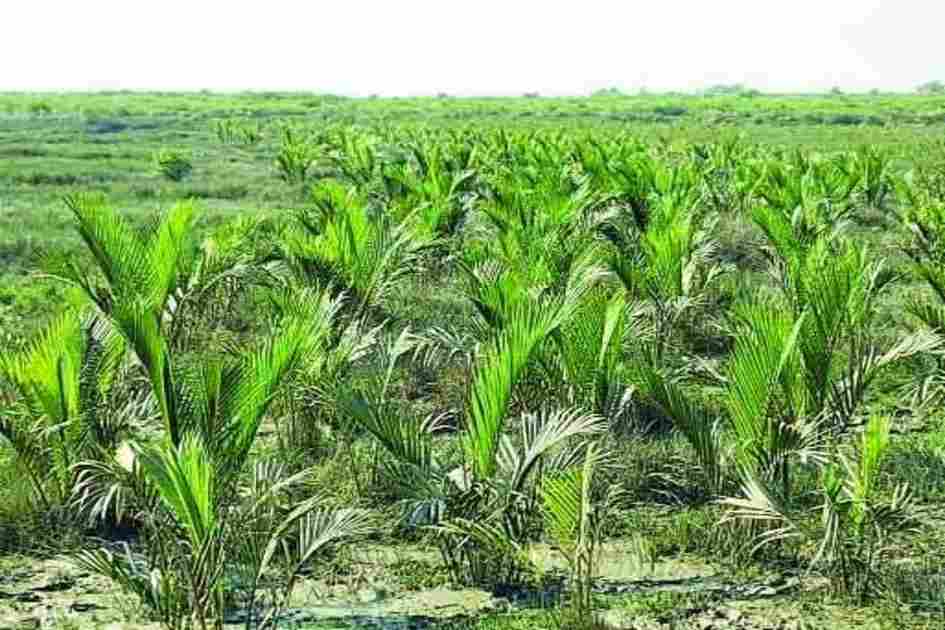

Bangladesh is piloting nipa palm plantations in Mirsarai to reduce coastal erosion, restore ecosystems and build natural defenses against cyclones, offering a scalable model for climate resilient afforestation nationwide efforts.
As Climate Change accelerates coastal erosion in Bangladesh, one of the world’s most vulnerable countries, experimental nipa palm plantations are taking root along the shoreline of Mirsarai, offering a promising nature-based defense against tidal threats.
The initiative, led by the Bangladesh Forest Department, aims to stabilize newly formed coastal land and build a natural buffer against cyclones and storm surges. Since the 2022–23 fiscal year, more than 820 hectares of newly accreted land outside the embankment of the Mirsarai Economic Zone have been brought under afforestation.
Plantation activities are underway in several coastal blocks, including Domkhali, Moghadia and Bamon Sundar. Alongside traditional mangrove species such as keora and baine, nipa palm (Nypa fruticans) is being planted along canal banks to reduce erosion and improve ecological resilience.
Around 30,000 nipa palm seeds and saplings were collected from the Sundarbans and the Barishal region. While some early saplings were lost due to disease, extreme weather and grazing, officials say more than 10,000 plants have survived.
Field observations in Ichhakhali Union show nipa palms growing up to 6 to 7 feet tall along tidal canals, where regular flows deposit nutrient-rich silt. The plantations are gradually forming dense green belts that help bind soil and reduce the risk of land erosion.
Nipa palm, commonly known as golpata in Bangladesh, is a mangrove-associated species found in low to moderate salinity zones across the Indian and Pacific Ocean coasts. Its long leaves, which can reach up to nine meters, have traditionally been used for roofing and other rural purposes.
Local residents say the plantations are already making a visible difference. Many initially mistook the plants for coconut saplings but growing awareness has increased appreciation for their ecological value. Increased bird activity has also been reported in plantation areas, indicating early signs of biodiversity recovery.
Forest officials say the pilot project could pave the way for expanding mangrove-based protection beyond traditional zones like the Sundarbans, strengthening long-term coastal resilience.
The coastal initiative comes amid broader political pledges to expand afforestation nationwide. Tarique Rahman of the Bangladesh Nationalist Party has announced a plan to plant 250 million trees across the country.
Environmental advocates say the Mirsarai model offers practical lessons for scaling up such efforts.
Sohanur Rahman, Executive Coordinator of YouthNet Global, said, “This initiative shows how nature-based solutions can protect coastal communities while restoring ecosystems. The Mirsarai experience can serve as a strong model for the government’s nationwide tree plantation drive, especially in vulnerable coastal and char areas.”
The proposed campaign includes plantations along roads, riverbanks, educational institutions and coastal char lands, with a focus on engaging youth and local communities. Leaders say the effort aims to address environmental degradation, raise public awareness and build a more climate-resilient Bangladesh.




