

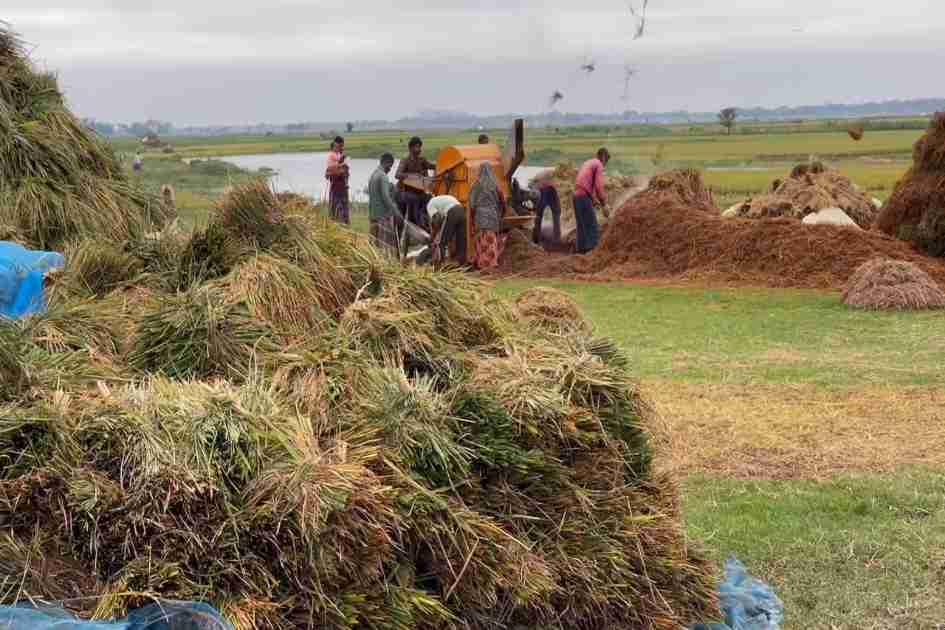



The government has advanced boro paddy and rice procurement in six haor districts to May 3 to help farmers recover losses from sudden flash floods.
The government has brought forward rice procurement in six haor districts to May 3 from the previously scheduled May 15, allowing paddy and rice collection to begin from Saturday in areas hit by sudden flash floods.
The decision was announced in a press release on Friday, May 1, by Imdad Islam, senior information officer and public relations officer at the Ministry of Food.
According to the statement, the special move has been taken to help farmers in six haor districts affected by sudden flooding by supporting the storage and sale of their boro paddy and rice. The districts are Netrokona, Kishoreganj, Sunamganj, Sylhet, Moulvibazar and Habiganj.
Under the revised schedule, both paddy and rice procurement from farmers in the haor region will begin on May 3. Rice collection in those districts had earlier been fixed to start on May 15.
In the rest of the country, procurement will continue under the previously announced timetable, with paddy collection starting on May 3 and rice collection from May 15.
For the upcoming boro season, the government will buy 1.8 million metric tons of paddy and rice from the domestic market. Of the total, 500,000 metric tons will be paddy, 1.2 million metric tons parboiled rice and 100,000 metric tons non-parboiled rice.
The procurement price has been set at 36 taka per kilogram for paddy, 49 taka per kilogram for parboiled rice and 48 taka per kilogram for non-parboiled rice.
Alongside paddy and rice, the government will also procure 50,000 metric tons of wheat at 36 taka per kilogram.
The procurement drive will continue until August 31.




