




A 25-year study in Bolivia shows giant anteaters adjust activity to heat, while forest patches offer vital refuge amid growing habitat threats.
Giant anteaters are changing their activity patterns in response to rising temperatures and appear to rely on forest patches as thermal refuges, according to a 25-year camera-trap study in Bolivia.
The study, the largest ever conducted on the naturally rare species, found that giant anteaters were more common in tropical savannas containing patches of forest than in areas dominated by continuous Amazon rainforest.
Published in Xenarthra, the research draws on a quarter century of camera-trap monitoring across multiple landscapes in Bolivia. Researchers found that giant anteaters (Myrmecophaga tridactyla) became increasingly active during cooler nighttime hours as temperatures rose in savanna environments.
The findings suggest that forest patches provide important thermal refuges that help the animals cope with heat, potentially making them increasingly important as the climate warms.
The study also found marked differences in giant anteater abundance between landscapes. The animals were recorded more frequently in tropical savannas interspersed with forest islands than in areas dominated by continuous Amazon rainforest. Researchers said this may be because tropical grasslands have higher densities of terrestrial ant and termite nests, which are the animals’ main food source.
“This study demonstrates the tremendous value of camera trap surveys and long-term wildlife monitoring,” said Dr. Robert Wallace, Senior Conservation Scientist for WCS Bolivia and lead author of the study.
“By studying giant anteaters across decades and in different ecosystems, we can see how they respond to environmental conditions today while also gaining insights into how climate change and habitat loss may affect them in the future. Conserving both forests and natural savannas will be essential for the long-term survival of this remarkable species.”
The findings highlight the need to protect both Amazon rainforests, which can help buffer rising temperatures, and the increasingly threatened tropical savannas where giant anteaters are found in greater numbers.
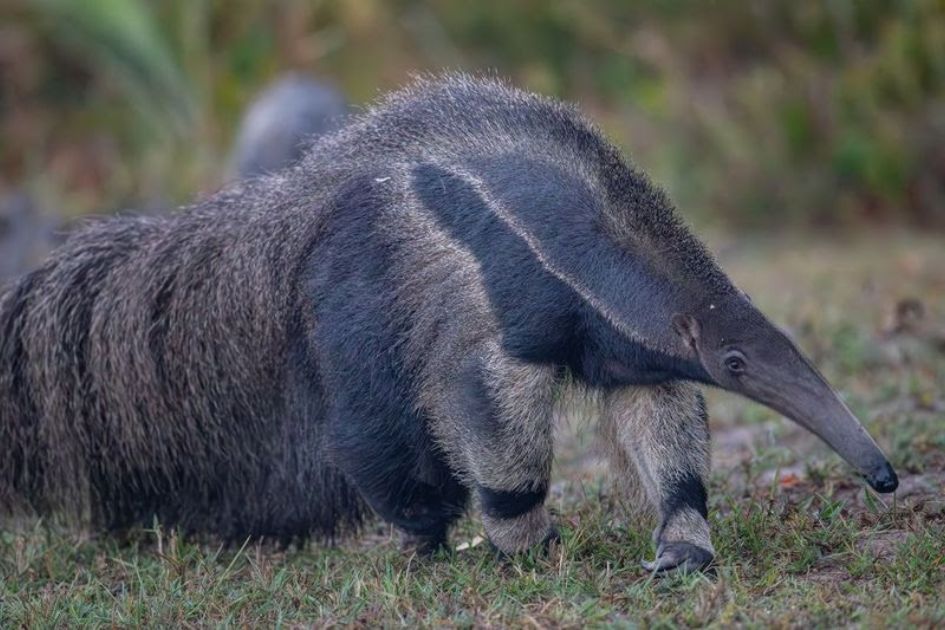
Giant anteaters are among Latin America’s most distinctive mammals, known for their elongated snouts, bushy tails and specialised diet of ants and termites. The species remains widely distributed from Honduras to northern Argentina but is classified as Vulnerable by the International Union for Conservation of Nature (IUCN).
Its populations continue to decline because of habitat loss and fragmentation, hunting, road mortality, attacks by domestic dogs and increasingly severe wildfires.
These threats may become more significant as climate change and habitat loss interact to reduce suitable habitat and thermal refuges, underlining the need for research into the species’ habitat preferences and long-term population monitoring.
The paper, “Now You See Me, Now You Don’t: Giant Anteater (Myrmecophaga tridactyla) Activity Patterns and Relative Abundance in the Tropical Grasslands and Forests of Bolivia,” was authored by Robert B. Wallace, Guido Ayala and Maria Viscarra.




