

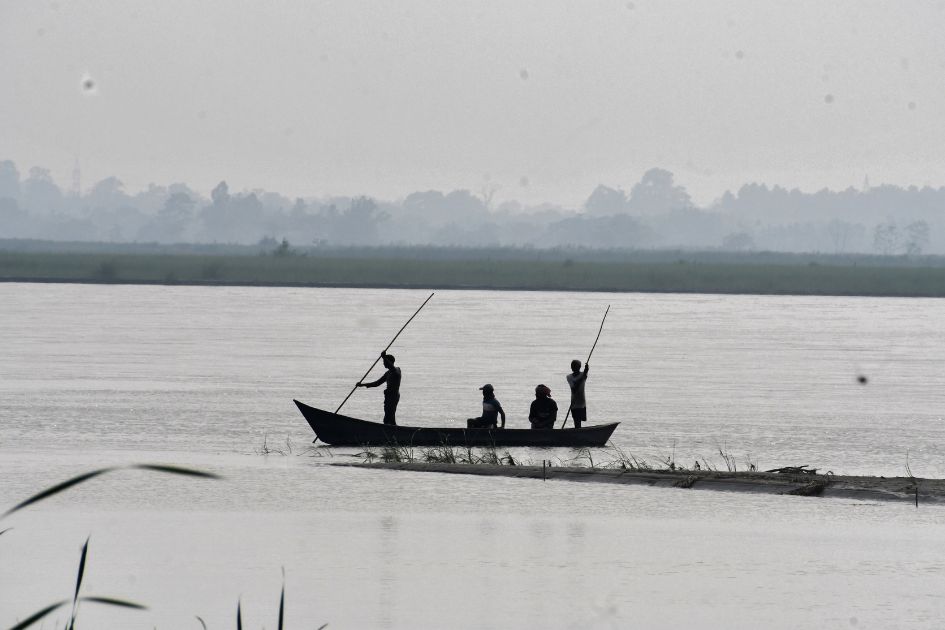



Bangladesh is pressing ahead with the Teesta project while seeking to preserve ties with India, amid renewed Chinese involvement and unresolved water-sharing negotiations.
Bangladesh does not want its relations with India to deteriorate over the long-running dispute surrounding the sharing of Teesta river waters, Water Resources Minister Shahiduddin Chowdhury Anee said at a seminar in Dhaka on Sunday.
Anee said Bangladesh regards India as a friendly neighbour but expects New Delhi to take Dhaka’s interests into account while pursuing its own.
“The neighbouring country is a friendly country. They have to think that while they have their interests, we also have ours,” news agency PTI reported, citing the news portal tbsnews.net.
“A friend should protect the interests of a friend. We never want our friendly relations with them to deteriorate,” he said.
The remarks come as Bangladesh’s new government intensifies efforts to resolve the Teesta dispute while also pursuing a broader Teesta River Comprehensive Management and Restoration Project, with China offering support.
The proposed project is intended to tackle recurring floods, river erosion and dry-season water shortages in northern Bangladesh, where the river is vital to agriculture and local livelihoods.
Anee said the government had organised several seminars and consultations since the February election to collect expert opinions on the project. A detailed study drawing on those recommendations would help determine the government’s next steps, he said.
The minister said people in five to six northern districts had high expectations for the project after years of suffering from erosion and other river-related problems.
“If we fail to implement it, the damage and problems faced by families in those areas will continue to increase. We have to overcome this challenge anyhow,” he said.
Anee said Prime Minister Tarique Rahman regularly discusses the project and that government departments are also reviewing its progress.
Calling for an agreement on the river, he said, “Whether it is called the Teesta treaty or the Teesta master plan, or whatever is necessary to implement this project, we will move towards implementation.”
The Teesta begins in the Himalayas and runs through India’s Sikkim and West Bengal states before entering Bangladesh. It eventually joins the Jamuna, the name used in Bangladesh for the Brahmaputra.
The river is particularly important to northern Bangladesh, where farmers depend on its waters. It is also important to West Bengal for irrigation and power generation, with several districts in North Bengal relying on the river.
India and Bangladesh have been negotiating the sharing of Teesta waters since the 1980s. An interim arrangement reached in 1983 allocated 39 percent of the water to India and 36 percent to Bangladesh, while 25 percent remained unallocated.
The two countries continued negotiations but failed to reach a long-term agreement. A draft interim deal was finalised in 2011 but could not be signed after the West Bengal government opposed it over concerns about water availability in the state.
Bangladesh’s renewed push for the Teesta project has also acquired a wider strategic dimension because of China’s involvement.
During his visit to Beijing in June, Rahman held talks with Chinese leaders and secured a commitment from Beijing to accelerate a technical feasibility study for the proposed Teesta restoration project.
For India, increased Chinese involvement in northern Bangladesh is sensitive because the region is close to the Siliguri Corridor, a narrow stretch of land that provides India’s crucial link between its northeastern states and the rest of the country.
India has said the Teesta issue should be discussed with all relevant stakeholders, including West Bengal.
External Affairs Ministry spokesperson Randhir Jaiswal said in July that India’s position on the proposed Teesta project had already been conveyed to Bangladesh. He said India would consider “all related developments” as part of its “overall approach to the Teesta issue”.
The Teesta negotiations are separate from the India-Bangladesh Ganges Water Sharing Treaty signed in 1996.
The treaty is valid for 30 years and is due to expire in December 2026. India and Bangladesh share 54 transboundary rivers and use the Joint Rivers Commission to address issues concerning their common water resources.
This post is republished from The Times of India.




