

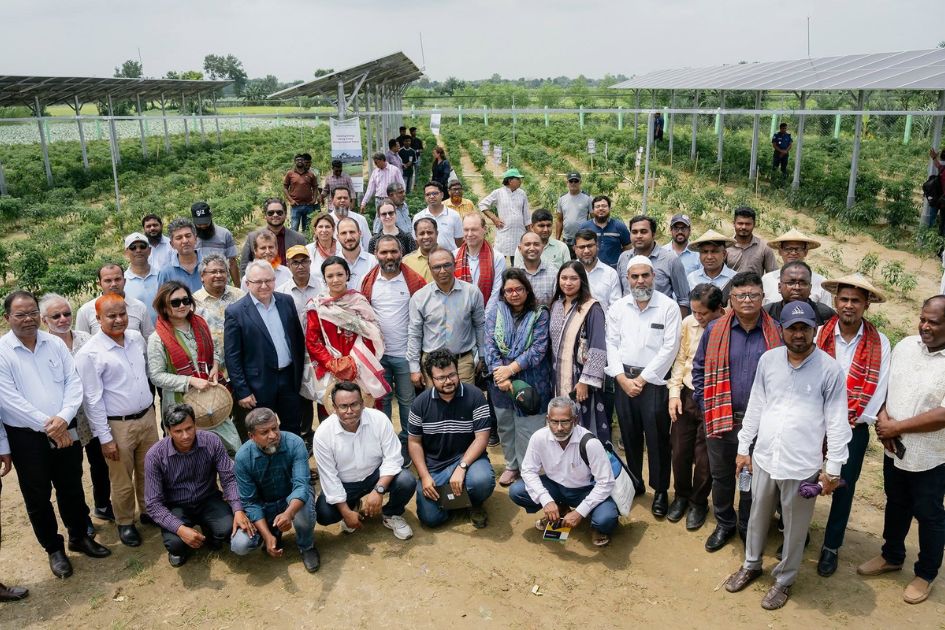



The pilot will test how solar irrigation, farming and grid supply can work together, offering data for future clean-energy and rural development efforts in Bangladesh.
Bangladesh’s first scientifically structured, research-oriented agrivoltaics pilot project has been inaugurated in Chuadanga, combining solar energy generation with agriculture on the same land.
The pilot project powers solar irrigation, reduces reliance on diesel pumps, supports farming across around 50 acres and feeds surplus clean electricity into the national grid.
It is also expected to generate evidence to support the scaling up of agrivoltaics across Bangladesh.
The project is supported through the German-funded GET-PAP project, with cofinancing from the Delegation of the European Union to Bangladesh. It combines technical expertise and financial support from German Development Cooperation.
GIZ, Germany’s international development agency and Fraunhofer ISE, the German solar energy research institute, provided technical, research and policy support for the project.
KfW Development Bank provided capital grant financing through IDCOL, Bangladesh’s Infrastructure Development Company Limited.
The initiative has been presented as an example of German-Bangladeshi cooperation in clean energy, sustainable agriculture and rural development.




