

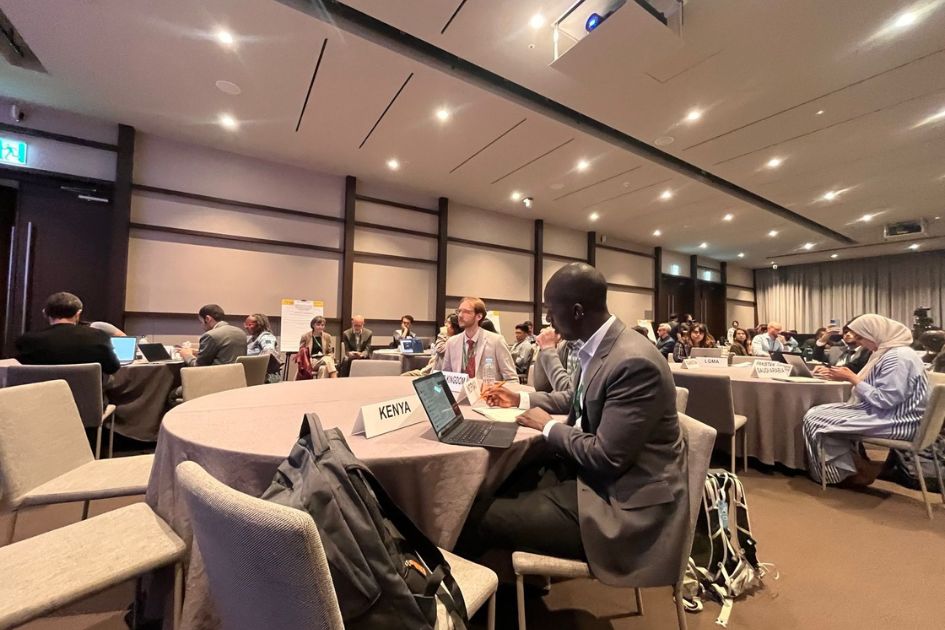



UN dialogue in Korea warns climate-driven food system reforms risk deepening inequality unless rights, livelihoods, and inclusive participation are protected in just transition policies.
UN climate leaders convened in Korea to discuss linking food security with just transition goals. In Yeosu, Republic of Korea, global climate officials highlighted concerns that climate-driven reforms of food systems could worsen inequality unless safeguards for rights, livelihoods and participation are established. Held on April 24–25 in a hybrid format, this fifth UN dialogue under the UAE Just Transition Work Programme brought together governments, experts, negotiators and civil society. Discussions focused on equitable transition pathways for food security across agriculture and ocean systems within the Paris Agreement framework.
The discussions aim to shape broader UN climate negotiations, aligning climate actions with job creation, food affordability, social protection and long-term resilience. Countries aim to find practical solutions to balance climate ambitions with fair work, social justice and sustainable development amid increasing climate shocks to food systems.
On day one, warnings emerged that without proper protections and social dialogue, climate measures in farming and fisheries could deepen inequalities for smallholder farmers, fishers, rural workers and vulnerable groups.
A key concern was that climate policies are not just transitions if communities lose land, income, employment or decision-making power during the process.
Participants emphasised that participation is uneven: women, youth, migrants, seasonal workers, Indigenous Peoples and informal workers are most affected yet least represented in decision-making.
Gender issues were central, with warnings that food insecurity may heighten gender-based violence, especially in vulnerable rural and displaced communities. Risks from agrochemicals in industrial farming also threaten reproductive health and fertility, impacting women and farming communities.
Theresa from ActionAid International stated that early-stage policy design must incorporate participation.
“Participation of marginalized communities must be at the centre of all processes,” she said. “Land rights are critical, especially where women and youth are most affected but least heard. Stakeholder mapping is essential because access to policymakers is highly unequal, with large landholders wielding more influence than smallholders, seasonal labourers and informal workers. The right to food and a gender lens should guide transitions.”
She added that women farmers face multiple barriers, including limited access to land, finance and training, and that rural girls are more likely to leave school early. Participation must occur before policies are finalized, not after.
Marie Cosquer of Action Against Hunger highlighted that UN human rights frameworks are not sufficiently integrated into UN climate discussions.
“United Nations Declaration on the Rights of Indigenous Peoples and United Nations Declaration on the Rights of Peasants and Other People Working in Rural Areas are still not adequately reflected in UNFCCC debates, yet they are crucial for promoting food sovereignty and an intersectional approach to women’s rights,” she said.
She warned against fragmented efforts to address food insecurity, urging a systemic approach that considers local producers, income models and global economic factors shaping access and distribution.
Throughout the sessions, women’s groups and development actors underscored ongoing structural inequalities in rural economies, such as limited access to resources, finances, technology and leadership roles. Youth employment and skill development were seen as vital for resilient food systems.
Delegates called for stronger protections, social safety nets and large-scale reskilling programmes to support workers affected by climate and economic shifts. Strengthening cooperatives and producer organizations was identified as a key way to improve bargaining power and income security.
Food sovereignty was a recurring theme, emphasizing that food security should be measured by communities’ control over seeds, production methods and local food priorities, not only by production volumes.
Concerns were also raised about agricultural intellectual property laws, with warnings that restrictive seed laws and patents could undermine smallholder resilience by limiting traditional seed saving and exchange.
Indigenous and local knowledge systems received strong support for their role in sustainable farming, fisheries, forestry and biodiversity, and their importance for long-term climate resilience.
Sohanur Rahman from YouthNet Global stressed that youth must be recognized as active contributors to climate solutions. “Young people are not only affected by climate change; they are essential in creating resilient, innovative food systems,” he said. “A just transition must invest in youth leadership, skills and meaningful participation in decision-making.”
The second day will focus on climate finance, international cooperation, technology transfer, innovation, policy frameworks, agroecology, agroforestry, circular economy strategies and ocean-based solutions.
This dialogue supports preparations for the upcoming review of the UAE Just Transition Work Programme at UN Climate Summit COP31 in Antalya, where progress and future directions will be assessed.
For countries vulnerable to climate impacts like Bangladesh, where many rely on small-scale agriculture, fisheries and coastal livelihoods, the outcomes of this dialogue are highly relevant. “You cannot address gender-based violence in food systems and climate-affected communities without actively engaging men and boys as part of the solution. A just transition must challenge harmful norms while building shared responsibility, where men and boys are equipped and encouraged to become allies in preventing violence and advancing gender equality,” concluded Sohanur Rahman.




