

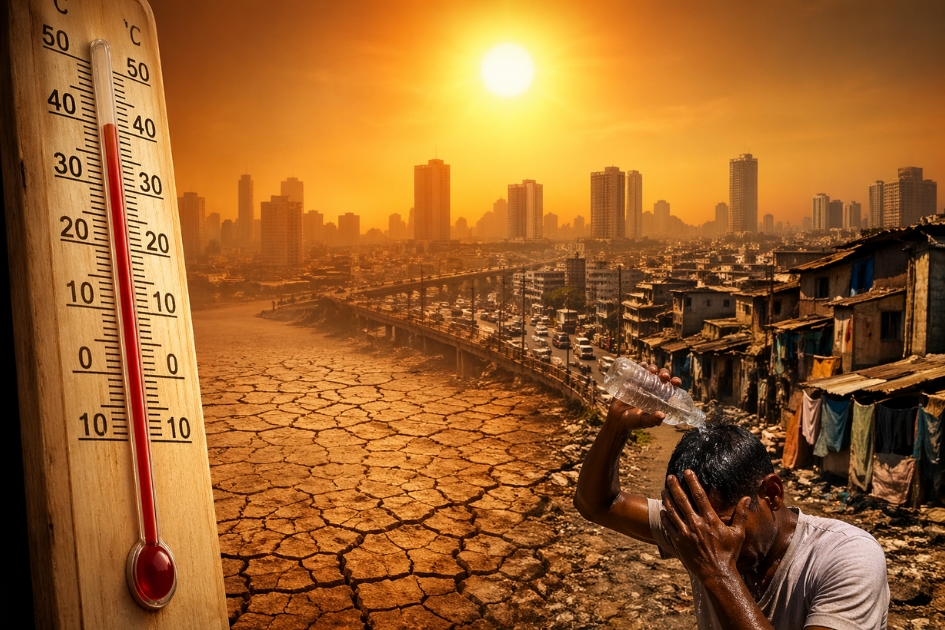



Rising heatwaves are reshaping life in Bangladesh, exposing urban vulnerability, energy strain and deep inequality, as climate change turns extreme heat into a persistent and dangerous “new normal.”
Back in 2020, the world learned a new vocabulary for crisis. COVID-19 forced us into an abrupt reality where adaptation became the only means of survival. We learned to work through screens and live behind masks and personal protective equipment. No country was fully prepared. What once felt temporary soon became routine. Masks, distancing and constant vigilance reshaped everyday life.
Out of this disruption emerged a defining phrase: the “new normal”, a term that signaled profound and lasting change. While global attention remained fixed on the pandemic, another crisis continued to intensify quietly but relentlessly: climate change.
The conversation around climate change has since shifted. For decades, it was framed as a distant warning, expressed through images of melting polar ice caps, abstract graphs and rising temperature averages. Today, the narrative has come home. Extreme heatwaves have emerged as one of the most visible and dangerous manifestations of a warming planet. Unlike sudden disasters, heat builds gradually, often going unnoticed until it becomes unbearable. Its impacts are not evenly distributed; they fall hardest on those with the least capacity to cope.
In Bangladesh, this reality is no longer seasonal; it is becoming systemic. According to data reported by The Daily Star, heatwaves are no longer short-lived episodes but prolonged events. In April 2024, Bangladesh experienced the longest heatwave in its recorded history. When the cooling Nor’wester rains fail to arrive, the heat does not simply pass; it lingers, creating extended periods of extreme conditions that the country’s infrastructure was never designed to withstand.
Historically, heatwaves were concentrated in specific regions such as the northwestern districts. Today, they affect nearly the entire country simultaneously, particularly urban areas. Cities like Dhaka are increasingly turning into heat traps. Dense concrete infrastructure, limited green spaces and unplanned urbanization have intensified what scientists describe as the “urban heat island” effect. During peak summer, temperatures often rise to 38°C to 43°C or higher, while high humidity traps heat at night, offering little relief.
For many residents of Dhaka’s high-rise buildings, air conditioning provides temporary comfort. But this relief comes at a cost. Increased reliance on cooling systems drives up electricity demand, contributing to higher emissions and additional waste heat. The result is a vicious cycle: efforts to cool indoor spaces ultimately contribute to rising outdoor temperatures.
The situation is far more difficult for those living in informal settlements. In Dhaka’s densely populated slums, homes are typically constructed from tin and other heat-absorbing materials, with poor ventilation and limited access to electricity. Here, extreme heat is not merely uncomfortable; it is life-threatening. It disrupts livelihoods, harms physical and mental health and deepens existing inequalities. For these communities, adaptation is not a matter of convenience but survival.
This is where the concept of the “new normal” takes on a more troubling meaning. What began as a phrase to describe life during a pandemic is now extending into the climate crisis. We are not simply recovering from one global shock; we are entering an era where multiple crises overlap and reinforce one another.
Geopolitical tensions, including those between Iran and the United States, add another layer of vulnerability. Disruptions in global energy markets can directly affect countries like Bangladesh, which depend heavily on imported fuels. Rising energy costs or supply shortages could restrict access to electricity precisely when it is needed most to cope with extreme heat.
These burdens will not be shared equally. Middle- and lower-income households are likely to bear the greatest impact, as they already face limited access to reliable energy. While renewable solutions such as solar power are often proposed, the transition remains uneven. Questions of affordability, accessibility and readiness persist: who can realistically make this shift and how quickly?
The uncomfortable truth is that we are at a crossroads. The “new normal” is no longer defined by a virus but by rising temperatures, deepening inequalities and systemic strain. Heat is no longer just a weather condition; it is a stress test for infrastructure, economies and social resilience.
But adaptation alone is not enough. During the pandemic, the world demonstrated an ability to change rapidly when necessary. Today’s prolonged heatwaves present a similar urgency, though unfolding more gradually. We can choose to redefine the “new normal” or simply learn to endure it.
The temperature is rising. The question is: are we ready?




